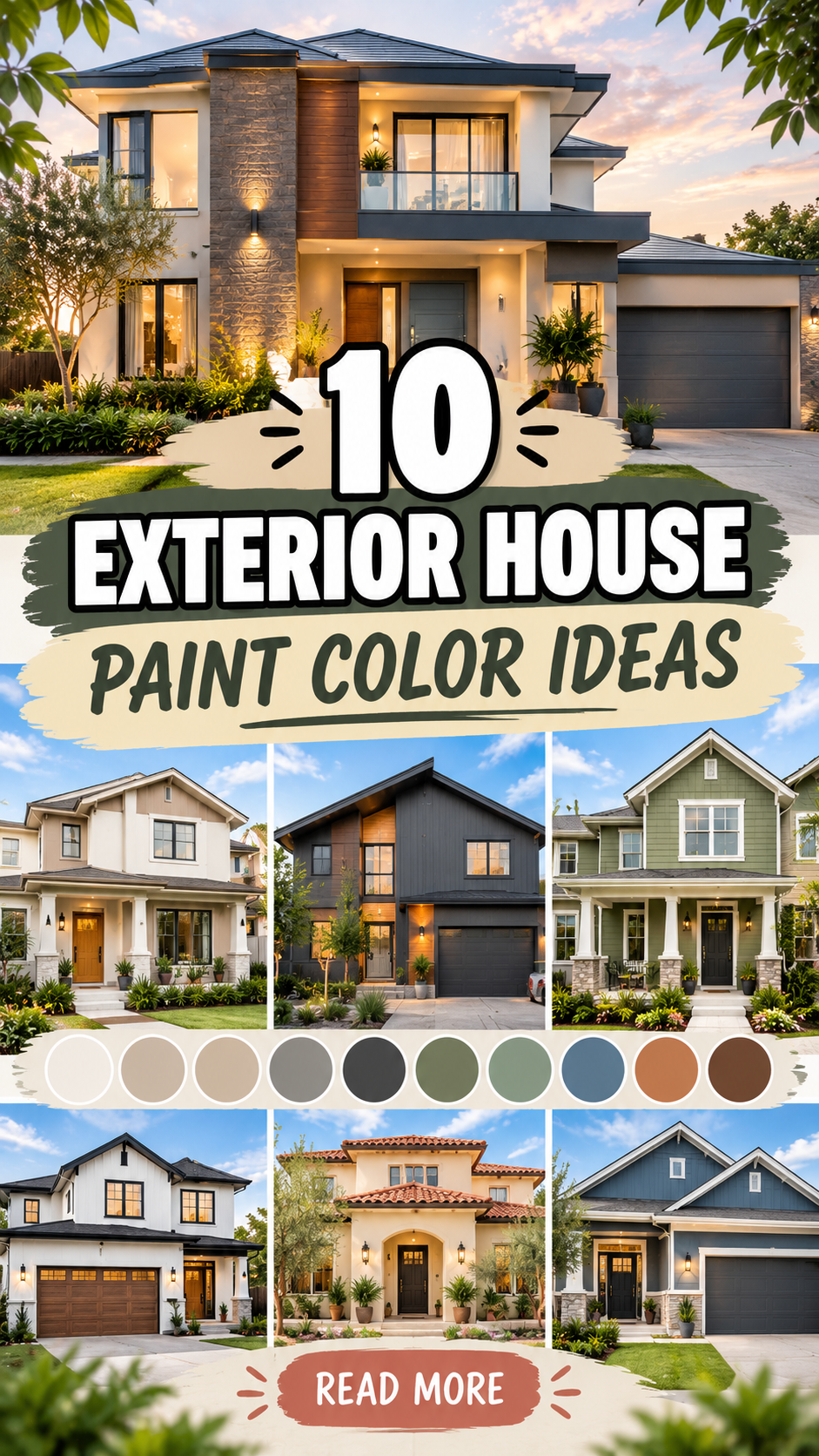
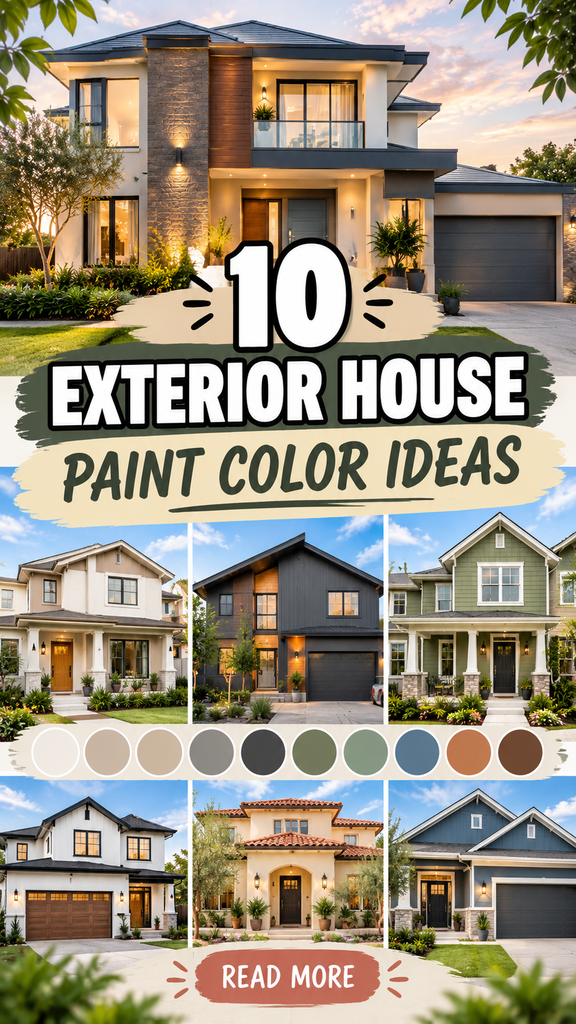
Choosing the right exterior house paint color can completely transform your home’s curb appeal. Whether you have a modern house, a traditional home, or a small family property, the right paint combination can make your exterior look fresh, stylish, and welcoming.
Exterior paint colors do more than improve appearance. They help highlight architectural features, complement roofing and doors, and create a coordinated look with your garden and surroundings. From timeless white and warm beige to bold charcoal gray and earthy sage green, there are many beautiful options to consider.
If you’re planning to repaint your home or looking for inspiration for a new house, these 10 exterior house paint color ideas will help you find a combination that suits your style.
1. White and Charcoal Gray
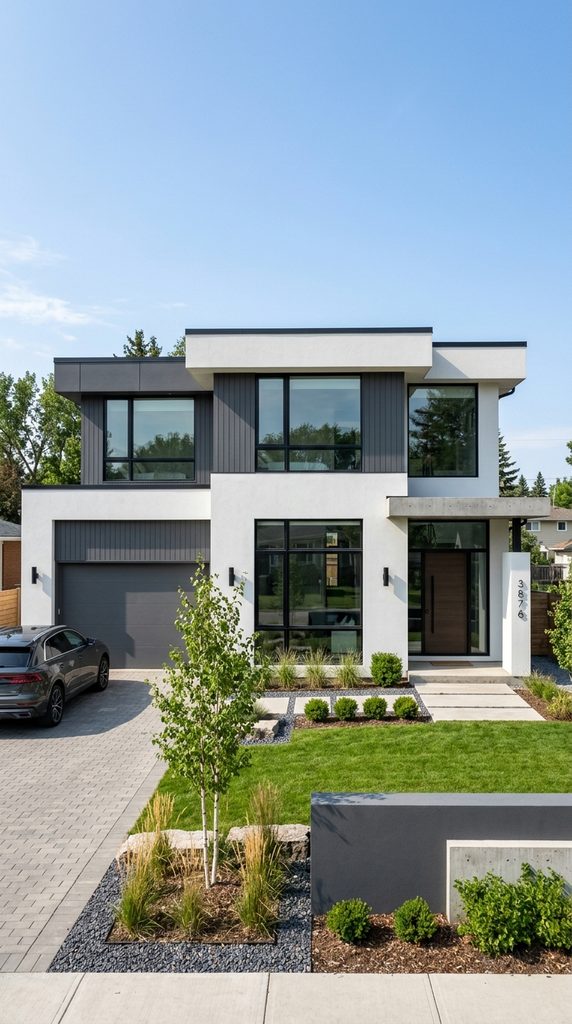
White and charcoal gray create a clean, modern exterior that looks sophisticated without being overly complicated. White keeps the house bright, while charcoal adds contrast and highlights important architectural details.
Use white as the primary wall color and charcoal gray for selected exterior sections, window frames, boundary walls, or decorative panels. A dark front door can complete the look.
This combination works especially well with contemporary houses featuring straight lines, large windows, and simple geometric designs. You can also add wooden accents to make the exterior feel warmer.
Best for: Modern houses, minimalist architecture, and contemporary urban homes.
Styling tip: Keep charcoal gray as an accent if you want the house to maintain a bright and spacious appearance.
2. Cream and Warm Beige
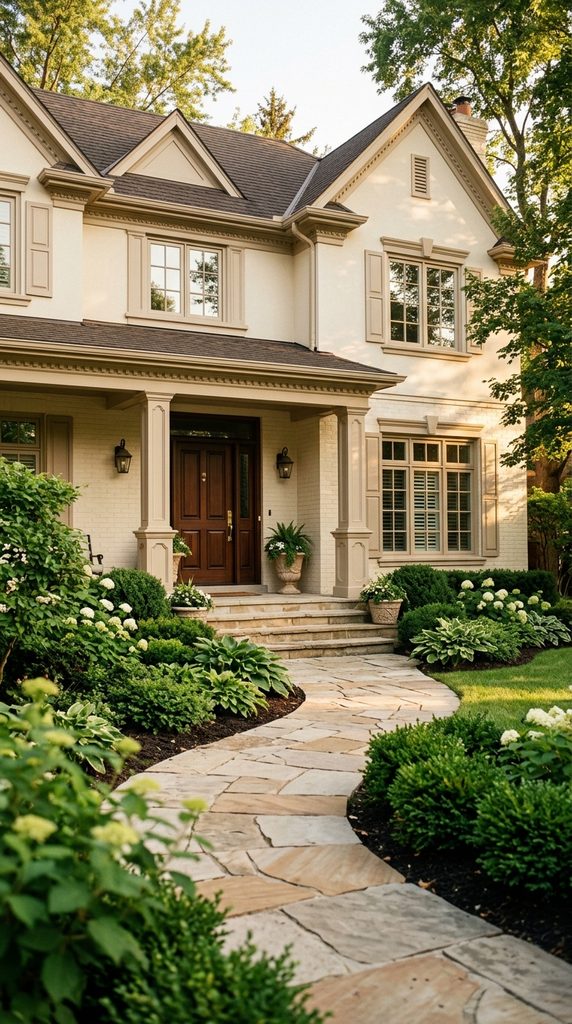
Cream and warm beige are excellent choices for homeowners who prefer a timeless and welcoming exterior. These shades create a soft, elegant appearance that complements many architectural styles.
Use cream on the main walls and beige on columns, recessed sections, or boundary walls. Dark brown doors and window frames can add depth without making the design feel too bold.
This palette also pairs beautifully with natural stone, decorative exterior tiles, and green landscaping. It is particularly suitable for homes where a warm, classic appearance is preferred over high-contrast colors.
Best for: Traditional homes, family houses, and elegant exterior designs.
Styling tip: Choose shades with compatible undertones so the cream and beige look coordinated in sunlight.
3. Light Gray and White
Light gray and white offer a balanced combination for a fresh, understated exterior. Light gray provides subtle character, while white trim creates definition around windows, doors, balconies, and rooflines.
This color scheme works well for both single-story and double-story houses. It can also make a compact exterior look neat and visually organized.
For additional contrast, incorporate black railings, a dark front door, or simple stone details. If your house has a small front garden, green plants can soften the cooler appearance of the gray paint.
Best for: Contemporary homes, minimalist exteriors, and compact urban houses.
Styling tip: Test the gray shade outdoors because natural light can make some grays appear blue or much cooler than expected.
4. Sage Green and Cream
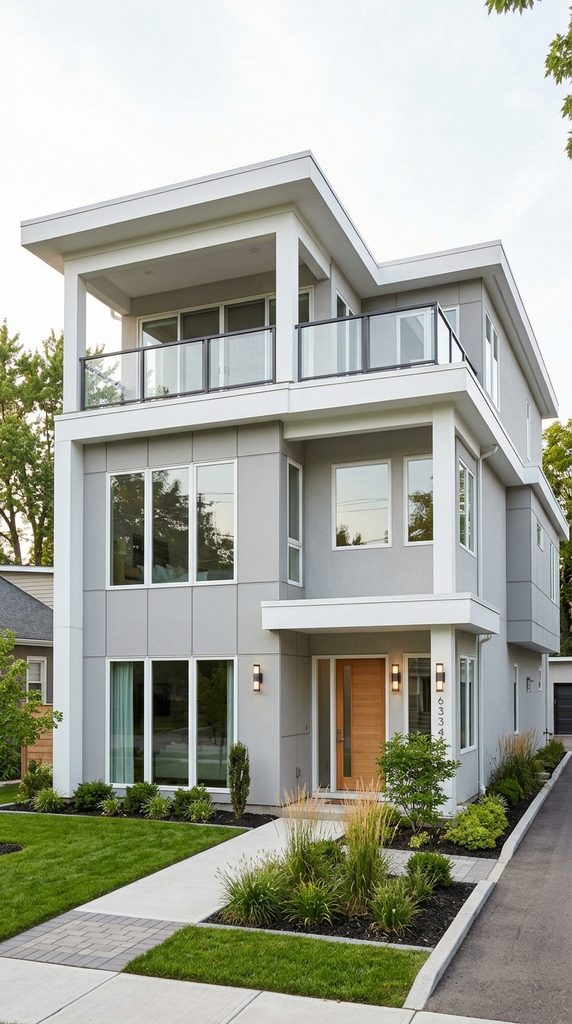
Sage green is a muted, nature-inspired shade that brings a calm and distinctive appearance to a home’s exterior. When paired with cream, it creates a soft combination that feels both modern and timeless.
Use sage green on the main walls and cream around windows, columns, or decorative borders. A natural wood or dark brown front door can add warmth to the overall design.
This combination looks particularly attractive with garden plants, stone pathways, and natural landscaping. It is also a good option for homeowners who want something different from standard white and gray exteriors.
Best for: Nature-inspired homes, modern farmhouse designs, and garden-facing houses.
Styling tip: Choose a muted sage rather than a bright green for a more sophisticated exterior.
5. Beige and Dark Brown
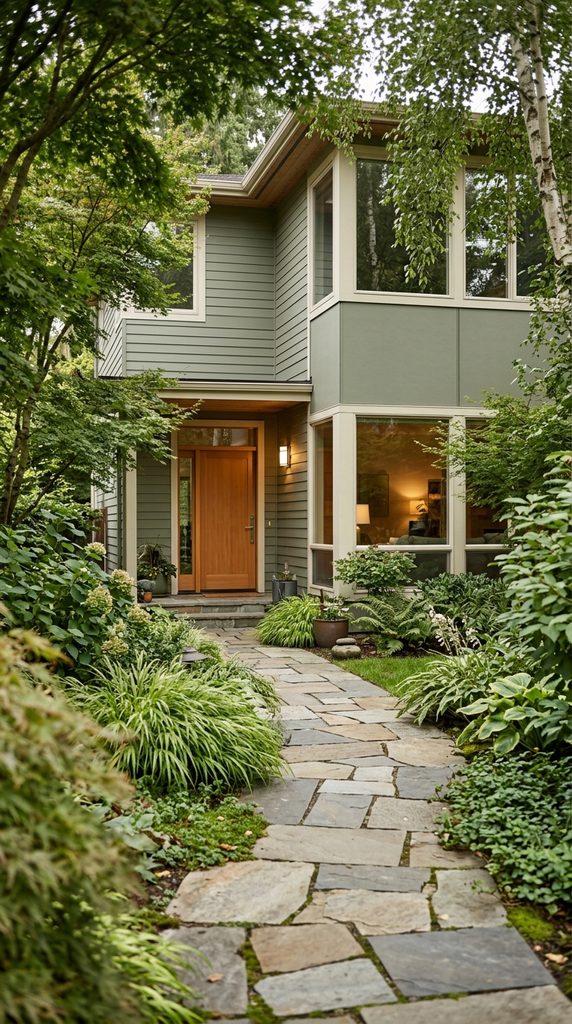
Beige and dark brown create a warm, grounded exterior with a classic appearance. The lighter beige walls provide brightness, while brown details add contrast and visual weight.
Use beige as the primary color and dark brown for the main entrance, balcony railings, window frames, or selected architectural panels. Wooden textures and stone finishes can complement the palette.
This combination works well for homes with traditional details as well as contemporary houses that use natural materials. It can also create a cohesive look when the roof, doors, and exterior fixtures already have brown tones.
Best for: Classic family homes, warm contemporary designs, and traditional architecture.
Styling tip: Use a medium beige rather than a very yellow shade if you want a more modern finish.
6. Greige and Black
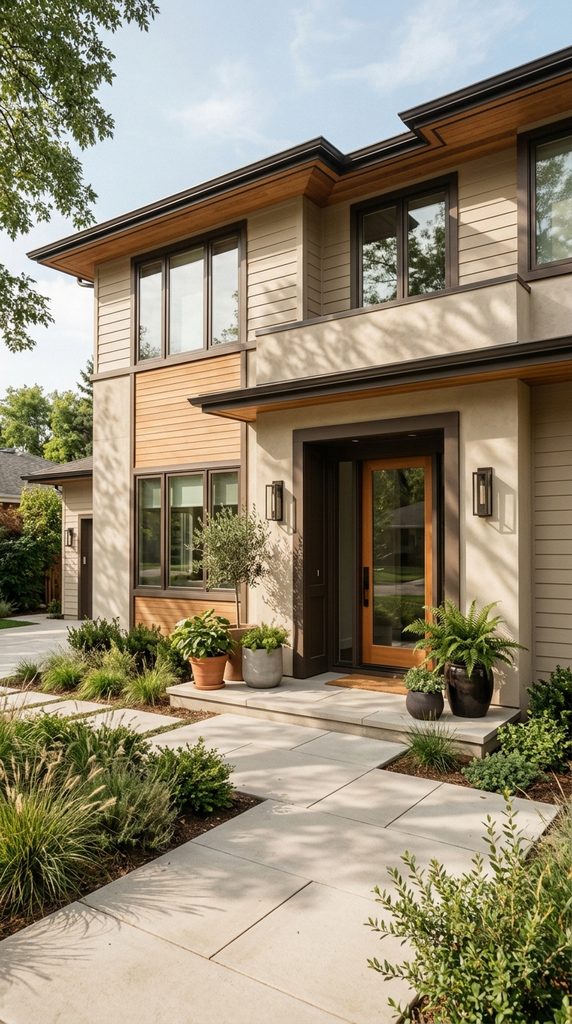
Greige, a combination of gray and beige undertones, is a stylish exterior color for homeowners who want something more distinctive than plain gray. Pairing it with black creates a sophisticated, contemporary appearance.
Use greige on the main exterior walls and black on window frames, metal railings, the front door, or a few architectural features. The result is a balanced design with subtle warmth and strong definition.
This palette looks especially attractive on houses with clean lines, large windows, and simple exterior detailing. Natural wood accents can further soften the contrast.
Best for: Modern houses, luxury-inspired exteriors, and minimalist architecture.
Styling tip: Choose a warm greige if the exterior receives strong sunlight or if you want to avoid a cold-looking finish.
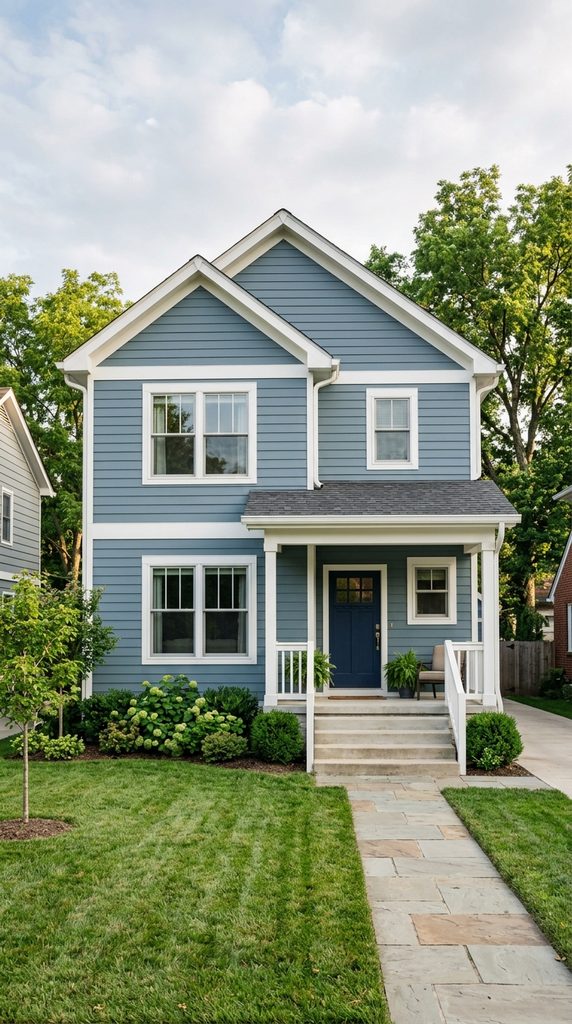
7. Dusty Blue and White
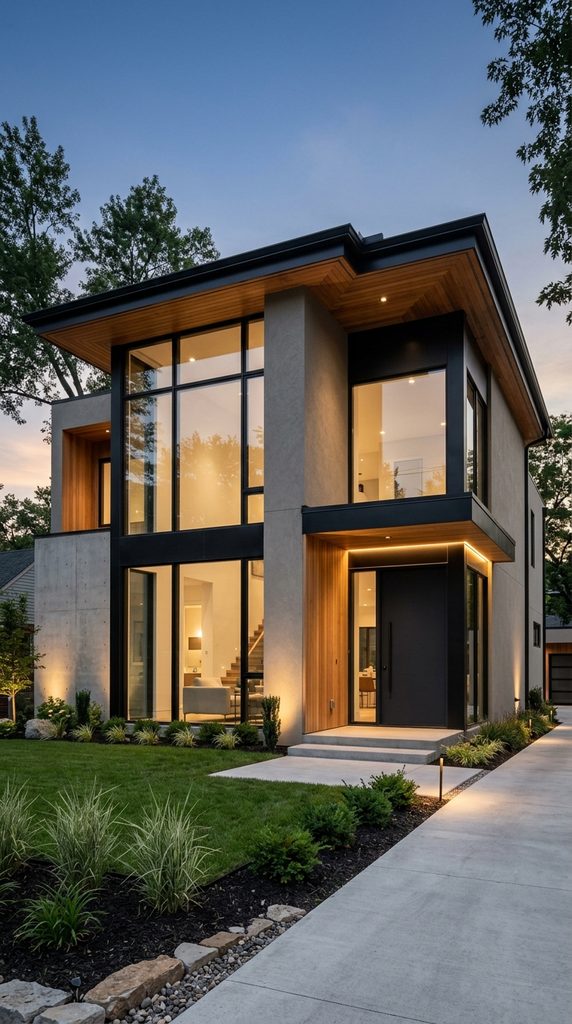
Dusty blue is a muted blue shade with soft gray undertones. It brings personality to an exterior while remaining calm and elegant.
Use dusty blue on the main walls and white around the windows, columns, and roofline. A charcoal or dark navy front door can create a more defined entrance.
This combination works particularly well with white trim, simple landscaping, and uncluttered architectural details. It can give a home a fresh appearance without relying on overly bright colors.
Best for: Contemporary family homes, cottage-style houses, and coastal-inspired exteriors.
Styling tip: Choose a muted blue with gray undertones for a refined look that is easier to coordinate with other exterior finishes.
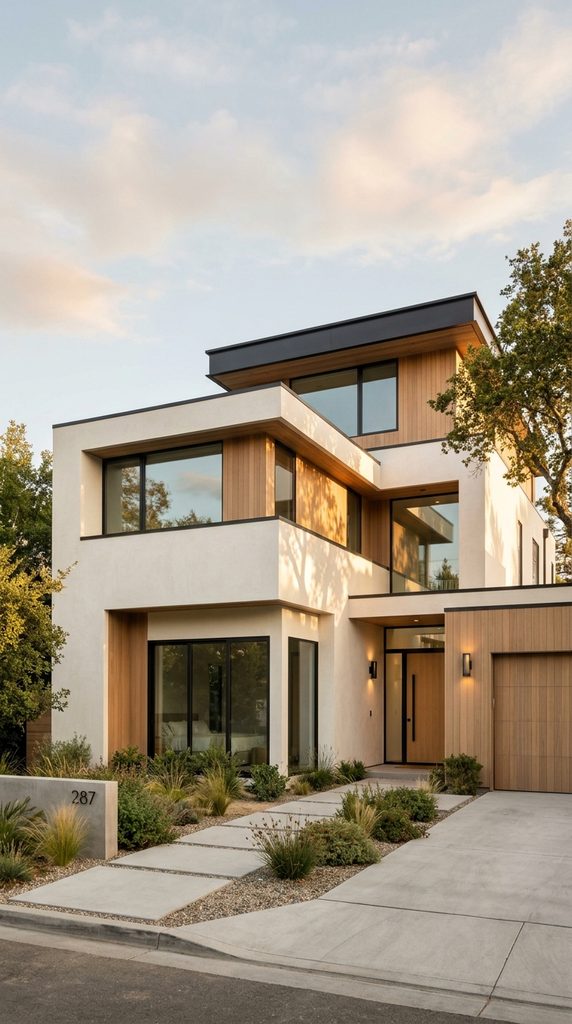
8. Warm White and Natural Wood
Warm white and natural wood create a modern exterior that feels bright, organic, and welcoming. The white paint provides a clean foundation, while wood introduces warmth and texture.
Use warm white across most exterior walls. Add wood-look panels around the entrance, balcony ceiling, porch, or selected facade sections. Black or bronze fixtures can provide additional contrast.
This combination works particularly well with minimalist architecture, simple landscaping, and large windows. If natural wood is not practical for your budget or climate, suitable wood-look materials can provide a similar visual effect.
Best for: Contemporary homes, minimalist architecture, and modern luxury-inspired designs.
Styling tip: Use wood accents in a few carefully selected areas rather than covering the entire facade.
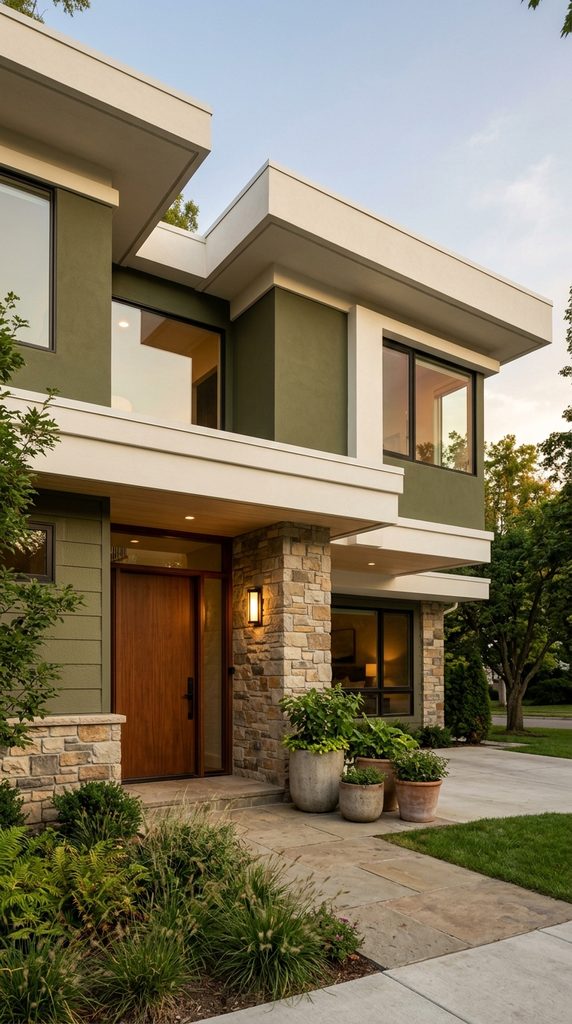
9. Olive Green and Warm White
Olive green is a rich, earthy color that adds depth and character to a home’s exterior. Paired with warm white, it creates a balanced palette that feels natural without appearing too dark.
Use olive green on the main walls or selected exterior sections, with warm white around windows, columns, and architectural borders. Natural stone and brown wood details can complement the earthy tones.
For smaller houses, consider using olive green on the entrance or a feature section while keeping the majority of the exterior light.
Best for: Earthy modern homes, nature-inspired architecture, and distinctive exterior designs.
Styling tip: Test the shade in direct sunlight and shade because olive green can appear significantly different under changing light.
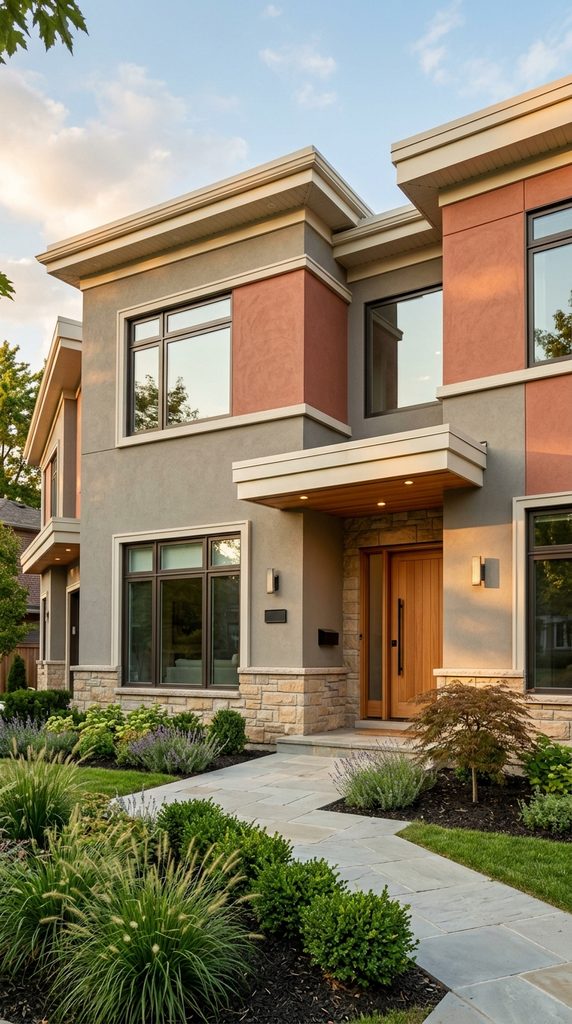
10. Greige and Terracotta
Greige and terracotta create a warm, contemporary exterior with a distinctive earthy character. Greige provides a neutral foundation, while terracotta adds a subtle clay-inspired accent.
Use greige on the main walls and terracotta on selected panels, entrance details, or decorative sections. Cream trim and natural stone can help connect the two colors.
This palette works well for modern homes that incorporate warm materials and simple architectural shapes. It can also create an inviting appearance when paired with potted plants and understated landscaping.
Best for: Mediterranean-inspired houses, modern earthy designs, and homes with natural textures.
Styling tip: Choose a muted terracotta shade rather than a bright orange-red to maintain an elegant exterior.
How to Choose the Best Exterior House Paint Colors
Before selecting paint, consider how your chosen colors will look with your home’s architecture and surroundings.
- Consider the roof color: Your exterior paint should complement the roof rather than compete with it.
- Check the natural lighting: Sunlight changes how paint appears. Test samples on different sides of the house.
- Coordinate fixed materials: Consider existing tiles, stone, brick, metal railings, doors, and window frames.
- Use a simple palette: One main color, one trim color, and an optional accent shade are often enough.
- Think about maintenance: Dust, rain, and pollution can affect the appearance of exterior paint. Choose a suitable quality and finish for your local conditions.
- Select exterior-grade paint: Use paint formulated for your wall surface and climate, following the manufacturer’s preparation instructions.
- Test before painting: Apply sample patches and observe them in morning, midday, and evening light.
For homes in hot, sunny climates, lighter exterior shades can be a practical option because they generally absorb less solar heat than darker shades. However, the overall result also depends on insulation, wall construction, and other building features.
Final Thoughts
The right exterior house paint color can make your home look more modern, welcoming, and visually appealing. White and charcoal gray create crisp contrast, cream and beige provide timeless warmth, and sage green or dusty blue introduce a softer, nature-inspired style.
If you are unsure which palette to choose, start with a neutral main color and add a complementary trim or accent shade. Consider your roof, doors, surrounding landscape, and architectural details before making a final decision.
With careful color selection and good-quality exterior paint, you can give your house a fresh appearance that suits your personal style and remains attractive for years to come.
Leave a Reply