

A neutral living room can feel calm, elegant, and welcoming without looking boring. Soft shades such as cream, beige, taupe, warm white, gray, and natural brown create a flexible foundation that works with many interior styles.
The beauty of neutral living room decor is its versatility. You can create a modern minimalist space, a cozy farmhouse-inspired room, or a warm organic interior simply by changing textures, furniture, and accessories.
If you’re looking for inspiration to refresh your space, these 10 neutral living room ideas can help you create a comfortable and timeless home.
1. Layer Different Shades of Beige
Beige is one of the easiest colors to use when creating a neutral living room. Instead of using one shade throughout the space, combine several tones such as sand, cream, taupe, and warm beige.
Use lighter shades on the walls and larger furniture, then introduce slightly darker tones through cushions, rugs, curtains, and accessories.
Layering similar colors creates depth while keeping the overall appearance soft and cohesive.
Styling tip: Mix warm and cool neutral shades carefully so the room feels coordinated rather than flat.

2. Create a Cream and White Living Room
A cream-and-white color palette can make a living room feel bright, peaceful, and sophisticated. Use warm white walls with cream furniture and soft ivory textiles to prevent the room from looking too stark.
Natural wood furniture can add warmth, while subtle black or bronze details can provide contrast.
This combination works particularly well in modern, Scandinavian, minimalist, and contemporary interiors.

3. Add Warm Wooden Furniture
Natural wood is an excellent way to bring warmth into a neutral living room. A wooden coffee table, sideboard, console, or accent chair can add organic texture without introducing a strong color.
Light oak creates an airy Scandinavian feel, while walnut and darker woods provide a richer appearance.
Pair wooden furniture with cream upholstery and woven accessories for a comfortable, natural atmosphere.

4. Mix Plenty of Textures
One of the most important principles of neutral decorating is using texture. When your color palette is simple, different materials prevent the room from feeling flat.
Combine materials such as:
- Linen
- Cotton
- Wool
- Bouclé
- Wood
- Woven fibers
- Ceramic
- Stone
For example, pair a soft linen sofa with a chunky throw, woven basket, textured rug, and ceramic vase.
The colors can remain subtle while the textures create visual interest.

5. Choose a Neutral Textured Rug
A rug can anchor your furniture and add comfort underfoot. For a neutral living room, consider a cream, beige, ivory, or soft gray rug with subtle texture.
Instead of choosing an extremely plain rug, look for gentle patterns or variations in the weave. These details add depth without disrupting the neutral color scheme.
Make sure the rug is large enough to visually connect the main seating pieces.

6. Add Greenery for a Natural Accent
Neutral interiors can benefit from a touch of greenery. Plants introduce a natural color without overpowering the calm palette.
Place a tall plant beside the sofa, add smaller plants to shelves, or use fresh branches in a large ceramic vase.
Choose simple planters in white, beige, stone, or natural materials to maintain the neutral aesthetic.
Greenery is especially effective in organic modern, minimalist, and Scandinavian living rooms.

7. Use Black Accents for Contrast
A neutral living room doesn’t have to be completely soft and light. Small black accents can provide definition and make the overall design more sophisticated.
Consider black picture frames, table legs, lighting fixtures, curtain rods, or decorative objects.
The key is to use black sparingly. A few carefully placed accents can create balance without overpowering the neutral color palette.

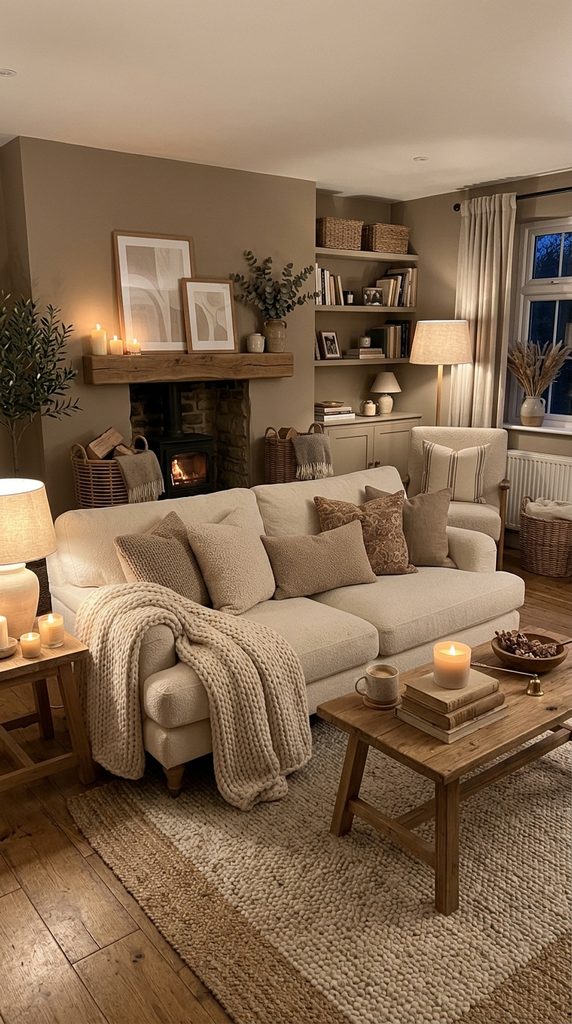
8. Create a Cozy Neutral Living Room
Neutral colors are perfect for creating a comfortable and relaxing living room. Layer a soft sofa with cushions, throws, and a plush rug to create a welcoming environment.
Add warm lamps and candles for an inviting evening atmosphere. Woven baskets can provide practical storage while adding another layer of texture.
Keep the colors within a soft range of cream, beige, taupe, and warm brown for a cozy appearance.
9. Try Modern Minimalist Neutral Decor
If you prefer a cleaner look, embrace minimalist neutral decorating. Choose furniture with simple silhouettes and keep decorative accessories to a minimum.
A streamlined sofa, simple coffee table, large neutral artwork, and one or two sculptural objects can be enough.
Leave some open space between furniture and accessories. This helps the room feel calm and uncluttered.
Minimalist design doesn’t mean the room needs to feel empty. Focus on quality, proportion, and carefully selected materials.

10. Add Neutral Artwork and Decorative Accessories
Artwork is a simple way to personalize a neutral living room. Choose abstract prints, line drawings, photography, or textured artwork in shades that complement the rest of the room.
You can create a gallery wall or use one large piece as a focal point above the sofa.
Complete the look with ceramic vases, coffee-table books, candles, baskets, and sculptural objects. Keep the accessories within your chosen color palette for a cohesive finish.

How to Make a Neutral Living Room Feel Interesting
A common concern with neutral decorating is that the room may feel plain. The solution is to focus on texture, shape, layering, and contrast rather than adding lots of bright colors.
Combine smooth and rough materials, soft and structured furniture, and light and dark neutral shades. Different shapes can also make the room more visually appealing.
For example, pair a rectangular coffee table with a round mirror, curved chair, organic vase, and linear artwork.
Lighting is another important element. Layer overhead lighting with floor lamps, table lamps, and accent lighting to create warmth and depth.
Best Neutral Colors for Living Rooms
There are many colors that can work within a neutral living room palette. Popular options include:
- Warm white
- Ivory
- Cream
- Beige
- Sand
- Taupe
- Greige
- Soft gray
- Warm brown
- Natural wood tones
Choose your colors according to the natural light in your room. A space with limited sunlight may benefit from warmer neutrals, while a bright room can handle cooler shades.
Before painting, test samples on the wall and observe them at different times of day because lighting can significantly change how a color appears.
Final Thoughts
A neutral living room can be stylish, comfortable, and timeless when you use more than just a single color. Layer soft neutral shades, natural materials, cozy textiles, greenery, subtle contrast, and thoughtful accessories to create depth and personality.
Whether you prefer modern minimalism, Scandinavian simplicity, farmhouse warmth, or organic contemporary design, neutral decor provides a versatile foundation that can evolve with your style.
The best neutral living room is not necessarily the one with the fewest colors. It is the one where every shade, texture, and material works together to create a calm and inviting space.
Leave a Reply