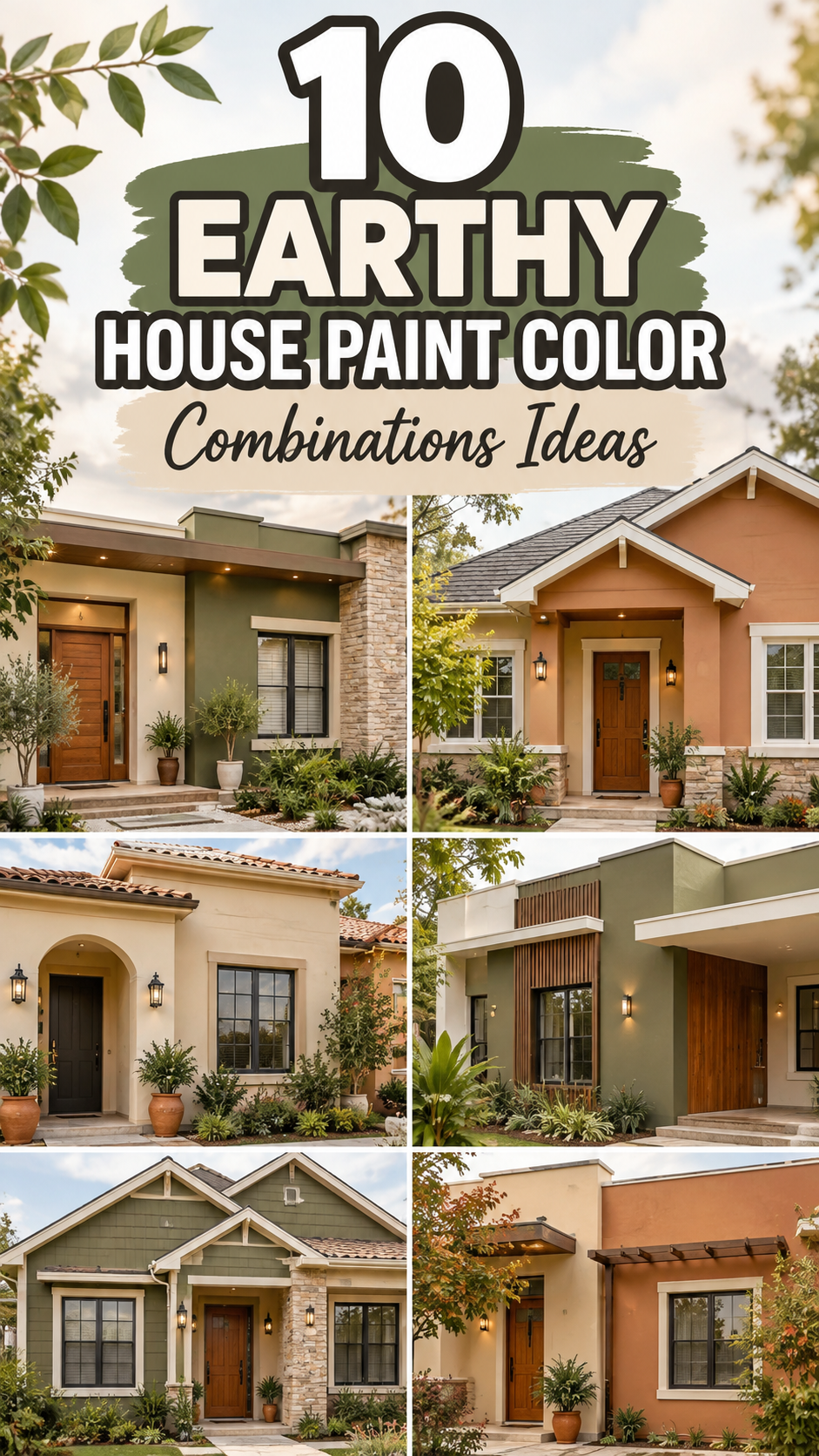
Earthy house paint colors are a beautiful choice for homeowners who want a warm, natural, and welcoming exterior. Inspired by nature, these colors include sandy beige, terracotta, olive green, warm brown, muted taupe, and soft cream. They create a timeless appearance that complements gardens, stone pathways, wooden doors, and many architectural styles.
Whether you have a small house, a modern farmhouse, a traditional home, or a cozy cottage, earthy paint combinations can enhance your home’s exterior without making it look overly colorful or complicated.
In this guide, discover 10 earthy house paint color combinations ideas to inspire your next exterior makeover.
1. Beige and Warm White
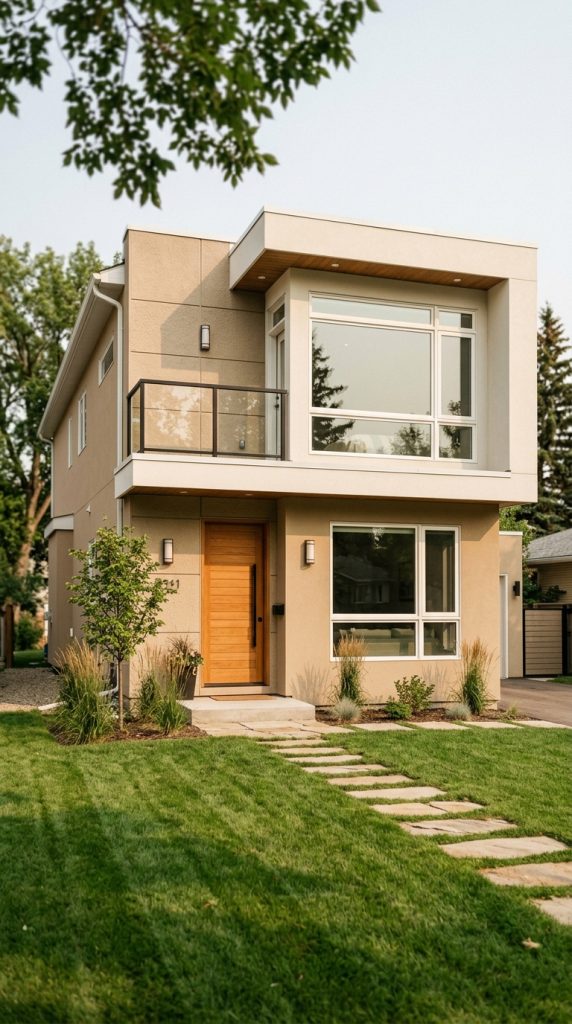
Beige and warm white create a soft, elegant exterior that feels bright and inviting. Beige adds natural warmth to the walls, while warm white highlights windows, doors, and architectural details.
This combination works beautifully for small houses, modern homes, and traditional properties. It also pairs well with brown roof tiles, stone pathways, and green landscaping.
Best combination: Sandy beige walls, warm white trim, and a natural wood front door.
Styling tip: Choose a light beige shade to maintain an open appearance, especially if your house has a small facade.
2. Terracotta and Cream
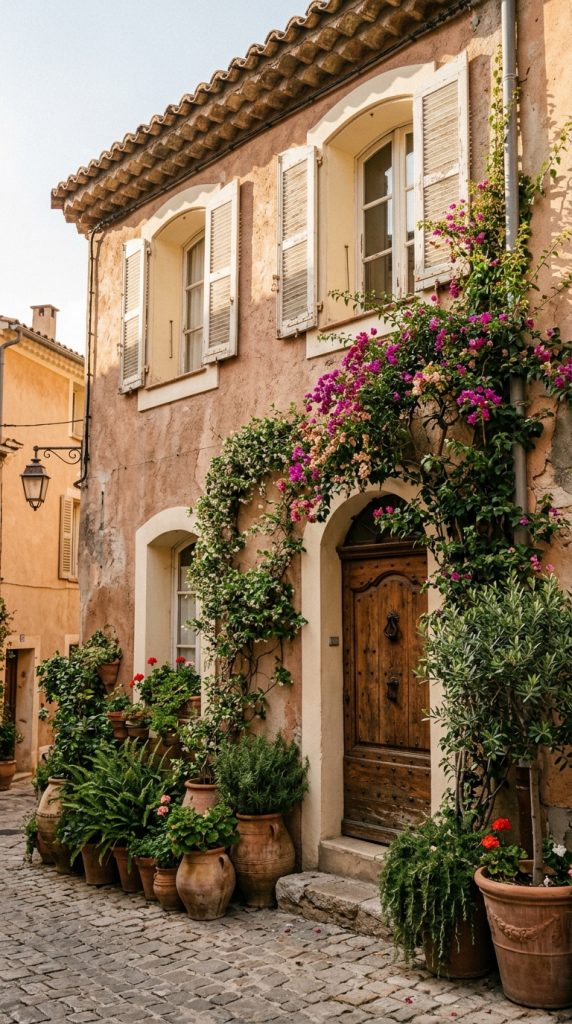
Terracotta brings the warm, rustic beauty of natural clay to a home’s exterior. When paired with cream, it creates a welcoming Mediterranean-inspired look with plenty of character.
This color palette is especially attractive on cottages, Spanish-style homes, and houses with tiled roofs or textured walls.
Best combination: Muted terracotta walls, cream trim, and a dark wooden entrance.
Styling tip: Use a softer, earthy terracotta rather than a bright orange-red shade for a more timeless finish.
3. Sage Green and Beige
Sage green and beige create a calming combination inspired by natural landscapes. The muted green adds freshness, while beige introduces warmth and softness.
This palette works well for farmhouse homes, modern cottages, and houses surrounded by trees or garden plants.
Best combination: Sage green walls, beige trim, and a medium-brown wooden door.
Styling tip: Add simple shrubs, clay planters, and natural stone accents to complement the earthy colors.
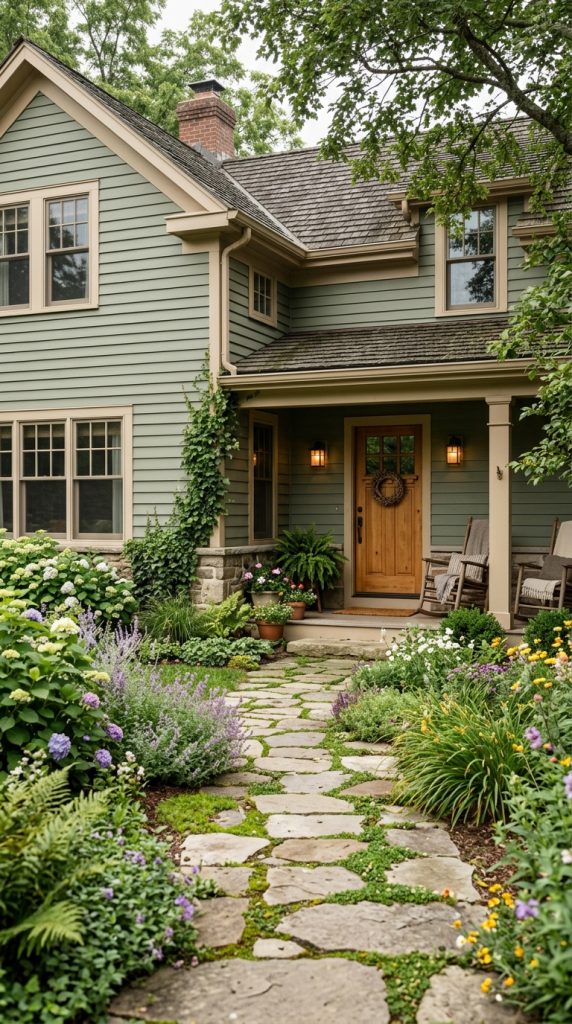
4. Olive Green and Cream
Olive green provides a deeper, richer earthy appearance than sage green. Its subtle yellow and brown undertones give a house a grounded, organic character, while cream creates a gentle contrast.
This combination is ideal for rustic homes, contemporary farmhouses, and traditional houses with natural materials.
Best combination: Muted olive green walls, cream window trim, and a warm wood front door.
Styling tip: Use cream on important architectural details to keep the darker green from dominating the exterior.
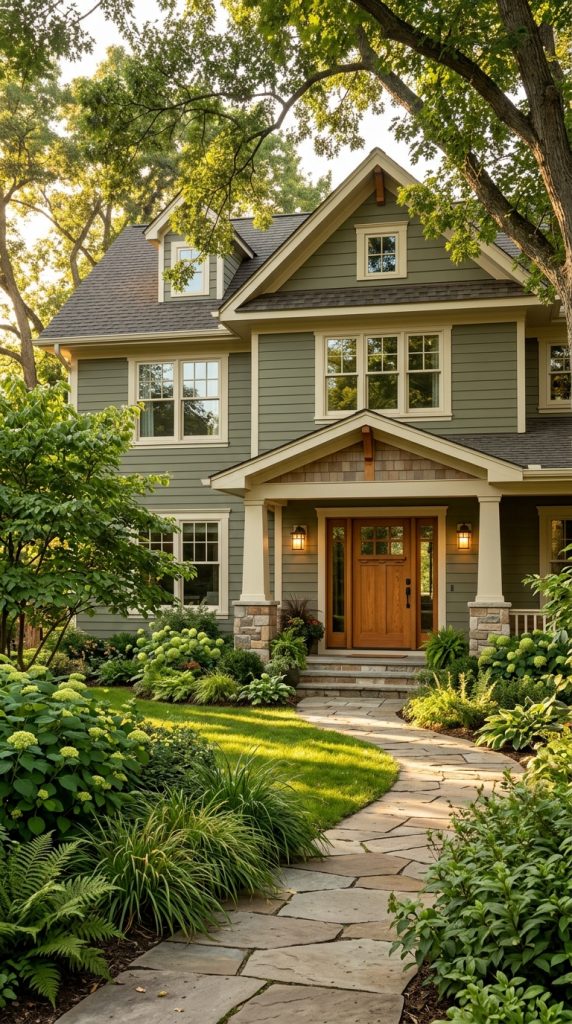
5. Taupe and Chocolate Brown
Taupe and chocolate brown create a sophisticated, natural color scheme. Taupe offers a balanced mixture of gray and brown, while chocolate brown adds depth to doors, shutters, and selected exterior features.
This combination suits modern homes, traditional houses, and properties with stone or wood details.
Best combination: Light taupe walls, chocolate brown accents, and cream window frames.
Styling tip: Keep the main wall color relatively light and reserve the darkest brown for smaller features.
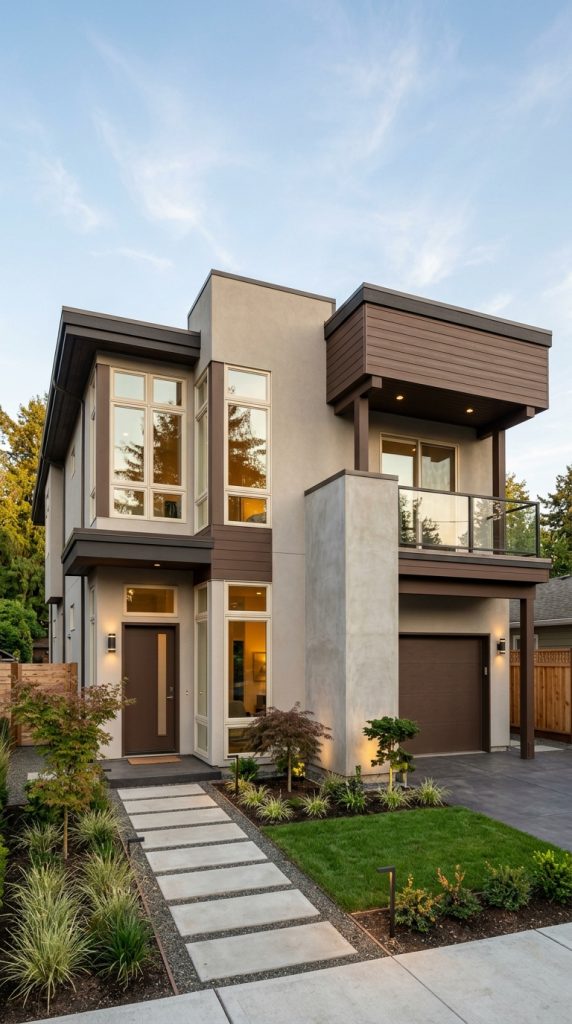
6. Sand Beige and Terracotta
Sand beige and terracotta are inspired by desert landscapes and sun-warmed earth. The sandy neutral keeps the exterior bright, while terracotta creates a warm focal point.
This combination looks beautiful on Mediterranean-style homes, compact houses, and rustic cottages.
Best combination: Sand beige walls, terracotta accent sections, and a dark brown front door.
Styling tip: Use terracotta around the entrance or on a small architectural section if you prefer a subtle, balanced look.
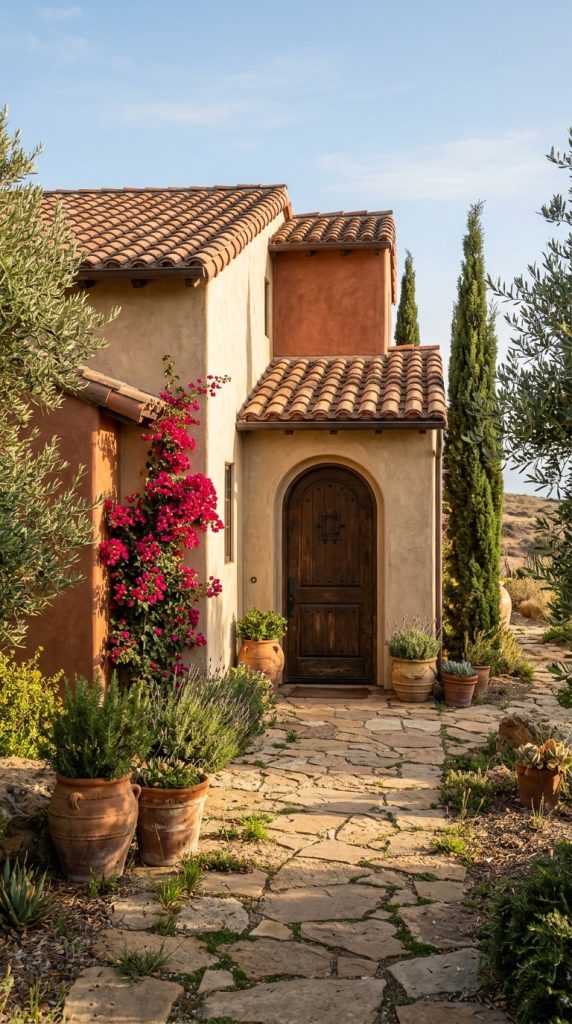
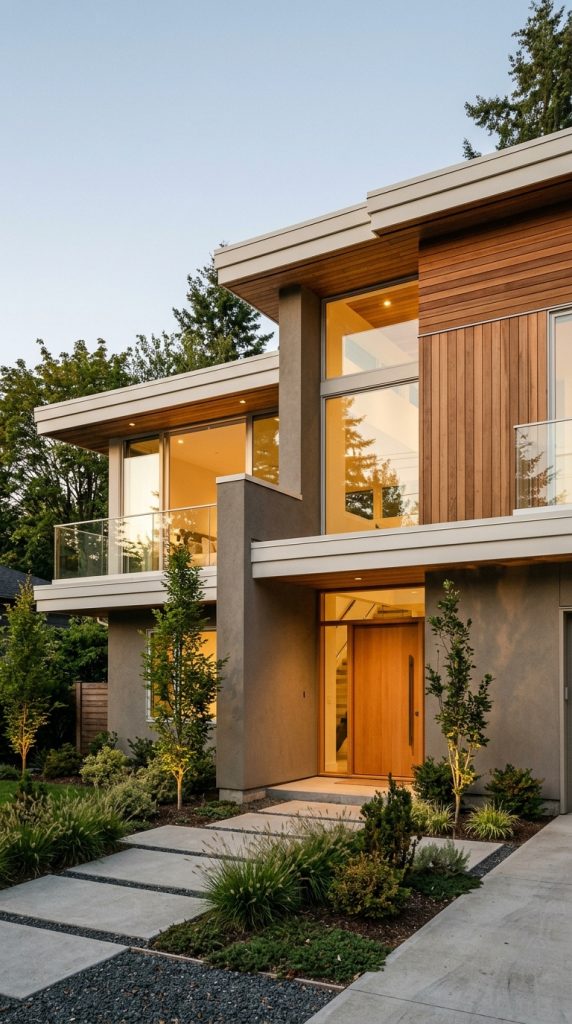
7. Warm Gray and Natural Brown
Warm gray and natural brown combine contemporary style with earthy warmth. Unlike cool gray, warm gray has subtle beige undertones that work beautifully with wood, stone, and greenery.
This palette is suitable for modern houses, minimalist exteriors, and homes with simple architectural lines.
Best combination: Warm gray walls, natural brown wooden accents, and off-white trim.
Styling tip: Coordinate the brown accents with the roof, front door, or porch ceiling for a cohesive appearance.
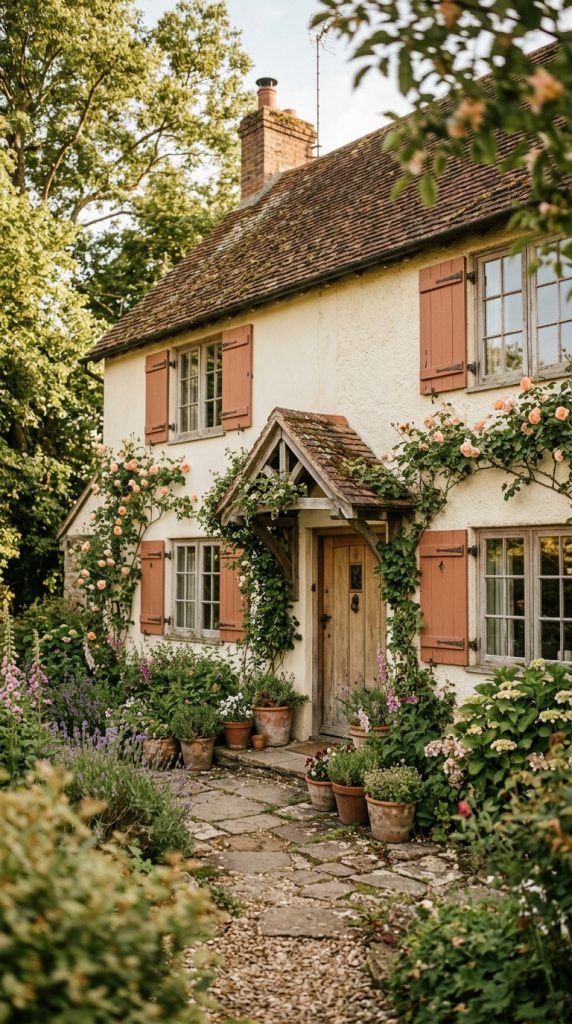
8. Cream and Muted Rust
Cream and muted rust create a distinctive exterior inspired by autumn leaves and natural clay. Cream provides a bright background, while rust introduces warmth and character.
This palette works especially well for cottages, farmhouse-style homes, and houses with traditional details.
Best combination: Cream walls, muted rust accents, and a medium-brown wooden entrance.
Styling tip: Use rust as an accent color around the front door, shutters, or selected architectural features instead of covering every wall.
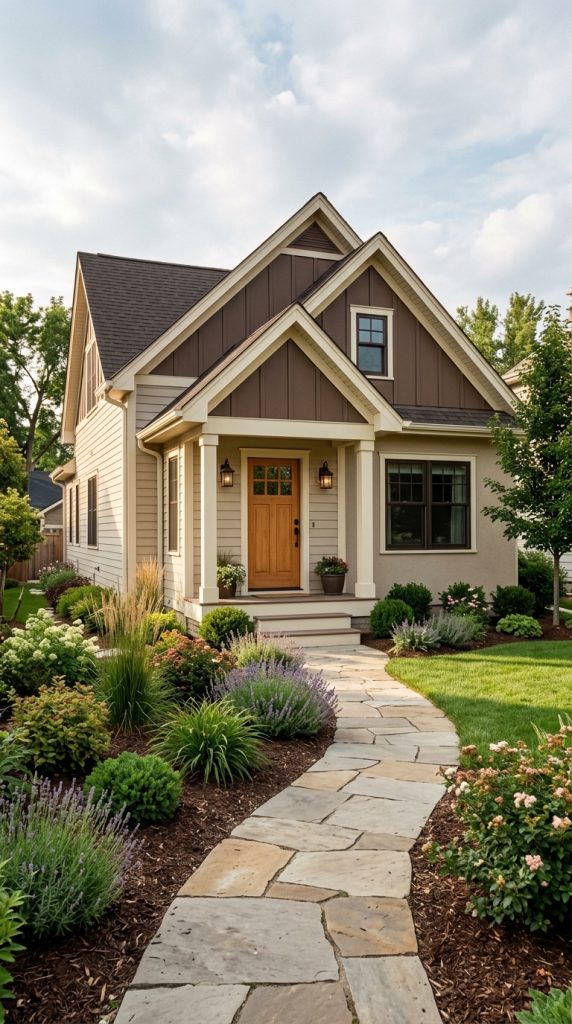
9. Mocha Brown and Beige
Mocha brown and beige create a warm, grounded appearance that feels elegant and inviting. Beige balances the deeper brown, while mocha adds richness and visual depth.
This combination is ideal for homes with wooden doors, stone features, and warm-toned roofing.
Best combination: Beige walls, mocha brown accents, and cream trim.
Styling tip: Avoid using very dark brown across the entire exterior of a small house. Lighter beige walls can help maintain a balanced look.
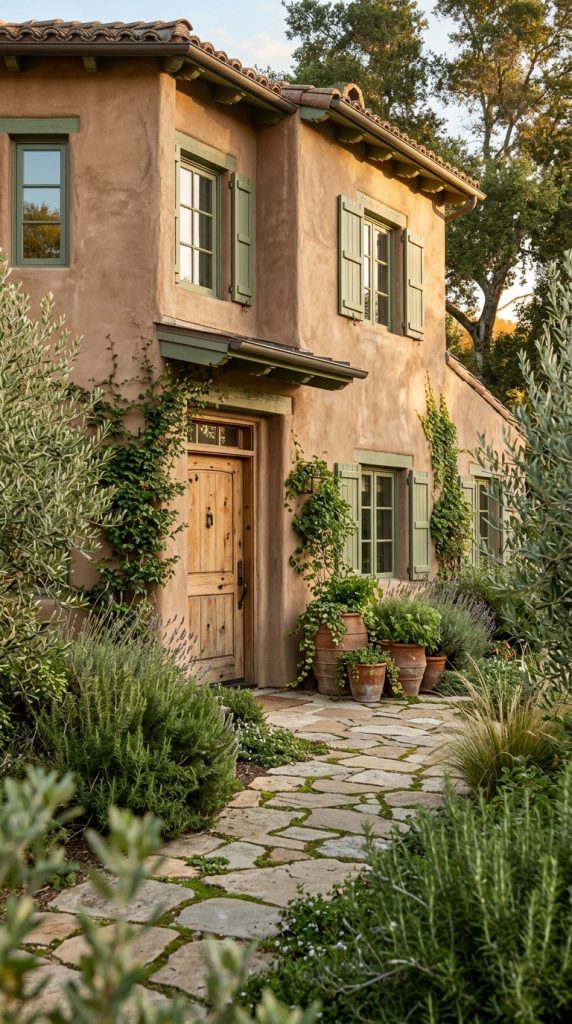
10. Dusty Clay and Olive Green
Dusty clay and olive green create an earthy, nature-inspired palette with a distinctive appearance. The clay shade brings a warm reddish-brown tone, while olive green adds depth and an organic feel.
This combination is ideal for rustic cottages, Mediterranean-inspired houses, and homes with landscaped gardens.
Best combination: Dusty clay walls, olive green accents, and a natural wood front door.
Styling tip: Balance these two colors with cream or warm white trim if the exterior needs additional brightness.
How to Choose the Best Earthy Paint Colors for Your House
Choosing the right earthy colors involves more than selecting two attractive shades. Your roof, exterior materials, natural lighting, and surrounding landscape all affect how the final combination will look.
Here are some helpful tips:
- Consider your house size: Lighter earthy shades such as cream and sandy beige can help a small house look brighter.
- Coordinate with the roof: Brown, charcoal, and terracotta roofs may work well with different earthy wall colors.
- Choose complementary undertones: Pair warm colors with other warm shades, or test combinations carefully if mixing warm and cool undertones.
- Use wood and stone thoughtfully: Natural materials can enhance earthy paint colors without requiring additional accent shades.
- Test samples outdoors: Observe paint samples in direct sunlight and shade before choosing the final colors.
- Keep the palette simple: A main wall color, a trim color, and one accent shade are usually sufficient.
- Select suitable exterior paint: Choose a durable finish designed for your wall material and local weather conditions.
Final Thoughts
Earthy house paint colors offer a timeless way to make your home look warm, natural, and stylish. Beige and warm white create a bright, classic appearance, while terracotta and cream add rustic charm. Sage green, olive green, taupe, and brown are excellent options for homeowners who prefer a calm, nature-inspired exterior.
For the best result, choose colors that complement your roof, windows, front door, and landscaping. A carefully balanced earthy palette can give your house a beautiful exterior that feels welcoming and remains appealing for years.
Leave a Reply