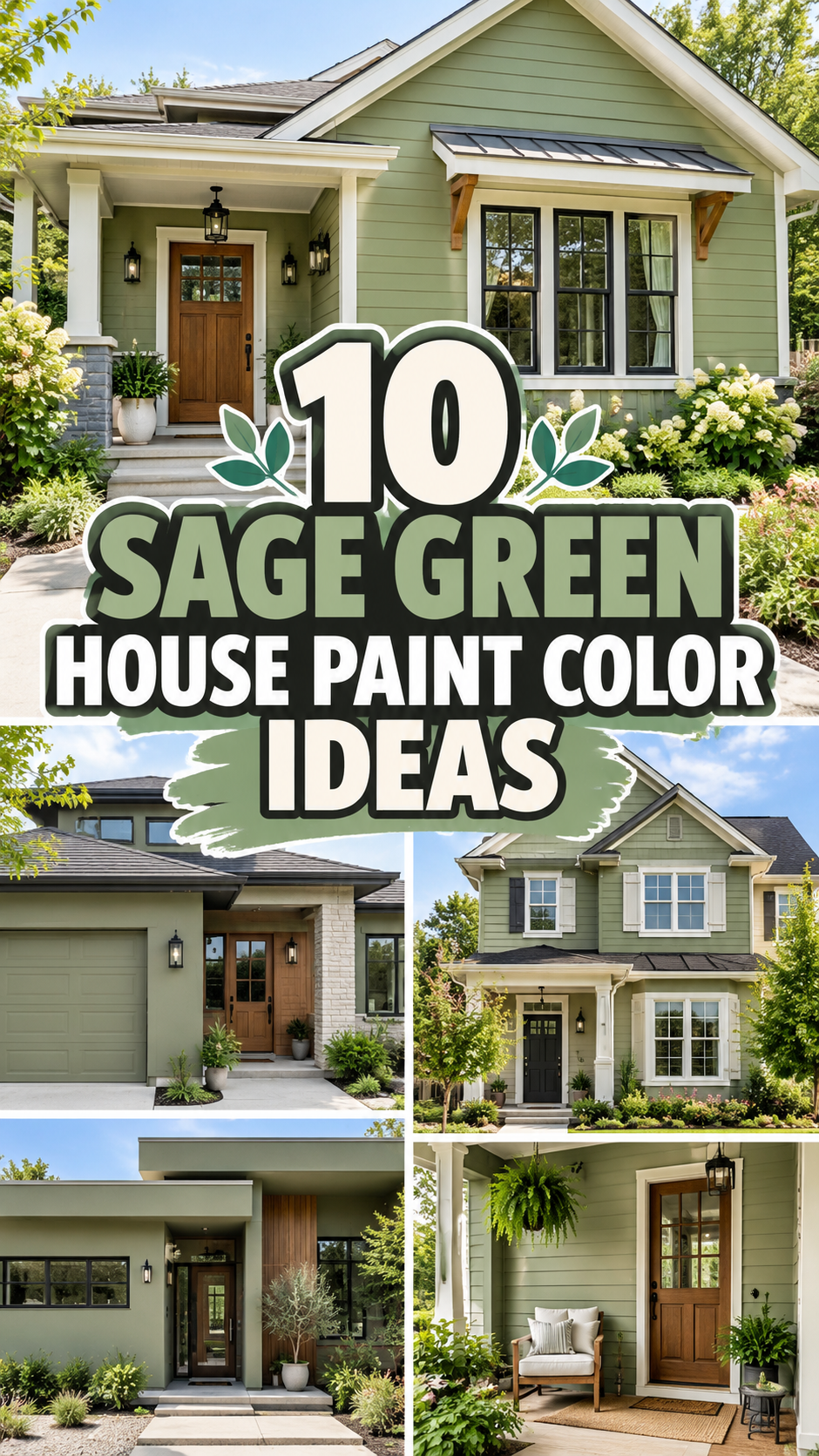
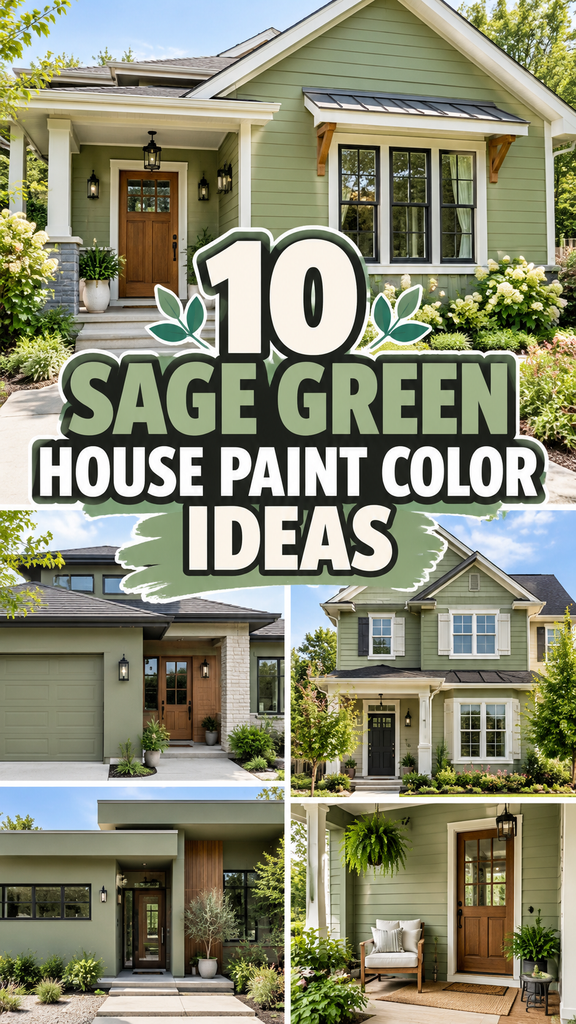
Sage green has become a beautiful choice for homeowners who want a calm, natural, and stylish home exterior. This muted green shade combines subtle gray undertones with a soft earthy appearance, making it suitable for modern houses, cozy cottages, traditional homes, and farmhouse-style properties.
One of the best things about sage green is its versatility. It pairs beautifully with white trim, cream details, natural wood, charcoal accents, and stone finishes. Whether you want a modern exterior or a charming cottage-inspired look, the right sage green combination can give your home a fresh and welcoming appearance.
In this guide, explore 10 sage green house paint color ideas to inspire your next exterior makeover.
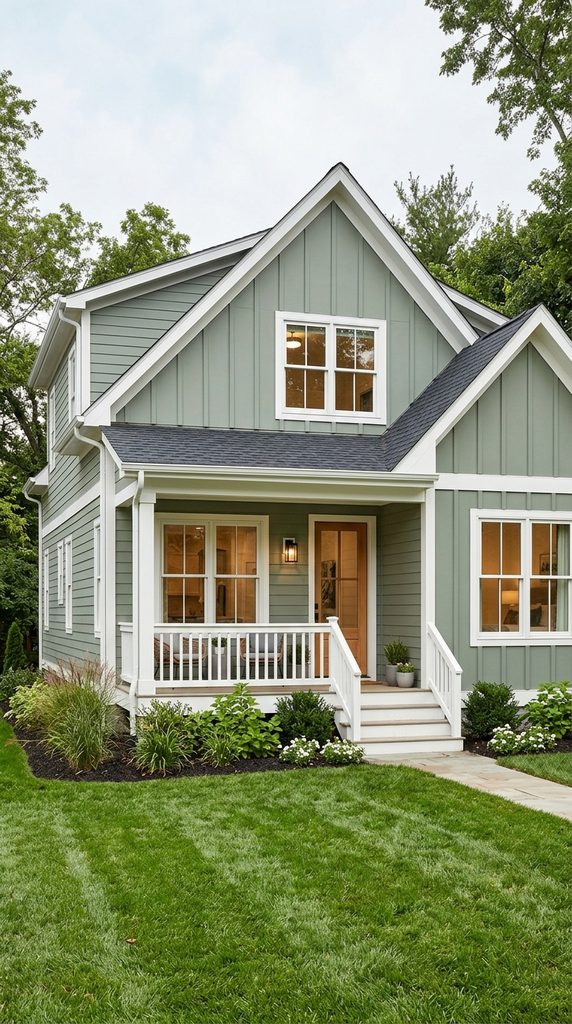
1. Sage Green and White Exterior
Sage green paired with white is a timeless combination that creates a clean and balanced exterior. The soft green walls add natural warmth, while white trim brightens the windows, doors, and architectural details.
This palette works beautifully for small houses, suburban homes, and classic cottages.
Best combination: Sage green walls, crisp white trim, and a white porch railing.
Styling tip: Use a muted sage shade to maintain an elegant appearance rather than choosing a green that looks too bright.
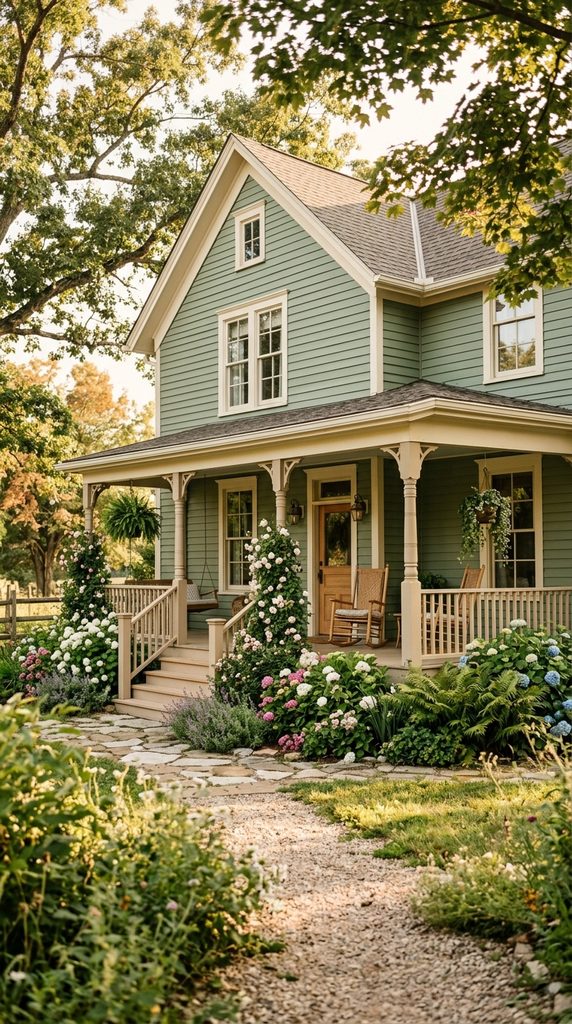
2. Sage Green and Cream House
Cream accents create a softer and warmer look than pure white. When paired with sage green, they give a house a cozy, welcoming appearance that feels both traditional and sophisticated.
This combination is ideal for cottages, farmhouse homes, and houses with classic architectural details.
Best combination: Sage green siding, cream trim, and a warm beige front porch.
Styling tip: Add flowering plants and natural stone pathways to complement the earthy color palette.
3. Sage Green and Natural Wood
Natural wood accents add texture and warmth to a sage green exterior. Wooden front doors, porch ceilings, shutters, and decorative beams create a beautiful contrast with the muted green walls.
This style works particularly well for modern cottages and nature-inspired homes.
Best combination: Sage green walls, a natural oak door, and wooden porch accents.
Styling tip: Choose wood tones that coordinate with your roof and outdoor flooring for a cohesive design.

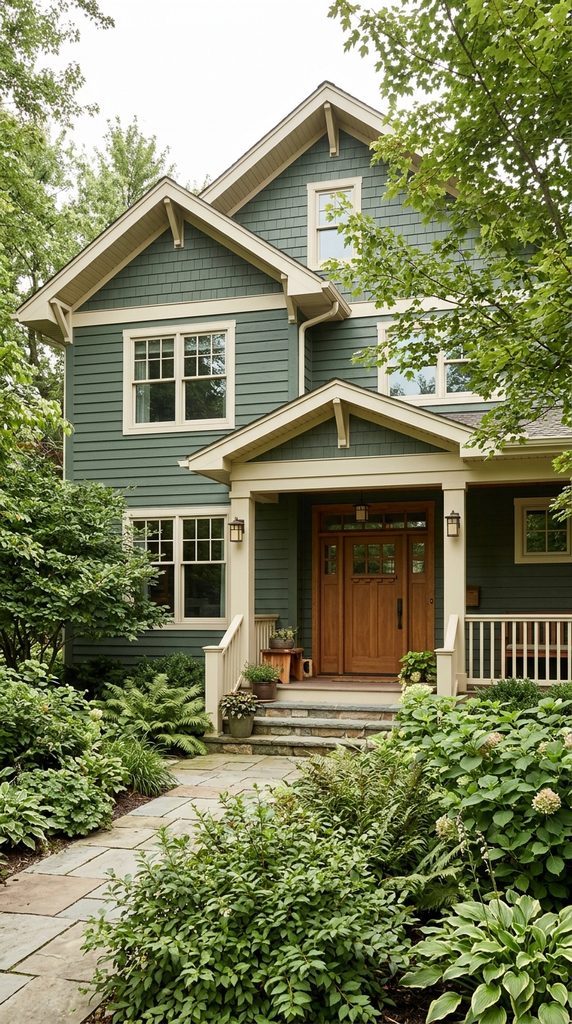
4. Dark Sage Green House
Dark sage green offers a richer and more dramatic appearance while maintaining the natural character of traditional sage. It works especially well on larger exterior surfaces when balanced with lighter architectural details.
Pair it with cream trim, warm wood, and simple landscaping to keep the overall design inviting.
Best combination: Dark sage green walls, cream window trim, and a medium-brown front door.
Styling tip: Test the shade outdoors before painting the entire house because darker greens can appear different in direct sunlight and shade.
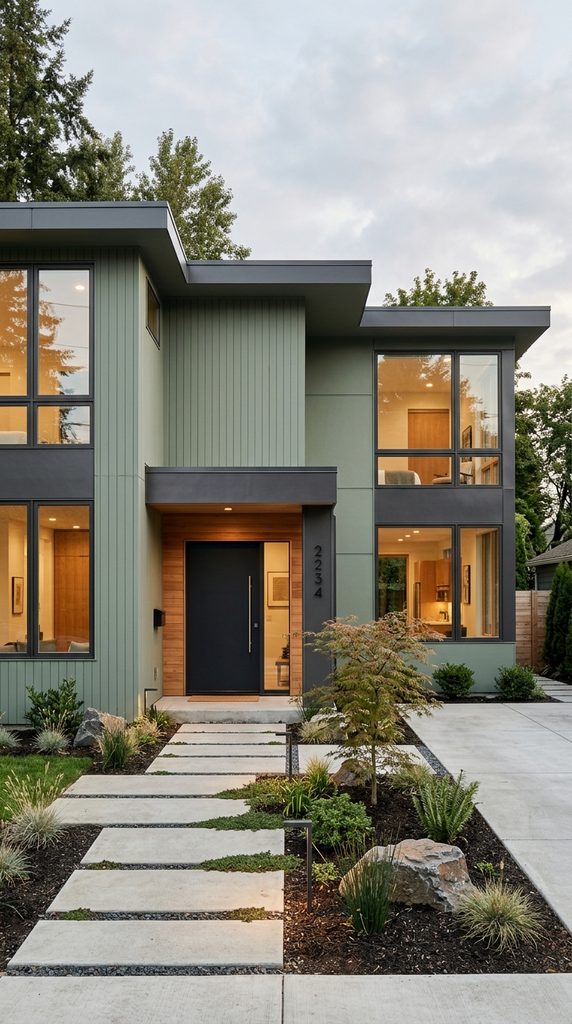
5. Sage Green and Charcoal Accents
For a modern exterior, combine sage green walls with charcoal-colored window frames, gutters, or a front door. The dark accents create definition without taking away from the soft, natural green.
This palette is particularly attractive on contemporary homes with clean lines and simple architecture.
Best combination: Sage green walls, charcoal window frames, and a charcoal front door.
Styling tip: Keep charcoal limited to selected features so the house retains a bright and balanced appearance.
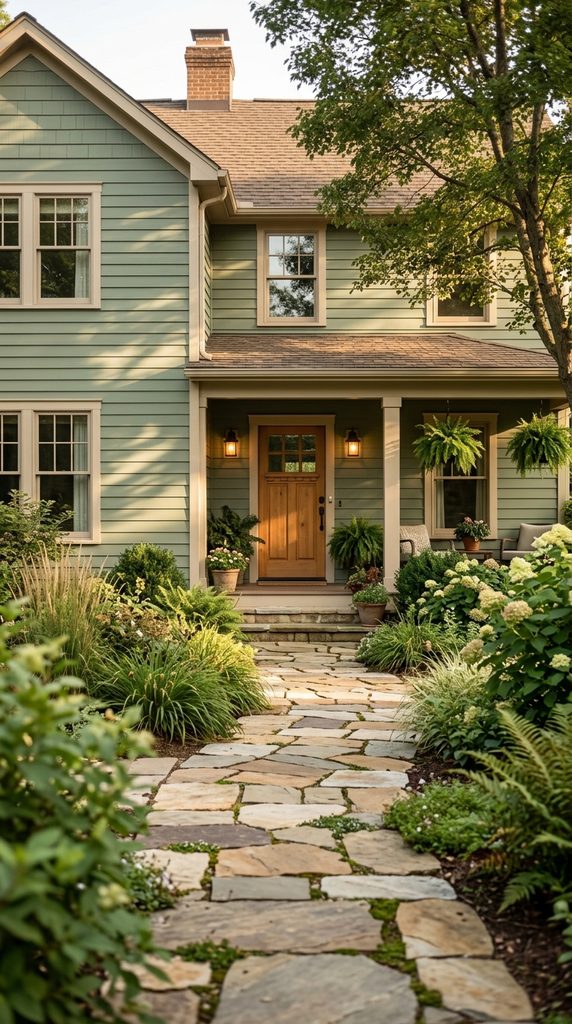
6. Sage Green and Beige Combination
Sage green and beige create a warm, earthy color scheme that feels understated and elegant. Beige can be used on trim, porch columns, garage doors, or selected exterior sections.
This combination is suitable for traditional houses, modern farmhouses, and homes surrounded by gardens.
Best combination: Sage green walls, light beige trim, and a brown roof.
Styling tip: Choose a light beige with warm undertones to complement the natural softness of sage green.
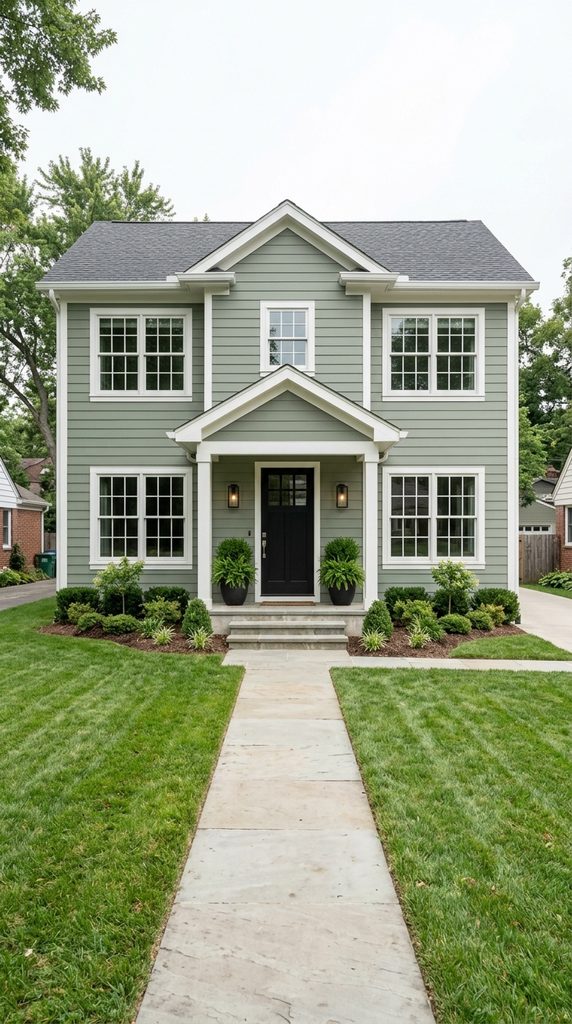
7. Sage Green with Black Front Door
A black front door adds a striking focal point to a sage green house. The contrast creates a polished, contemporary look while allowing the exterior walls to remain soft and natural.
Black exterior lights, house numbers, and simple metal fixtures can complete the look.
Best combination: Sage green walls, white trim, and a matte black front door.
Styling tip: Add a few black accents rather than using too many dark elements throughout the exterior.
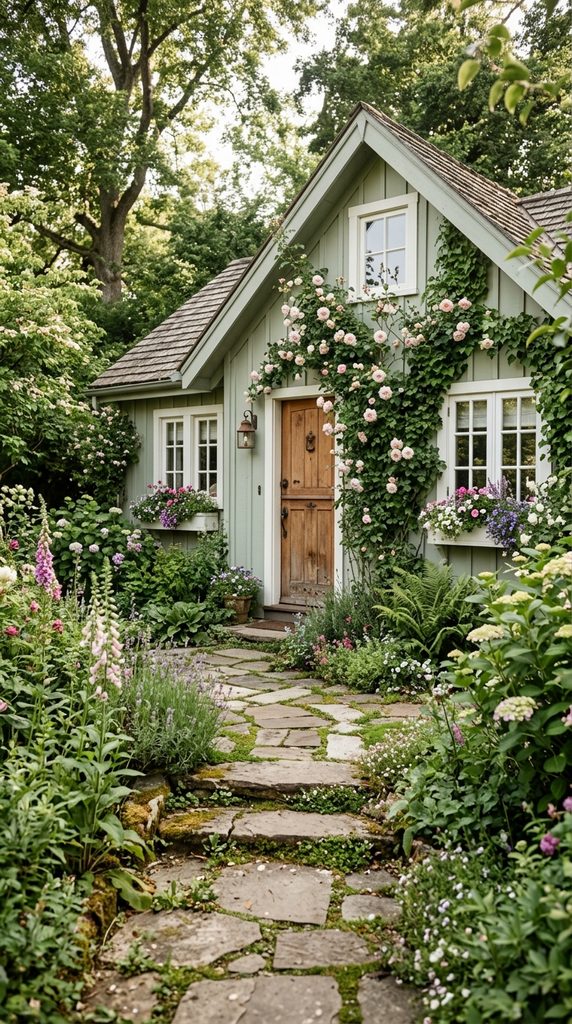
8. Light Sage Green Cottage
Light sage green is an excellent option for homeowners who want a delicate, airy exterior. Its pale, muted appearance works beautifully with white windows, simple shutters, and cottage-style landscaping.
This shade is especially suitable for smaller houses because it maintains a light appearance while adding more personality than a standard neutral.
Best combination: Light sage green walls, white trim, and a natural wood door.
Styling tip: Use climbing plants, potted greenery, and a simple stone pathway to enhance the cottage-inspired style.
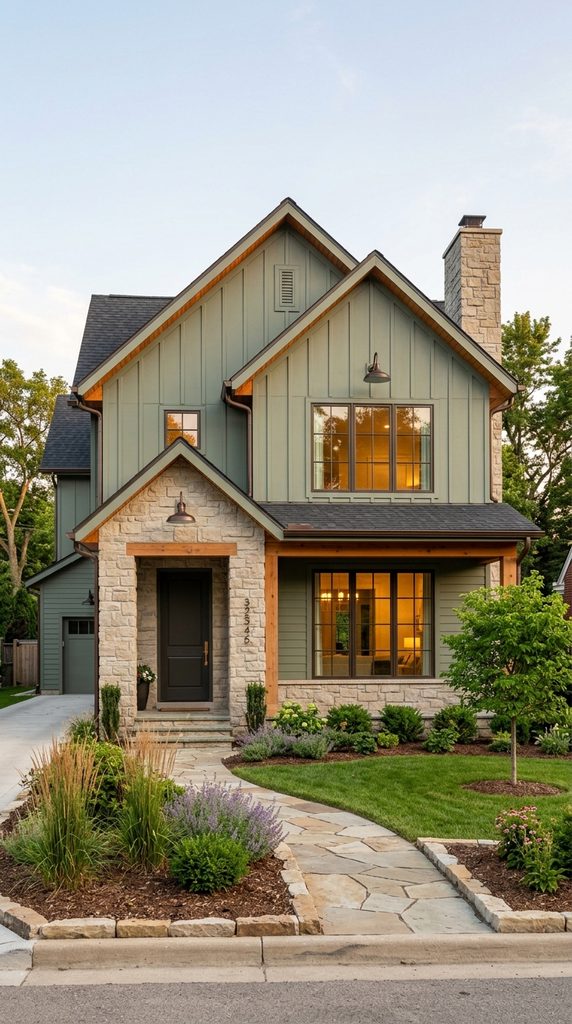
9. Sage Green and Stone Exterior
Combining sage green paint with natural stone creates a textured, organic appearance. Stone can be used around the entrance, on the lower portion of exterior walls, or on decorative columns.
This pairing works well for rustic homes, modern farmhouses, and properties with natural landscaping.
Best combination: Sage green siding, beige-gray stone accents, and dark bronze fixtures.
Styling tip: Choose stone colors that share similar warm or cool undertones with your selected green paint.
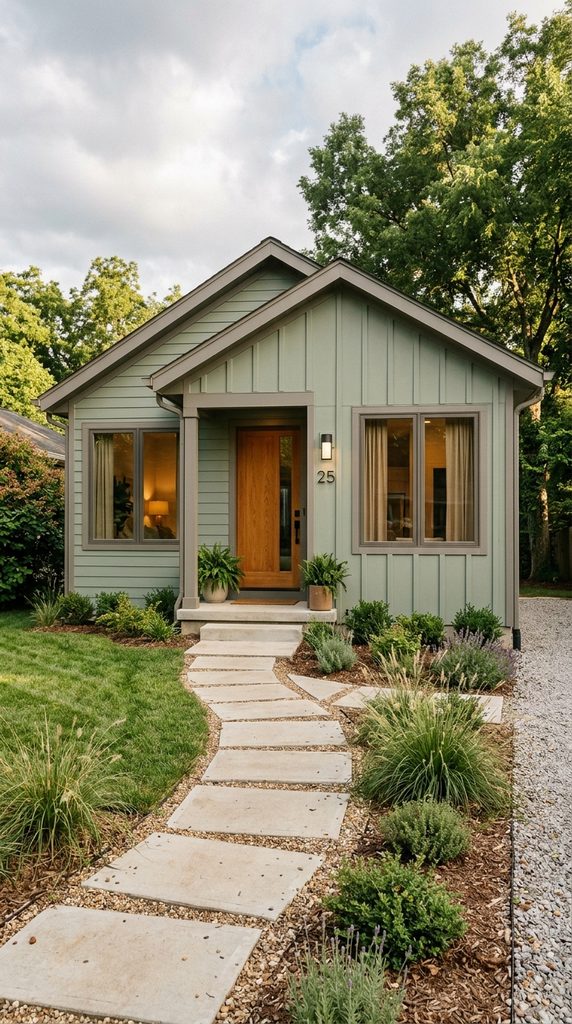
10. Sage Green and Warm Gray
Warm gray provides a subtle contrast that gives sage green exteriors a sophisticated, contemporary finish. Unlike very dark gray, a lighter warm gray can preserve the softness of the overall color palette.
Use gray on trim, garage doors, exterior panels, or other selected features.
Best combination: Sage green walls, warm gray trim, and a medium-brown wooden door.
Styling tip: Compare paint samples in natural light to ensure the gray does not appear too blue or too dark beside the green.
How to Choose the Best Sage Green Paint for Your House
Before selecting a sage green paint color, consider the architecture of your home and the surrounding environment. Different sage shades can appear gray, green, or even slightly blue depending on the lighting and nearby colors.
Here are a few practical tips:
- Consider the lighting: Light sage works well for bright, airy exteriors, while deeper sage adds richness and definition.
- Coordinate with the roof: Brown, charcoal, and some gray roofs can complement sage green beautifully.
- Choose complementary trim: White and cream create a classic look, while charcoal offers a more modern contrast.
- Test sample colors: Paint small patches on different exterior walls and observe them at different times of day.
- Use exterior-grade paint: Select paint suitable for your wall material and local weather conditions.
- Keep the color palette simple: A main wall color, a trim color, and one accent color are usually enough for a balanced design.
Final Thoughts
Sage green is a versatile house paint color that can make an exterior look peaceful, welcoming, and stylish. From light sage cottages to darker modern homes, this natural shade works with a wide range of architectural styles.
For a classic appearance, pair sage green with white or cream. For a warmer finish, add natural wood and beige details. If you prefer a contemporary look, choose charcoal accents or a black front door.
The best combination is one that complements your roof, natural lighting, and exterior materials while reflecting your preferred style.
Leave a Reply