

Shelves are more than just practical storage. With the right arrangement, they can become an attractive feature that adds personality, texture, and warmth to any room. Whether you are decorating built-in shelves, floating shelves, a bookcase, or a small wall display, thoughtful styling can make the space feel polished without looking overcrowded.
The best shelf styling ideas combine useful items with decorative pieces. Books, plants, artwork, baskets, ceramics, candles, and personal objects can all work together to create a balanced display.
If your shelves currently look empty, messy, or uninspiring, these 10 shelf decorating ideas can help you create a stylish arrangement that suits your home.
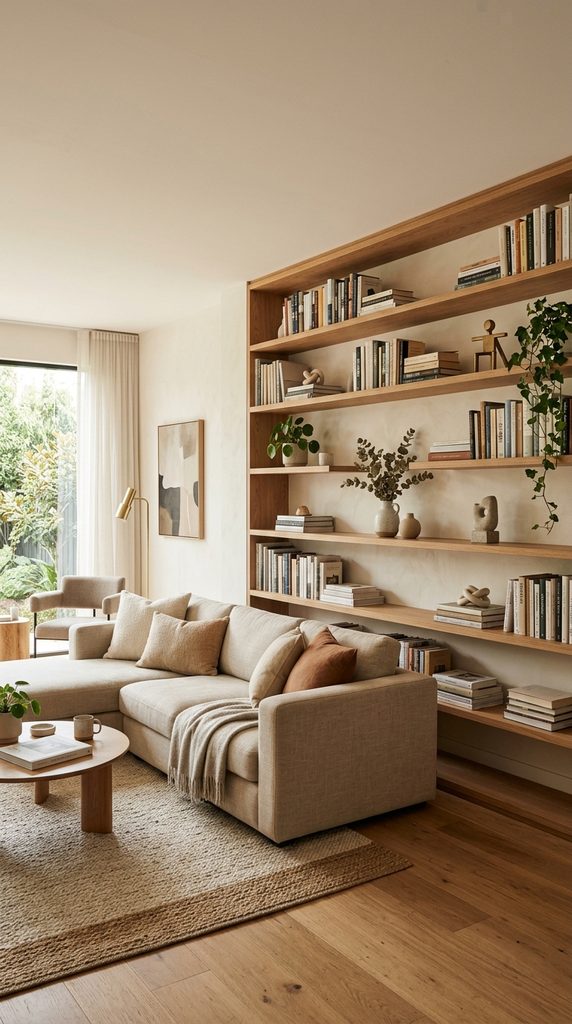
1. Layer Books Horizontally and Vertically
Books are one of the easiest ways to add height and structure to shelves. Instead of placing every book upright, combine vertical rows with small horizontal stacks.
Place a decorative object or small plant on top of a horizontal stack to create another visual layer.
Choose books with colors that complement your room rather than focusing only on matching covers. Neutral books work especially well for minimalist interiors, while colorful covers can add personality to eclectic spaces.
Styling tip: Leave small gaps between groups of books so the shelves don’t feel too crowded.
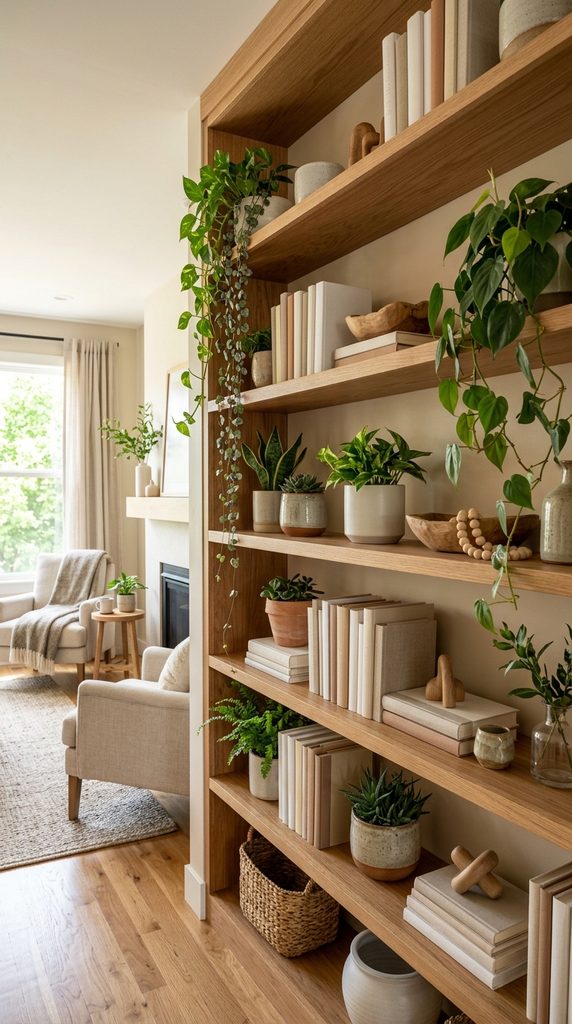
2. Add Greenery and Indoor Plants
Plants can instantly bring life to a shelf display. Small potted plants, trailing vines, succulents, and faux greenery can soften the straight lines of shelves.
Place taller plants on lower shelves and trailing varieties where they can naturally hang over the edge.
Use ceramic, terracotta, or woven planters to add additional texture. Make sure any real plant is suitable for the available light and conditions.
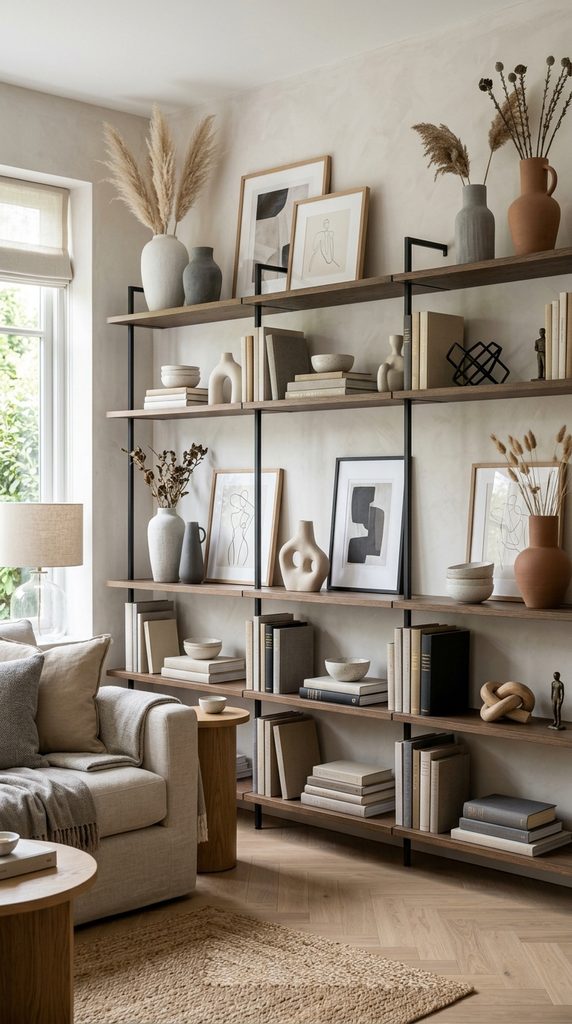
3. Mix Different Heights and Shapes
One of the secrets to attractive shelf styling is variation. If every object has the same height and shape, the arrangement can look flat.
Combine tall vases, medium-sized frames, short bowls, small sculptures, and books to create visual movement.
Think about creating a simple high-low-high or tall-medium-small rhythm across each shelf.
You don’t need to fill every space. Empty areas help individual objects stand out.
4. Use Decorative Baskets for Storage
Baskets are ideal for combining storage with style. Place woven baskets on lower shelves to hide blankets, magazines, toys, office supplies, or other everyday items.
Natural materials such as rattan, seagrass, and wicker can add warmth to neutral interiors.
For a more coordinated look, use baskets with similar colors or textures while varying their sizes.
This idea works particularly well for living rooms, bedrooms, home offices, and entryways.

5. Create a Neutral Shelf Display
A neutral shelf arrangement can make a room feel calm and sophisticated. Use shades such as cream, beige, white, warm gray, natural wood, and soft brown.
Combine ceramic vases, neutral books, framed artwork, woven objects, and small plants.
The key to keeping a neutral display interesting is texture. Mix smooth ceramics with rougher woven materials, wood, glass, and textiles.
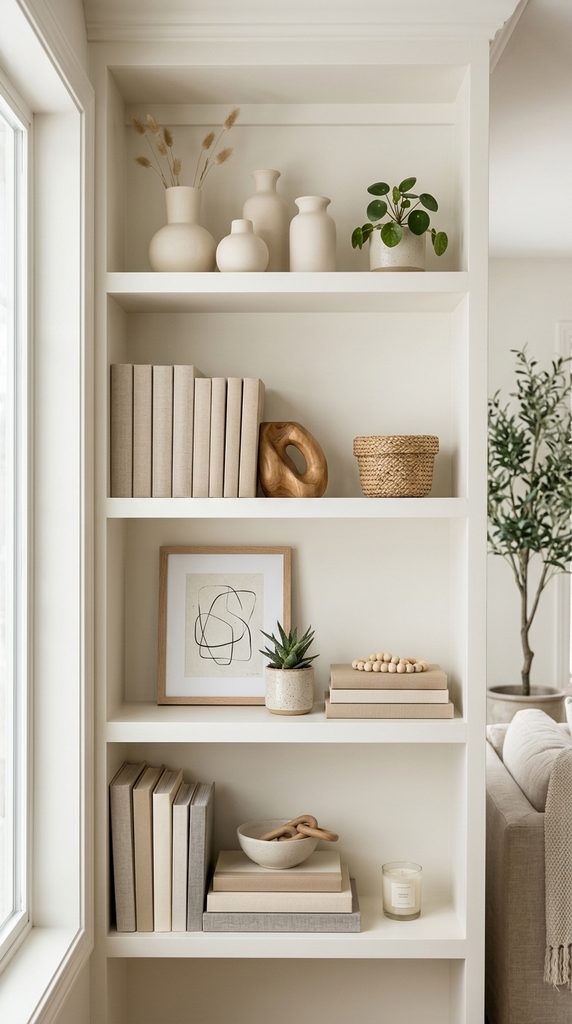
6. Add Framed Artwork and Photos
Framed artwork can give shelves a more personal appearance. Instead of hanging every frame on the wall, lean some artwork against the back of the shelf.
Layer a smaller frame in front of a larger one to create depth. You can use family photographs, abstract prints, botanical illustrations, or artwork that reflects your interests.
Mixing artwork with books and decorative objects prevents the shelves from looking like a traditional picture display.
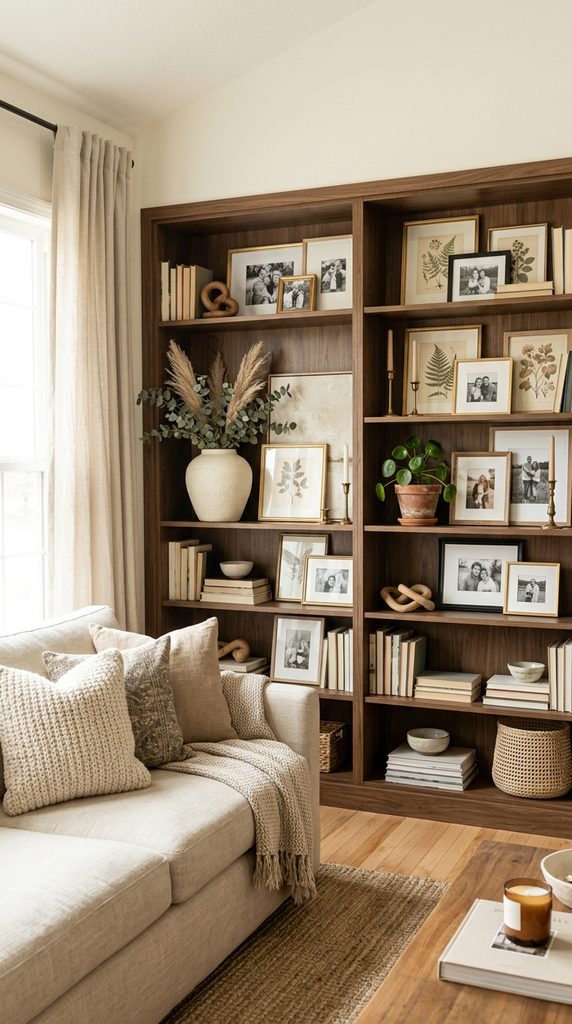
7. Style Shelves with Ceramics
Handmade ceramics can add character and texture to a shelf. Vases, bowls, pitchers, sculptures, and small pottery pieces can all become attractive decorative accents.
Group ceramics in different shapes and sizes rather than placing similar pieces next to one another.
For a cohesive appearance, choose pieces within a related color palette. Neutral ceramics are especially versatile and can work with modern, farmhouse, Scandinavian, and organic interiors.
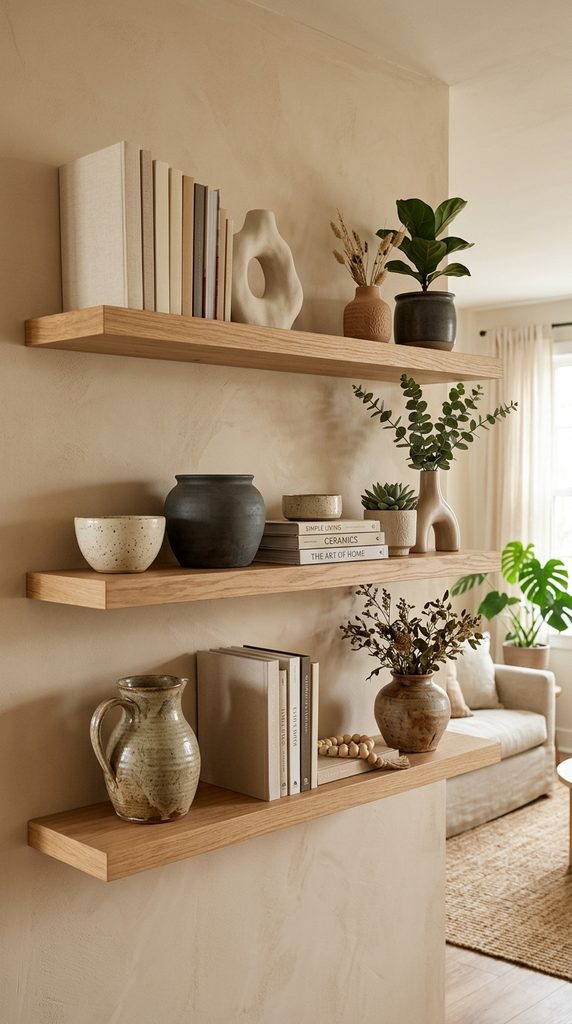
8. Create an Eclectic Shelf Display
If you prefer a collected and personal style, mix different types of objects. Combine books, vintage accessories, artwork, plants, ceramics, candles, baskets, and meaningful souvenirs.
The display doesn’t need to look perfectly symmetrical. Instead, focus on creating balance through color, scale, and texture.
Choose a few repeating elements to connect the arrangement. For example, natural wood, greenery, and warm neutral tones can tie together otherwise different objects.
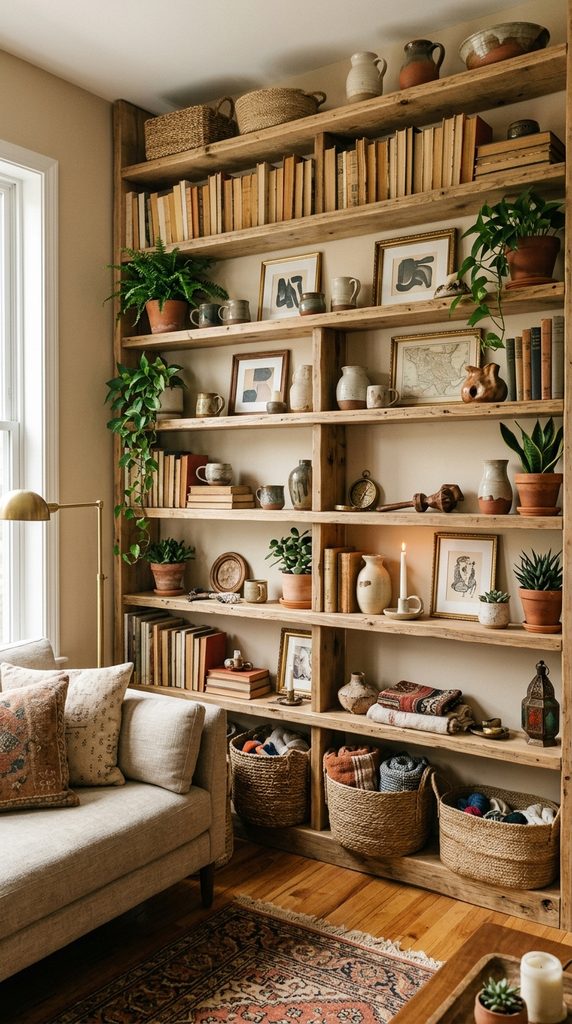
9. Keep It Minimal and Uncluttered
Sometimes less is more. A minimalist shelf display can look elegant when you use only a few carefully selected objects.
Choose one or two statement pieces per shelf, such as a sculptural vase, framed artwork, or small plant.
Leave plenty of open space around the objects. This allows each piece to become part of the design rather than getting lost among too many decorations.
Minimalist shelf styling works especially well in modern and Scandinavian interiors.
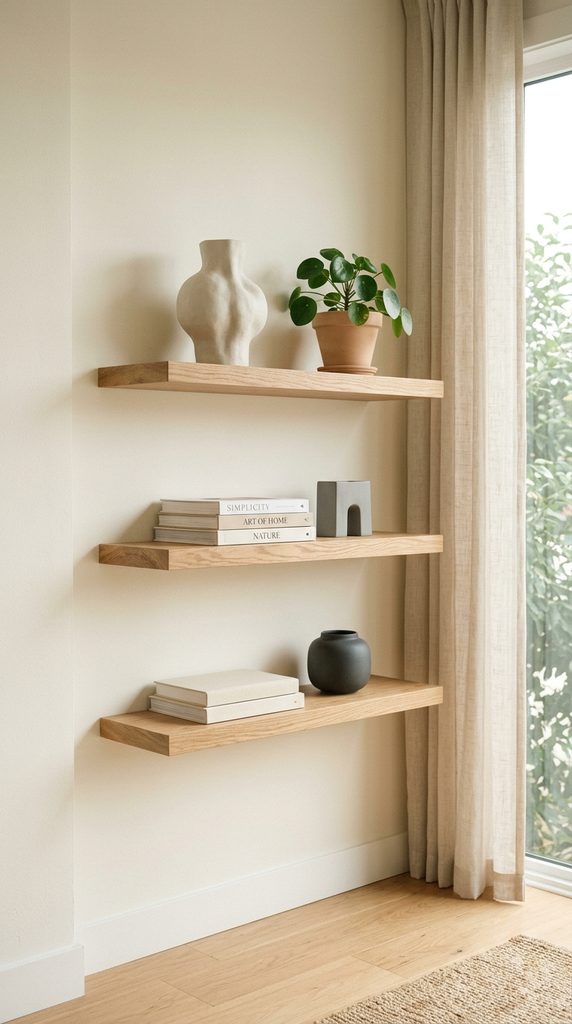
10. Add Personal and Meaningful Objects
The most memorable shelves often include items that tell a story. Display travel souvenirs, family photographs, handmade objects, favorite books, artwork, or inherited pieces.
Personal objects can make your home feel unique instead of looking like a showroom.
Mix meaningful pieces with simple decorative accessories to maintain a balanced appearance.
You don’t need to display everything you own. Select a few favorite items and rotate them occasionally to keep your shelves feeling fresh.

How to Style Shelves Without Making Them Look Cluttered
Shelf styling is about balance rather than filling every available space. Start by removing everything from the shelves and deciding which items you actually want to display.
Choose a few larger anchor pieces first. Then add books, plants, artwork, and smaller accessories around them.
A useful approach is to create small visual groups rather than spreading individual objects evenly across the shelves.
Pay attention to negative space. Empty areas can make a display look more sophisticated and help prevent visual clutter.
It is also helpful to repeat colors and materials throughout the arrangement. Even when the objects are different, a consistent palette can make them feel connected.
Shelf Styling Formula to Try
If you’re not sure where to start, use a simple formula:
Books + greenery + artwork + texture + personal object
For example, one shelf might have a vertical stack of books, a small plant, and a ceramic vase. Another could feature framed artwork layered behind a decorative bowl and a few books.
Move objects around until the arrangement feels balanced from a distance.
Shelf Styling Ideas for Different Rooms
Living Room: Combine books, plants, baskets, artwork, and decorative ceramics.
Bedroom: Use framed photographs, small plants, candles, books, and soft neutral accessories.
Kitchen: Display attractive dishes, cookbooks, ceramic pitchers, glass jars, and wooden boards.
Home Office: Combine books, organizers, framed artwork, plants, and practical storage.
Bathroom: Use small baskets, rolled towels, ceramic containers, greenery, and simple decorative objects.
Final Thoughts
Beautiful shelves don’t require a large collection of expensive accessories. The most effective shelf styling ideas combine items you already own with a few carefully chosen decorative pieces.
Books, greenery, baskets, artwork, ceramics, personal objects, and natural textures can create a display that feels both organized and personal.
The key is to vary heights, mix textures, create small groups, and leave enough empty space. Whether you prefer minimalist, modern, farmhouse, boho, or eclectic decor, thoughtful shelf styling can turn ordinary storage into a beautiful feature of your home.
Leave a Reply