

Choosing the right wall color can completely change the atmosphere of a living room. Neutral shades are especially popular because they create a calm, versatile background that works with many furniture styles, flooring options, and decorative accents. From warm beige to soft greige, neutral paint colors can make a living room feel cozy, spacious, and timeless.
If you are planning a living room makeover, these neutral living room paint color ideas can help you find a shade that feels modern without becoming overwhelming.
1. Warm White
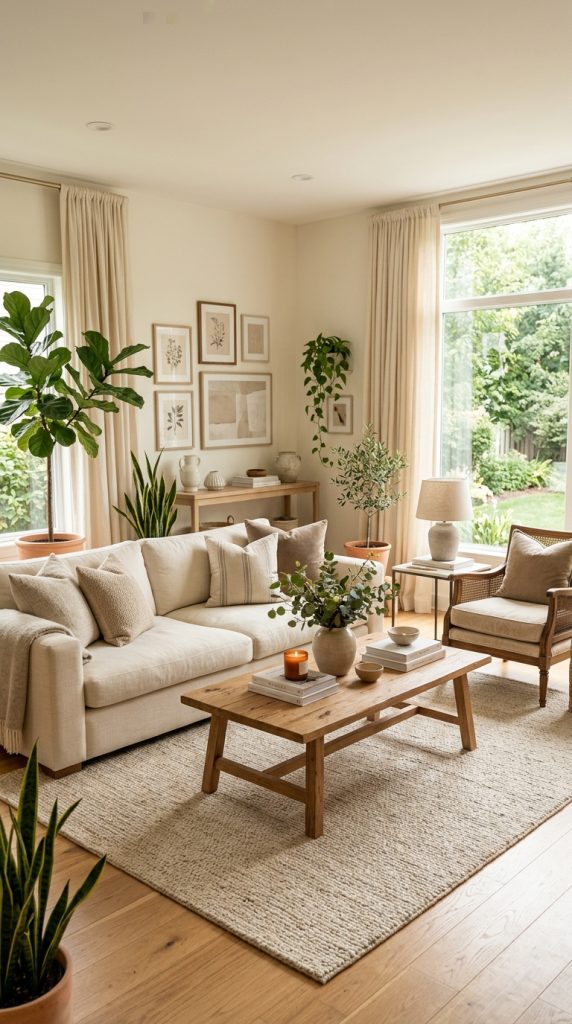
Warm white is a classic choice for a neutral living room. Unlike stark white, it contains subtle warm undertones that make the room feel softer and more welcoming.
Pair warm white walls with beige furniture, natural wood, woven textures, and greenery. It is particularly effective in rooms where you want to maximize brightness while maintaining a cozy atmosphere.
Warm white also provides an excellent backdrop for artwork and colorful accessories.
2. Soft Beige
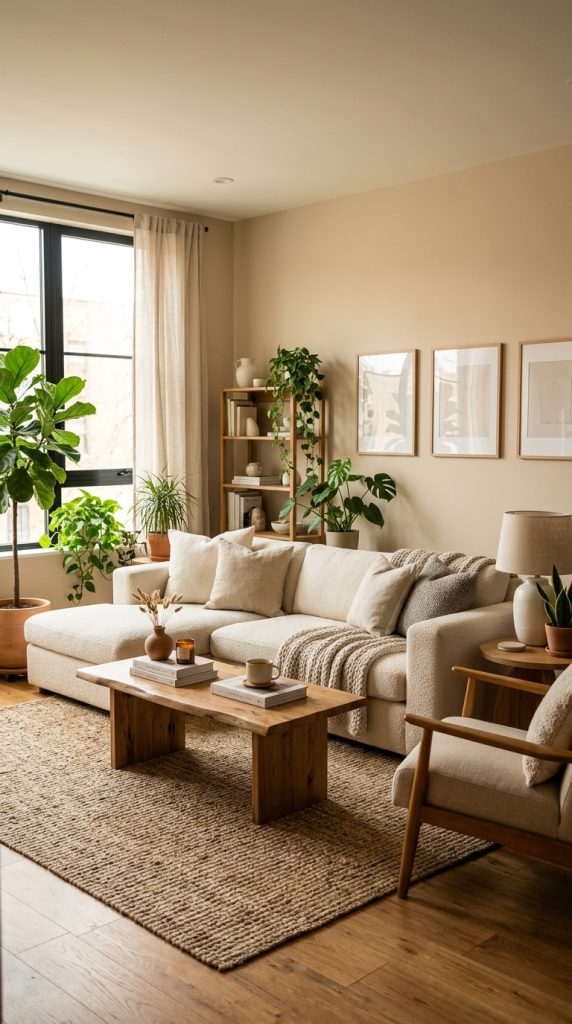
Soft beige adds warmth without making the room feel dark. It works beautifully with cream sofas, wooden furniture, woven rugs, and brass or black accents.
For a sophisticated appearance, combine different beige and cream shades throughout the room. Layering similar neutral colors creates depth while keeping the design cohesive.
Beige is particularly suitable for traditional, modern organic, farmhouse, and transitional interiors.
3. Light Greige
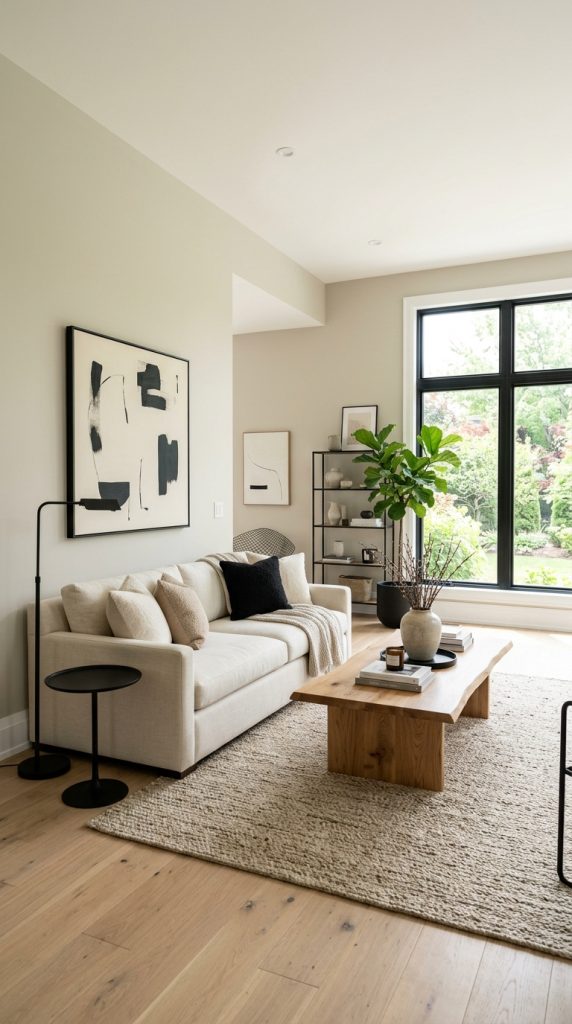
Greige combines the qualities of gray and beige, making it a versatile neutral for contemporary living rooms. A light greige can feel sophisticated while remaining warm enough for a comfortable home.
Pair it with white trim, natural wood, black accents, and cream upholstery. Greige can also work well with both cool and warm decorative colors, depending on its specific undertones.
4. Cream
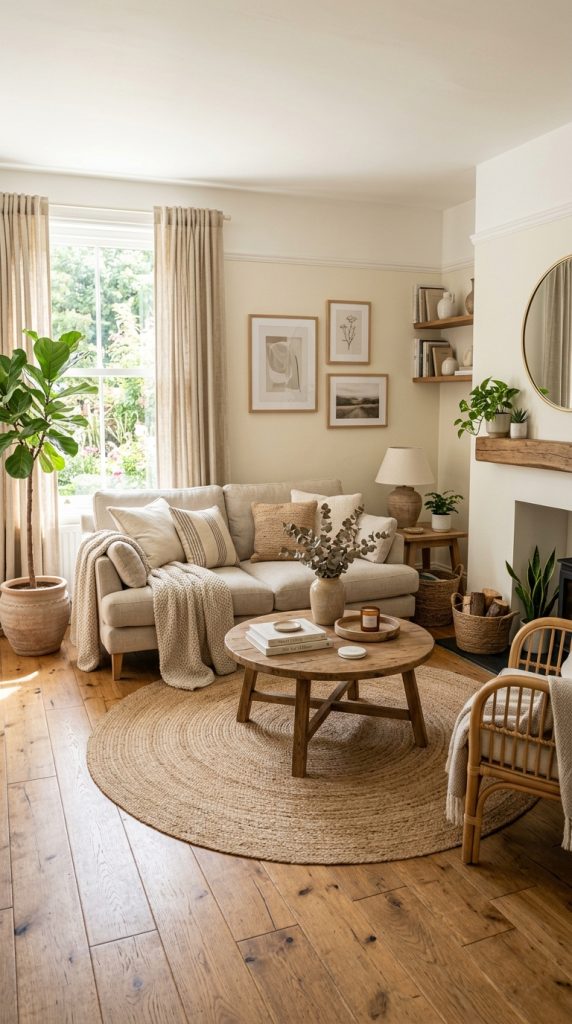
Cream creates a soft and elegant atmosphere. It is warmer than standard white and can make a living room feel comfortable and inviting.
Use cream walls with beige curtains, warm wood floors, linen furniture, and soft lighting. The color works especially well in rooms that receive plenty of natural daylight.
Cream is also a great choice if you want a timeless interior that can easily be updated with seasonal accessories.
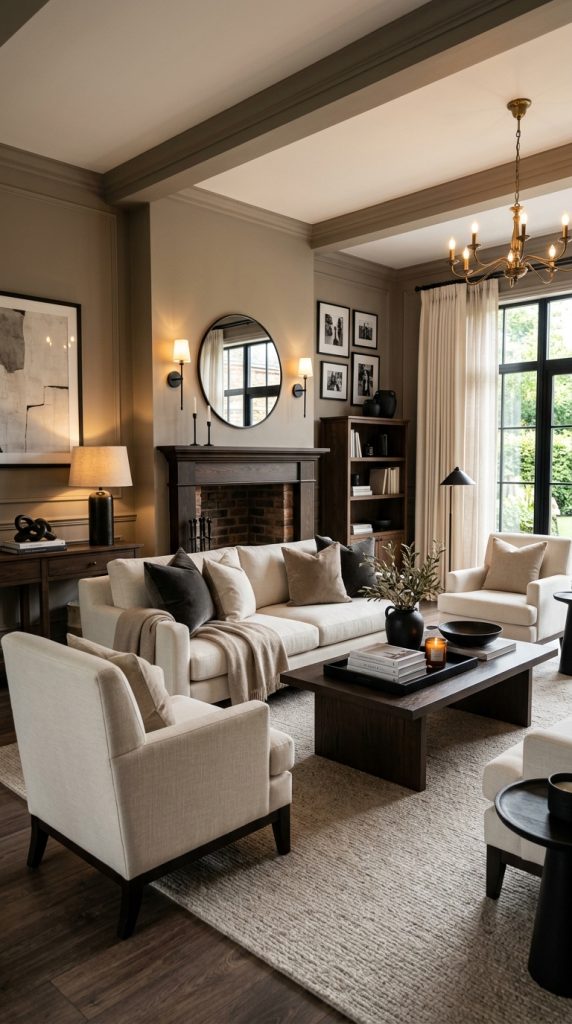
5. Taupe
Taupe is a sophisticated neutral that sits between gray, brown, and beige. It can add more depth than very pale neutrals while remaining subtle.
Use taupe walls with cream furniture, dark wood, soft black accents, and natural textures. In larger living rooms, a medium taupe can create a cozy and grounded atmosphere.
For smaller rooms, consider a lighter taupe to avoid making the space feel heavy.
6. Soft Gray
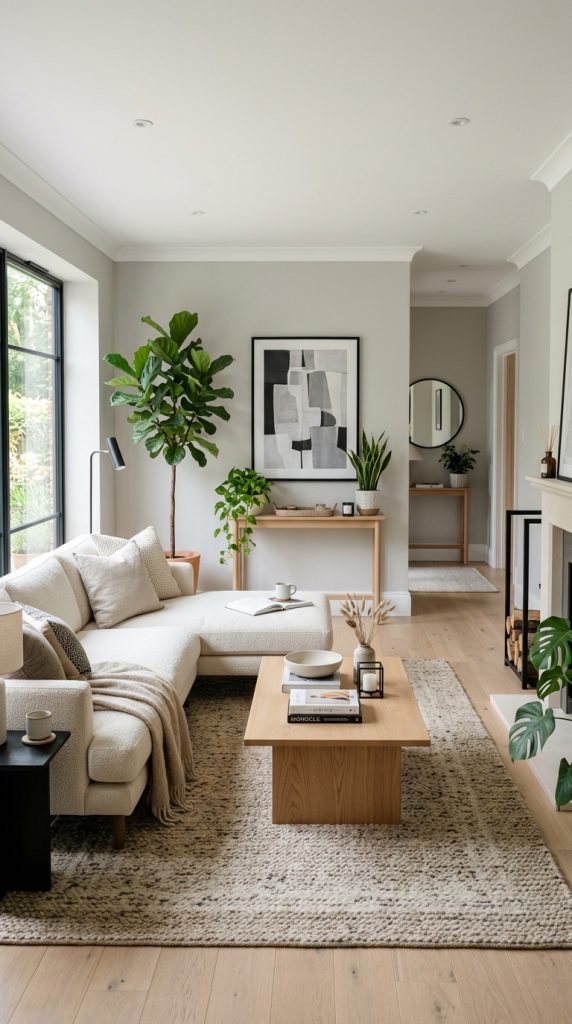
Soft gray can give a living room a clean and contemporary appearance. Choose a warm or balanced gray if you want to avoid an overly cool atmosphere.
Pair soft gray walls with white trim, light wood, cream furniture, and black metal accents. Add warm textiles and natural materials to make the room feel inviting.
Gray is particularly useful when you want a neutral foundation for modern artwork or colorful accessories.
7. Mushroom Beige
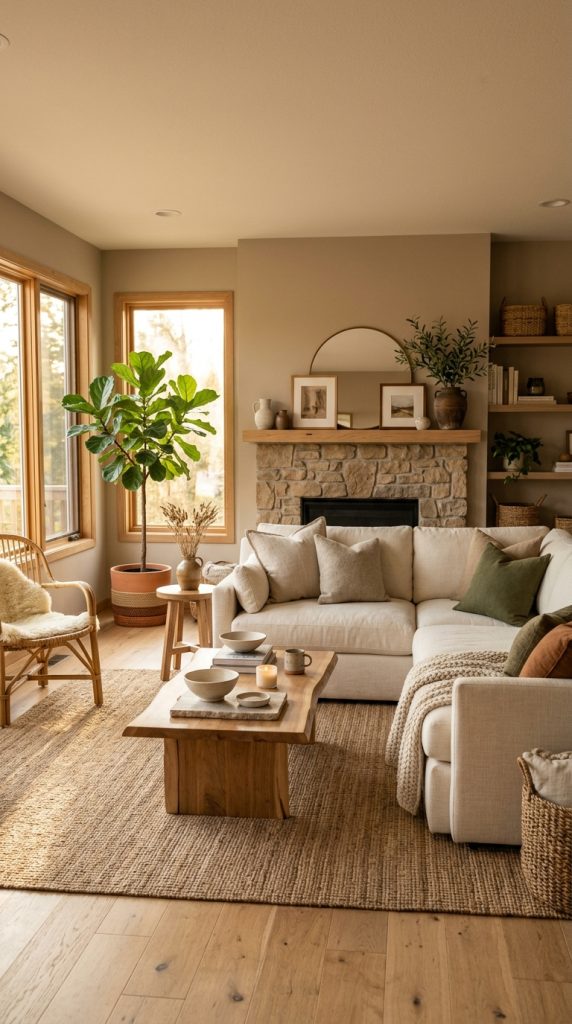
Mushroom beige is a muted earthy neutral that combines subtle brown and gray qualities. It can create a sophisticated, organic atmosphere without feeling too plain.
Pair it with natural wood, stone, cream textiles, olive greenery, and woven accessories. This shade is especially attractive in modern organic and contemporary living rooms.
Its earthy character makes it a good choice for creating a cozy environment.
8. Light Sand
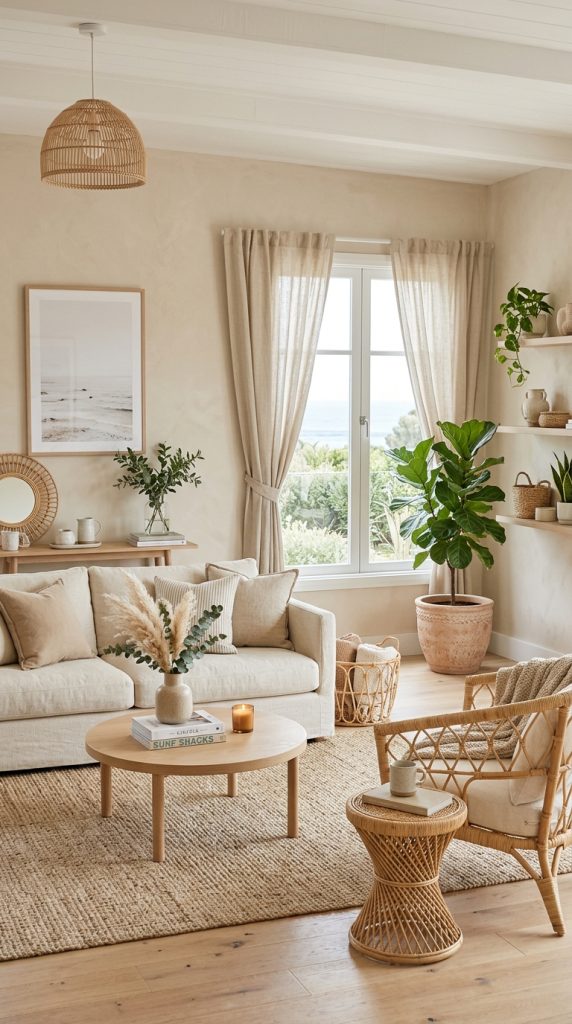
Light sand is a warm neutral inspired by natural sandy tones. It can brighten a living room while adding more warmth than a cool white.
Use it with rattan, linen, pale wood, cream furniture, and soft green plants. The combination can create a relaxed coastal or modern organic aesthetic.
Light sand also works well when you want your wall color to blend naturally with neutral furniture.
9. Greige With Warm Undertones
A warmer greige can be an excellent choice for living rooms that need a little more depth. Its subtle combination of beige and gray makes it easy to coordinate with many interior styles.
Pair it with warm white ceilings, natural wood furniture, beige upholstery, and muted accent colors.
Before committing to the shade, test a sample on multiple walls because natural and artificial lighting can significantly affect how greige appears.
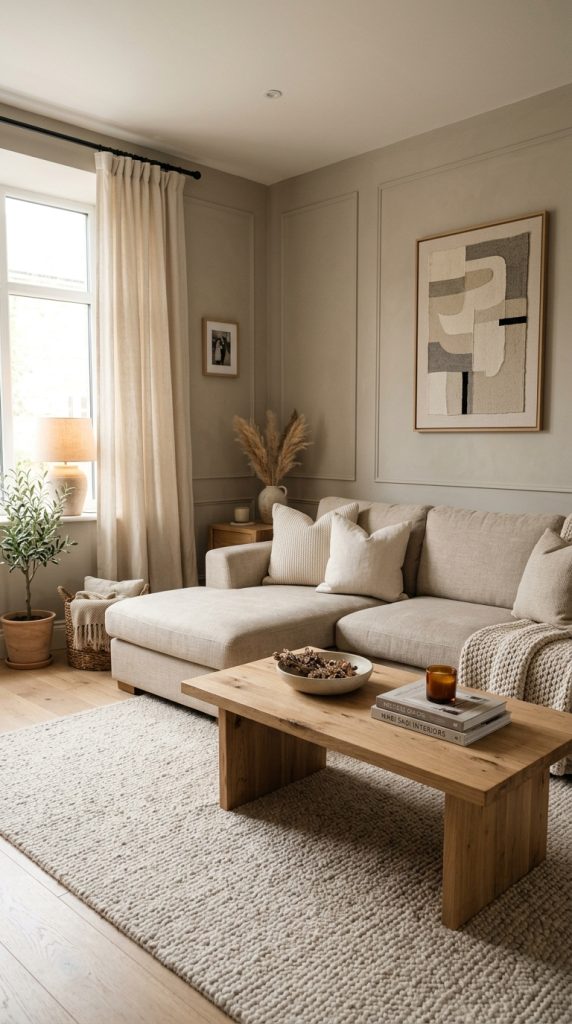
10. Soft Mushroom Gray
Soft mushroom gray provides a deeper neutral appearance while remaining comfortable and versatile. It works beautifully in cozy living rooms where you want a little more visual richness.
Combine it with cream upholstery, warm wood, soft rugs, and metallic accents. Add greenery to introduce a natural contrast.
This shade can be particularly effective on a feature wall or throughout a larger room with plenty of natural light.
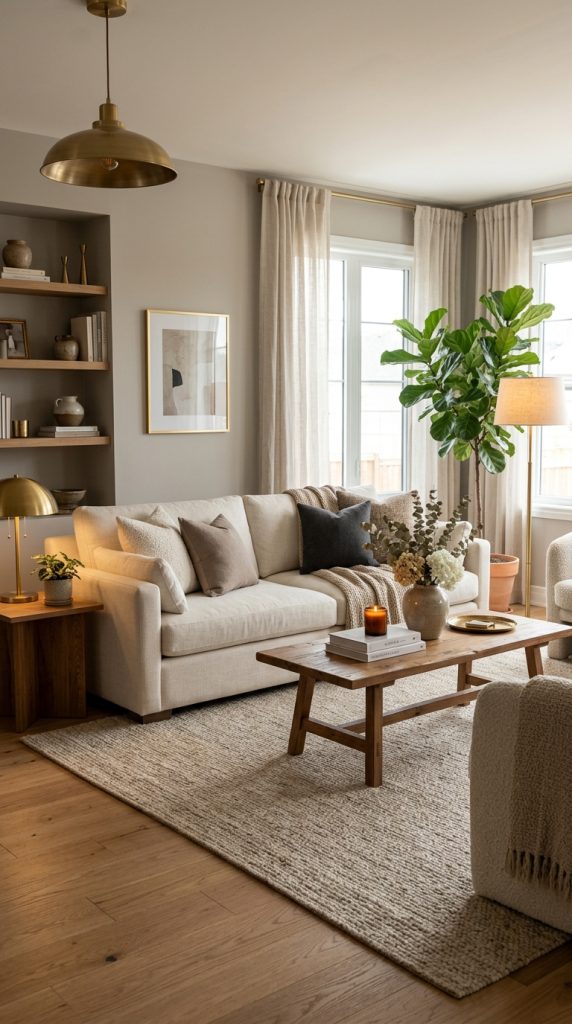
How to Choose the Best Neutral Paint Color
Neutral colors can look surprisingly different depending on lighting. A shade that appears beige in one room may look more gray or yellow in another.
Before painting the entire living room, test your preferred colors on several walls. Observe them in morning, afternoon, and evening light.
Also consider your flooring, curtains, sofa, and existing furniture. The undertones of these elements can influence how the paint color looks.
If your room has cool gray flooring, a balanced or slightly warm neutral may help create harmony. If your room contains lots of warm wood, a soft beige, cream, or warm greige can complement it beautifully.
Final Thoughts
These neutral living room paint color ideas offer an easy way to create a timeless and comfortable interior. Warm white, beige, cream, greige, taupe, and earthy neutrals can all provide a beautiful foundation for different decorating styles.
The best choice depends on your room’s natural light, existing finishes, furniture, and overall atmosphere. Take time to test samples before making your final decision, and remember that a successful neutral room often comes from layering several complementary shades and textures rather than relying on one color alone.
Leave a Reply