A well-designed garden can completely change the appearance of a home. Thoughtful landscaping adds color, texture, privacy, and usable outdoor space while making the property feel more welcoming. Whether you have a spacious backyard or a compact front garden, the right house garden design landscape ideas can help you create an outdoor area that feels beautiful and practical.
Modern landscaping is not only about planting flowers. It combines plants, pathways, seating, lighting, natural materials, and architectural features to create a balanced outdoor environment. The following ten ideas can inspire a garden design that suits your home’s style and your lifestyle.
1. Modern Minimalist Garden Landscape
A minimalist garden is ideal for homeowners who prefer clean lines and uncluttered spaces. Use geometric planting beds, simple pathways, ornamental grasses, and a limited selection of plants.
Materials such as concrete, natural stone, gravel, and wood can add structure. Keep the color palette restrained with greens, whites, grays, and natural brown tones.
Avoid filling every empty area with plants. Open space is an important part of minimalist landscaping and can make even a smaller garden appear larger.

2. Lush Tropical Garden Design
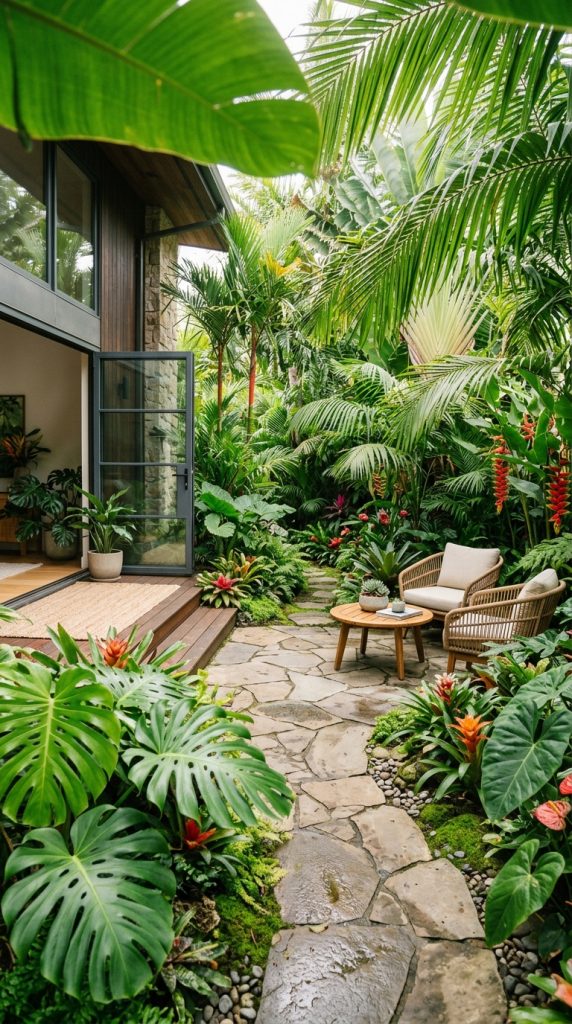
Bring a resort-inspired atmosphere to your home with a tropical garden. Use plants with large leaves, layered greenery, palms, and other climate-appropriate tropical varieties.
Create different heights by combining ground-cover plants, medium shrubs, and taller plants. Natural stone pathways can help connect different parts of the garden.
If your local climate is not suitable for tropical species, choose hardy plants with similar foliage characteristics that can thrive in your conditions.
3. Cottage Garden Landscape
A cottage-style landscape creates a relaxed and romantic appearance. Combine flowering plants, herbs, shrubs, and greenery in informal planting beds.
Instead of perfectly symmetrical rows, allow plants to create a naturally layered appearance. A small garden gate, wooden bench, stone pathway, or climbing plant-covered arch can reinforce the cottage aesthetic.
This design works particularly well around traditional homes and properties with natural architectural details.

4. Front Yard Curb Appeal Landscape
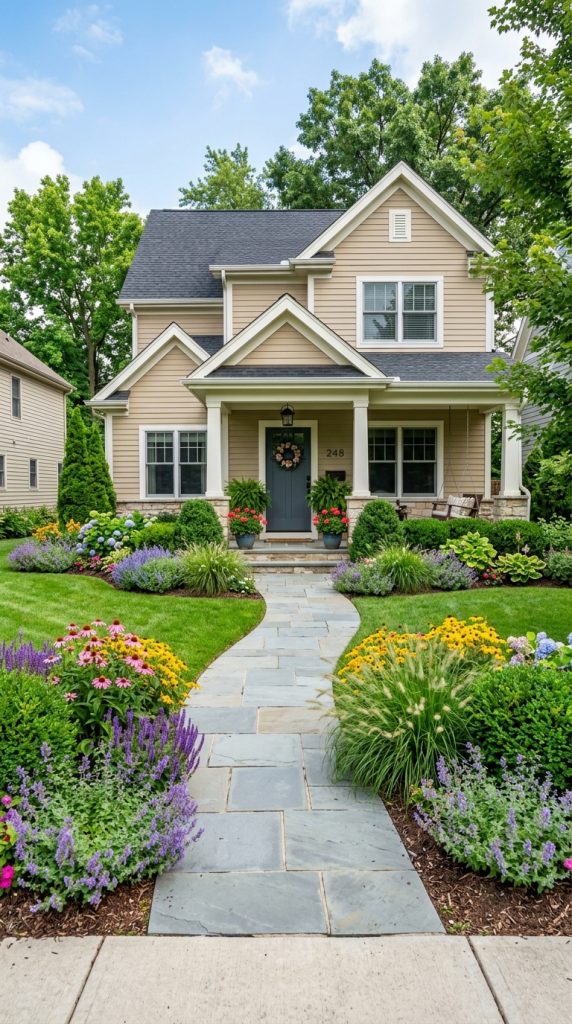
The front garden plays an important role in the overall appearance of your home. Create a welcoming landscape with a combination of shrubs, flowering plants, ornamental grasses, and a clearly defined pathway.
Place taller plants closer to the house and shorter plants near the walkway to maintain visibility. Decorative planters near the front entrance can add additional color.
Choose plants that complement the exterior color and architectural style of your home rather than competing with it.
5. Backyard Outdoor Living Landscape
Turn your backyard into an extension of your living space by combining landscaping with comfortable outdoor areas. Add a patio, seating area, dining table, or small fire feature where appropriate.
Surround the living area with plants and garden beds to create a sense of privacy. A pergola can provide shade and become a focal point for climbing plants or outdoor lighting.
This design is especially useful for homeowners who enjoy entertaining or spending time outdoors.

6. Small House Garden Landscape
A small yard can still have a strong landscape design. Instead of using many different features, focus on a few elements that serve multiple purposes.
Vertical gardens, wall planters, narrow flower beds, compact trees, and built-in seating can maximize limited space. Use pathways and planting areas to create visual depth.
Light-colored materials and carefully positioned greenery can also make a compact garden feel more open.
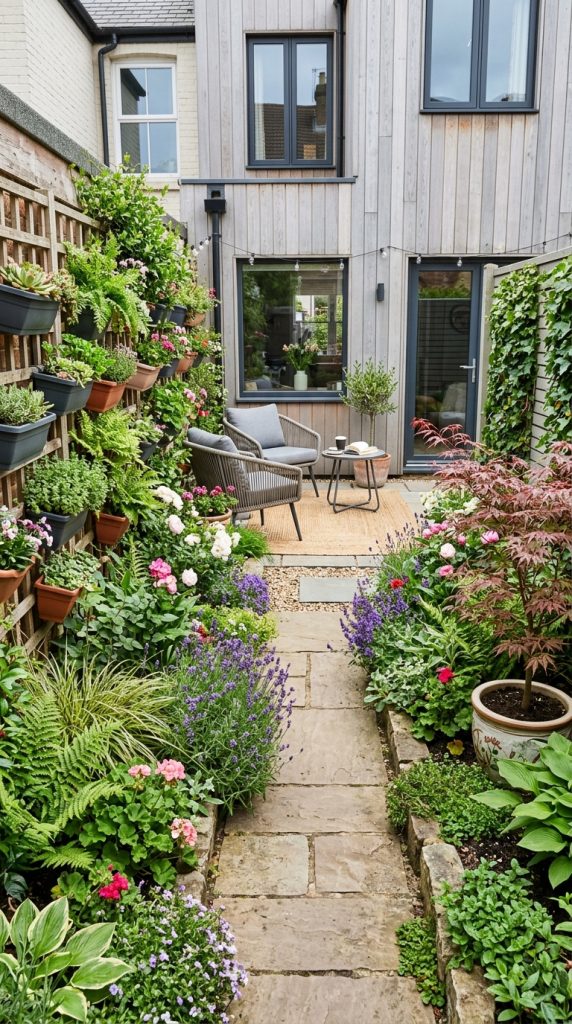
7. Natural Stone Garden Design
Natural stone can provide texture and structure while giving a garden an organic appearance. Use stone for pathways, retaining walls, borders, steps, or decorative features.
Combine stone with grasses, shrubs, flowers, and ground-cover plants to soften hard surfaces. Different stone textures can create visual interest without requiring excessive decoration.
This approach works well with rustic, modern organic, Mediterranean-inspired, and cottage-style homes.
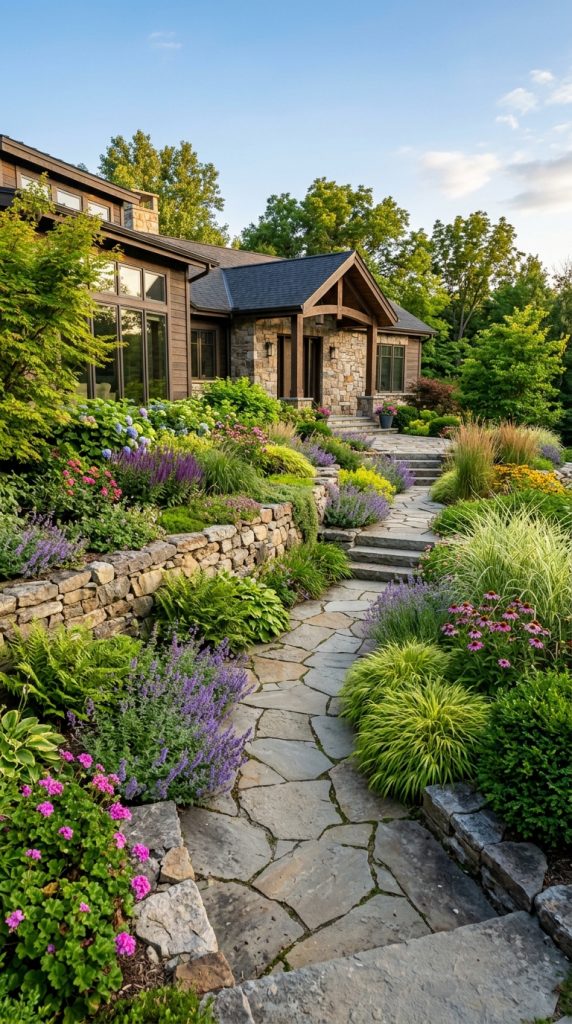
8. Low-Maintenance Landscape Garden
If you want a beautiful garden without spending hours maintaining it, choose a low-maintenance landscape. Focus on hardy plants, mulch, gravel, evergreen shrubs, and durable landscaping materials.
Group plants according to their watering and sunlight requirements to make maintenance easier. Reduce large areas of high-maintenance lawn where practical.
A well-planned low-maintenance garden can still look lush and stylish while requiring less frequent trimming and watering.
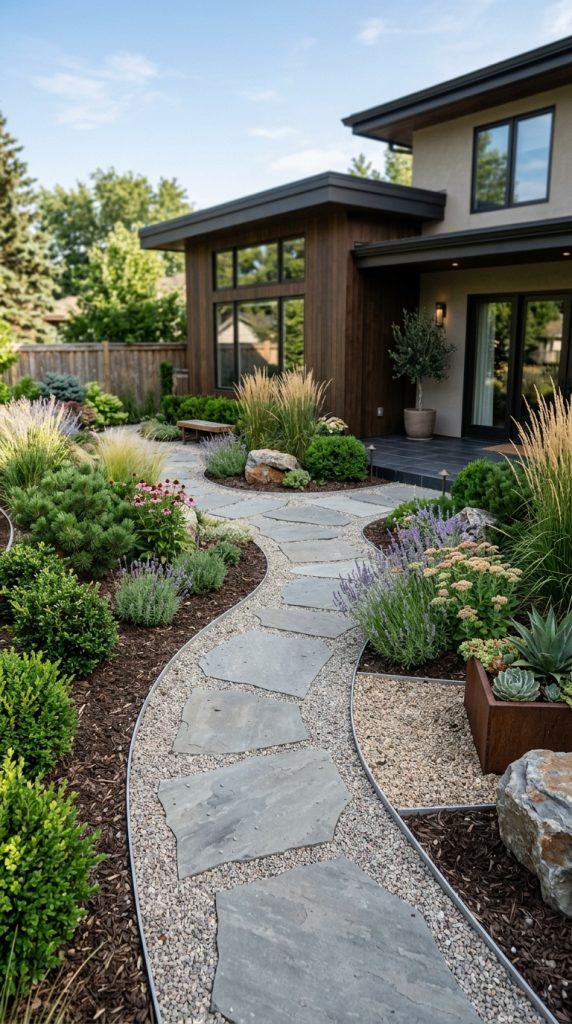
9. Layered Garden With Flower Beds
Layering plants at different heights creates depth and makes a landscape feel fuller. Place taller shrubs or ornamental plants at the back, medium-height flowers in the middle, and low-growing plants along pathways and borders.
Repeat selected colors and plant varieties throughout the garden for visual consistency. Curved beds can create a softer appearance, while straight borders work well with contemporary architecture.
Seasonal flowers can be added to introduce changing color throughout the year.

10. Garden With Outdoor Lighting
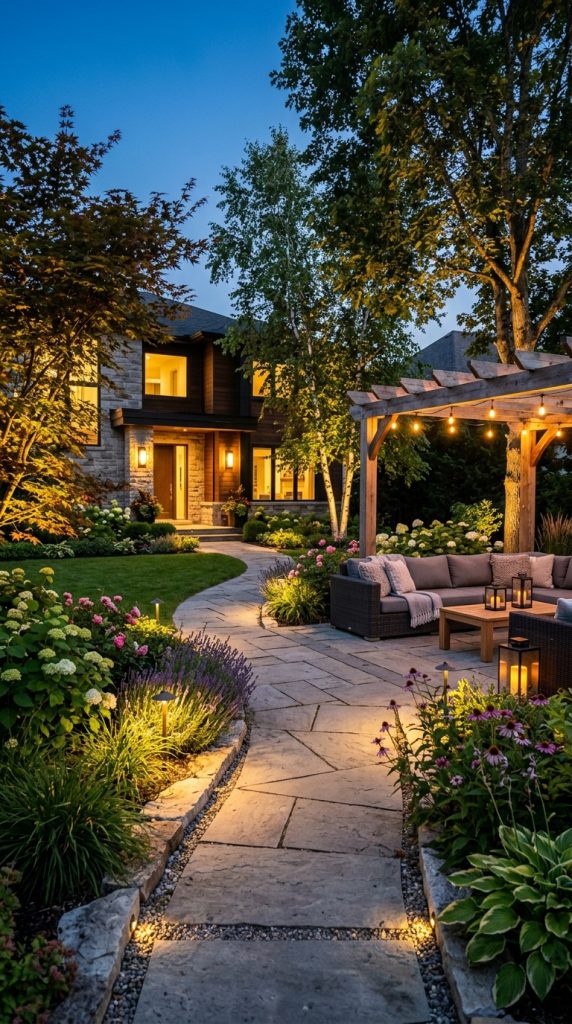
Outdoor lighting can make a beautifully landscaped garden enjoyable after sunset. Use pathway lights to guide movement and subtle uplighting to highlight trees, shrubs, walls, or architectural features.
Lighting around seating areas can make outdoor entertaining more comfortable. Warm, low-level illumination generally creates a relaxed atmosphere.
Avoid excessive brightness. Strategic lighting can highlight the most attractive parts of your landscape while preserving a calm nighttime environment.
How to Plan Your House Garden Landscape
Start by identifying how you want to use the outdoor space. You may need an entertaining area, children’s play space, vegetable garden, privacy screening, or simply a beautiful landscape to enjoy from indoors.
Next, study the sunlight, soil, drainage, and existing trees. Choose plants suited to your local conditions rather than selecting plants based only on appearance.
Create a simple layout before purchasing materials or plants. Think about pathways, planting beds, seating, water access, and lighting. Repeating materials and colors throughout the design can help the garden feel cohesive.
Most importantly, build the landscape gradually if necessary. A successful garden does not have to be completed in one project.
Final Thoughts
These house garden design landscape ideas demonstrate how different elements can work together to create a beautiful outdoor environment. Whether you prefer a minimalist garden, lush greenery, cottage-style planting, natural stone, or a practical outdoor living area, there is a landscape style to suit almost every home.
Focus on balance, functionality, and plants that suit your environment. With thoughtful planning and consistent care, your garden can become an attractive extension of your home and a comfortable place to relax throughout the year.
Leave a Reply