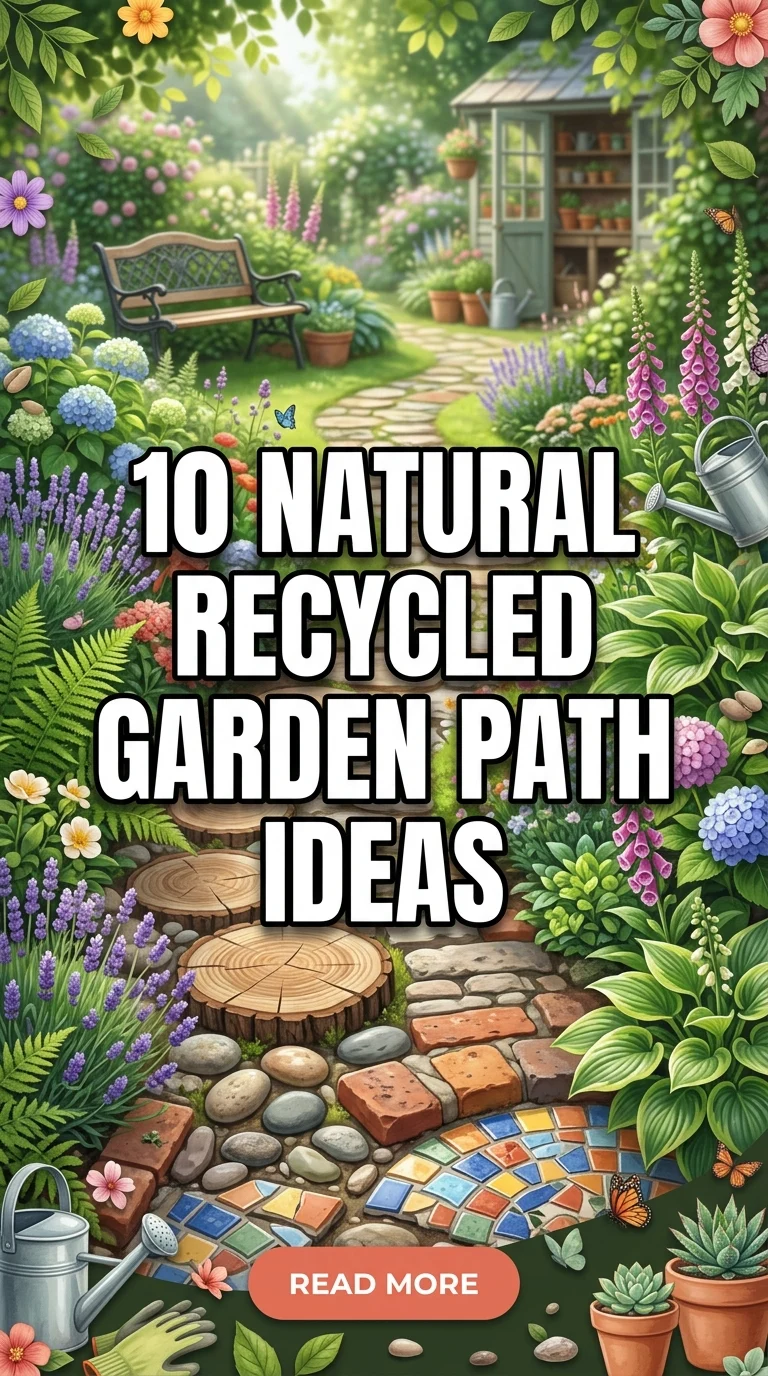
A beautiful garden path does more than connect different areas of your yard—it adds character, improves accessibility, and enhances your landscape design. If you’re looking for a sustainable and budget-friendly way to upgrade your outdoor space, recycled materials offer endless creative possibilities.
From reclaimed bricks and weathered wood to recycled gravel and broken concrete, eco-friendly garden paths combine natural beauty with environmental responsibility. These ideas help reduce waste while creating charming walkways that blend seamlessly with flowers, trees, and greenery.
In this article, you’ll discover 10 Natural Recycled Garden Path Ideas that are stylish, practical, and Pinterest-worthy for gardens of every size.
Why Choose Recycled Materials for Garden Paths?
Using recycled materials is an excellent way to create a unique landscape while reducing environmental impact. Many reclaimed items develop beautiful textures and natural aging that new materials simply can’t replicate.
Benefits of Recycled Garden Paths
- Reduce construction waste.
- Lower landscaping costs.
- Add rustic charm and character.
- Support sustainable outdoor design.
- Blend naturally with surrounding plants.
- Create one-of-a-kind garden features.
With thoughtful planning, recycled materials can look just as elegant as brand-new landscaping products.
1. Reclaimed Brick Garden Path
Old bricks create timeless garden walkways full of warmth and character. Their weathered appearance blends beautifully with flowers, shrubs, and climbing plants.
Arrange reclaimed bricks in patterns like:
- Herringbone
- Basket weave
- Running bond
- Circular designs
Fill the gaps with moss or creeping thyme for an organic finish.

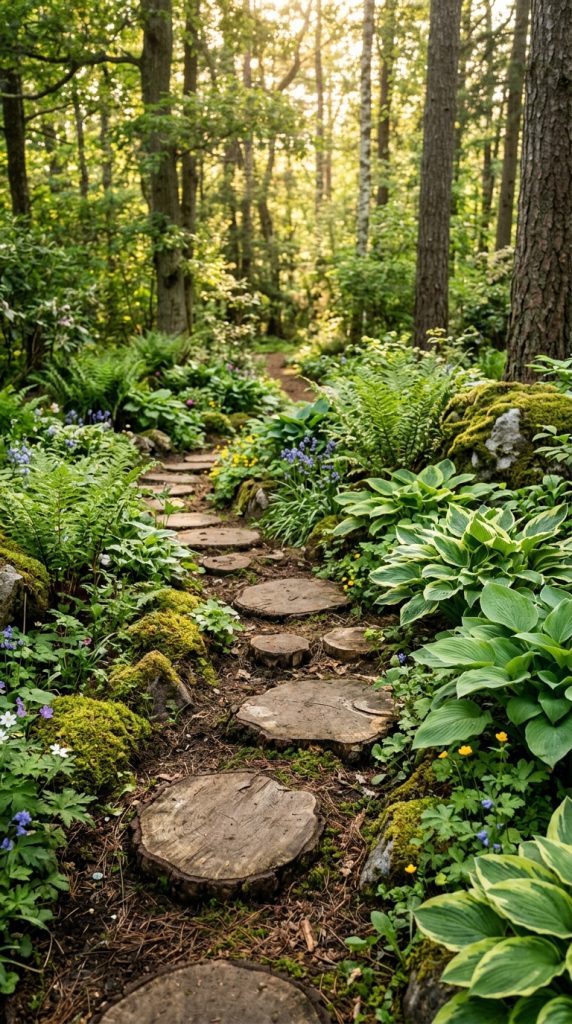
2. Natural Wood Slice Walkway
Tree trunk slices make charming stepping stones while giving new life to fallen trees.
Seal the wood to protect it from moisture and place each slice over compacted gravel or sand.
Surround the walkway with:
- Ferns
- Hostas
- Wildflowers
- Decorative grasses
The result feels natural and woodland-inspired.
3. Recycled Gravel and Stone Path
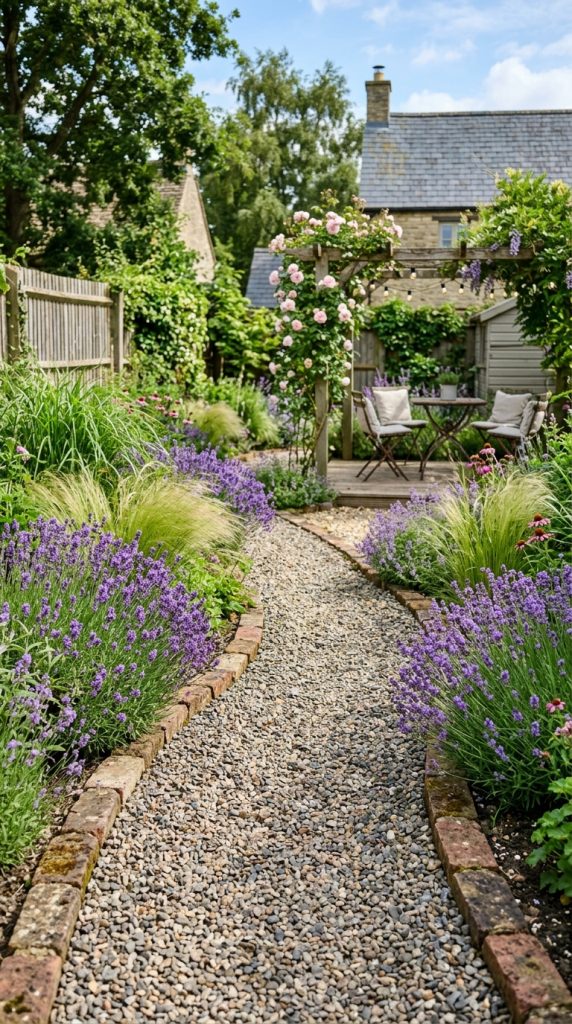
Crushed recycled concrete or reclaimed gravel creates an affordable, durable path suitable for nearly every garden style.
Border the pathway using reclaimed bricks, logs, or natural stones to keep everything neatly contained.
This option offers excellent drainage while maintaining a relaxed appearance.
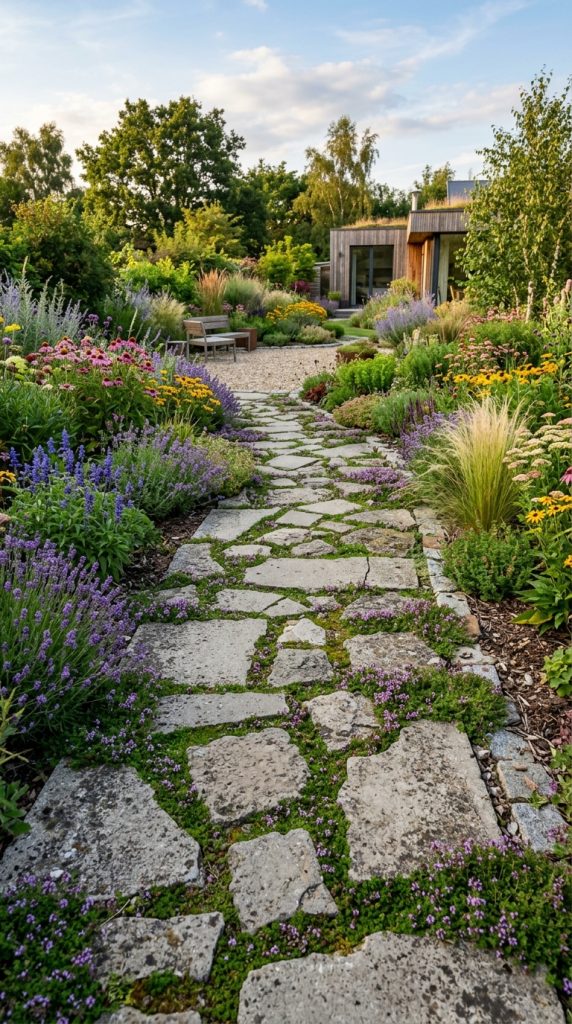
4. Broken Concrete Mosaic Path
Instead of discarding old concrete slabs, break them into irregular pieces to create a unique mosaic-style walkway.
Leave small gaps between each section and fill them with:
- Gravel
- Moss
- Creeping thyme
- Decorative pebbles
The finished design has an artistic, organic feel.
5. Reclaimed Wooden Plank Path
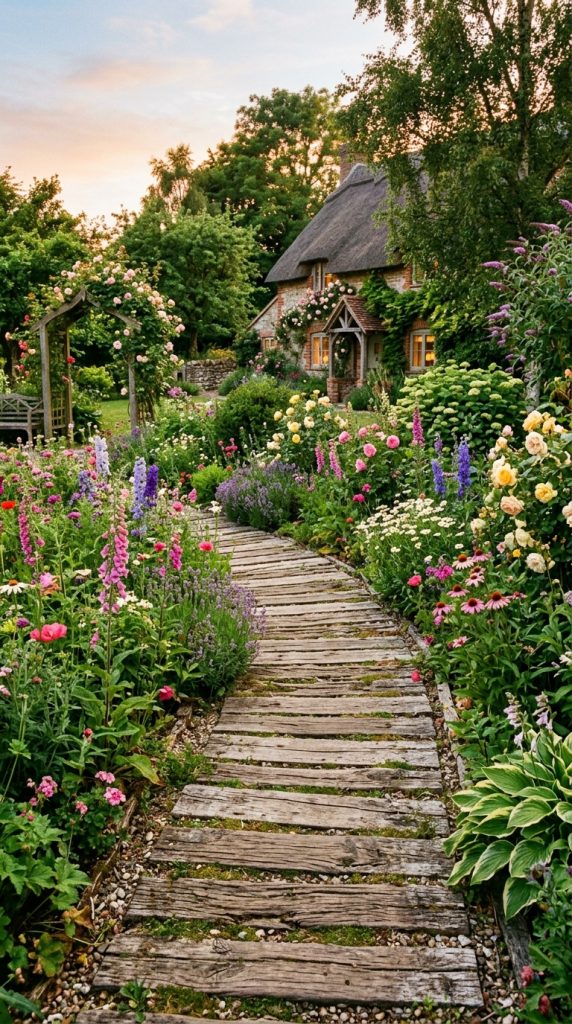
Old decking boards, reclaimed barn wood, or salvaged timber can become beautiful rustic walkways.
Lay wide planks across gravel for a clean contemporary look or stagger them to create a more casual garden path.
This design works especially well in cottage and woodland gardens.
6. Recycled Stone Stepping Path
Natural stones collected from renovation projects or landscaping leftovers can be transformed into elegant stepping stones.
Place each stone with comfortable walking distance between them and allow grass or ground cover to grow around the edges.
The irregular shapes create a relaxed, natural appearance.

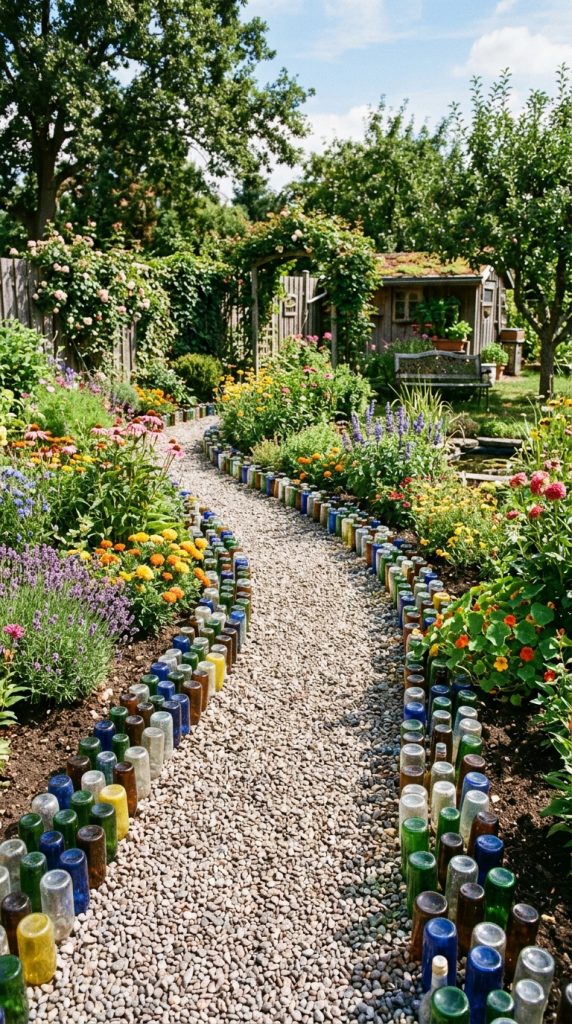
7. Glass Bottle Border Path
Recycled glass bottles can become colorful borders along gravel or mulch pathways.
Bury bottles upside down with only the bottoms exposed to create decorative edging that catches the sunlight.
Use bottles in similar colors for a cohesive design or mix shades for a playful look.
8. Bark Mulch Woodland Trail
Recycled bark mulch creates soft walking paths that blend naturally into woodland gardens.
Combine bark mulch with:
- Large natural rocks
- Fallen branches
- Native plants
- Ferns
- Moss
This eco-friendly option is comfortable underfoot and easy to refresh each season.

9. Pallet Wood Garden Walkway
Old wooden pallets can be dismantled and repurposed into charming garden boardwalks.
After sanding and sealing the wood, install the planks over a gravel base to improve drainage.
This budget-friendly project works especially well in vegetable gardens and backyard landscapes.

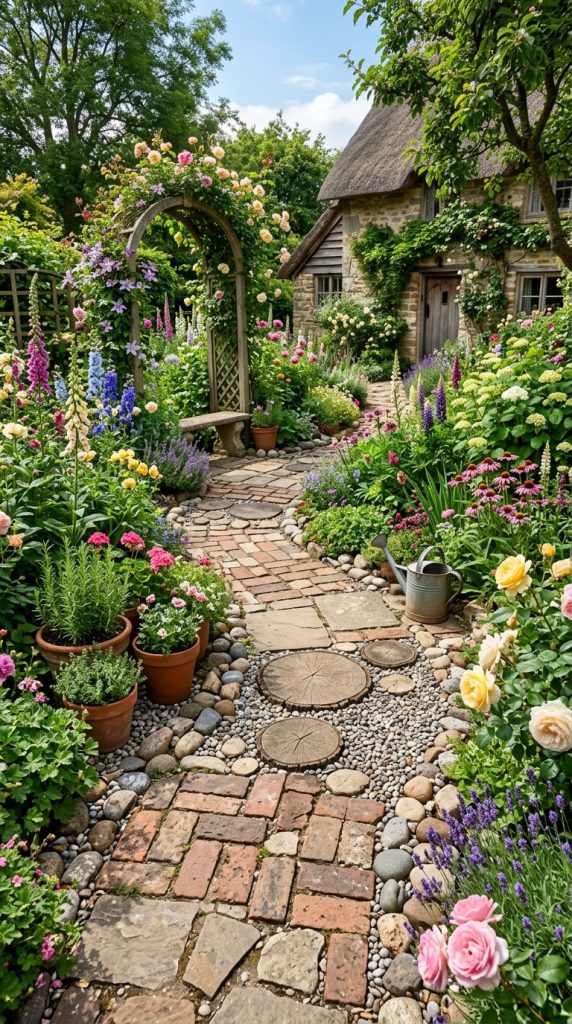
10. Mixed Recycled Material Garden Path
One of the most creative approaches is combining several recycled materials into one unique design.
For example, mix:
- Reclaimed bricks
- Natural stone
- Wood slices
- Gravel
- River rocks
- Broken concrete
The varied textures create depth and visual interest while highlighting sustainable landscaping.
Tips for Designing a Natural Garden Path
A well-planned pathway should be both beautiful and functional.
Keep these design tips in mind:
- Match the path style to your garden.
- Use natural curves instead of straight lines when possible.
- Add edging to keep materials in place.
- Ensure proper drainage.
- Include ground cover between stepping stones.
- Install solar lights for evening use.
- Plant flowers along the borders.
- Leave enough width for comfortable walking.
These simple details help create a professional-looking landscape.
Maintaining Recycled Garden Paths
Keeping your path attractive doesn’t require much effort.
Regular maintenance includes:
- Removing weeds.
- Refreshing mulch or gravel.
- Cleaning leaves and debris.
- Checking for loose stones or bricks.
- Resealing wood when needed.
- Trimming nearby plants.
A little upkeep will keep your recycled pathway looking beautiful for years.
Final Thoughts
Natural recycled garden paths are an excellent way to combine sustainability with creative landscaping. Whether you prefer reclaimed bricks, wood slices, gravel, natural stone, or mixed recycled materials, each option adds charm while reducing waste and saving money.
With thoughtful design and regular maintenance, these eco-friendly pathways can transform your outdoor space into a welcoming retreat that feels both timeless and environmentally conscious.
Leave a Reply