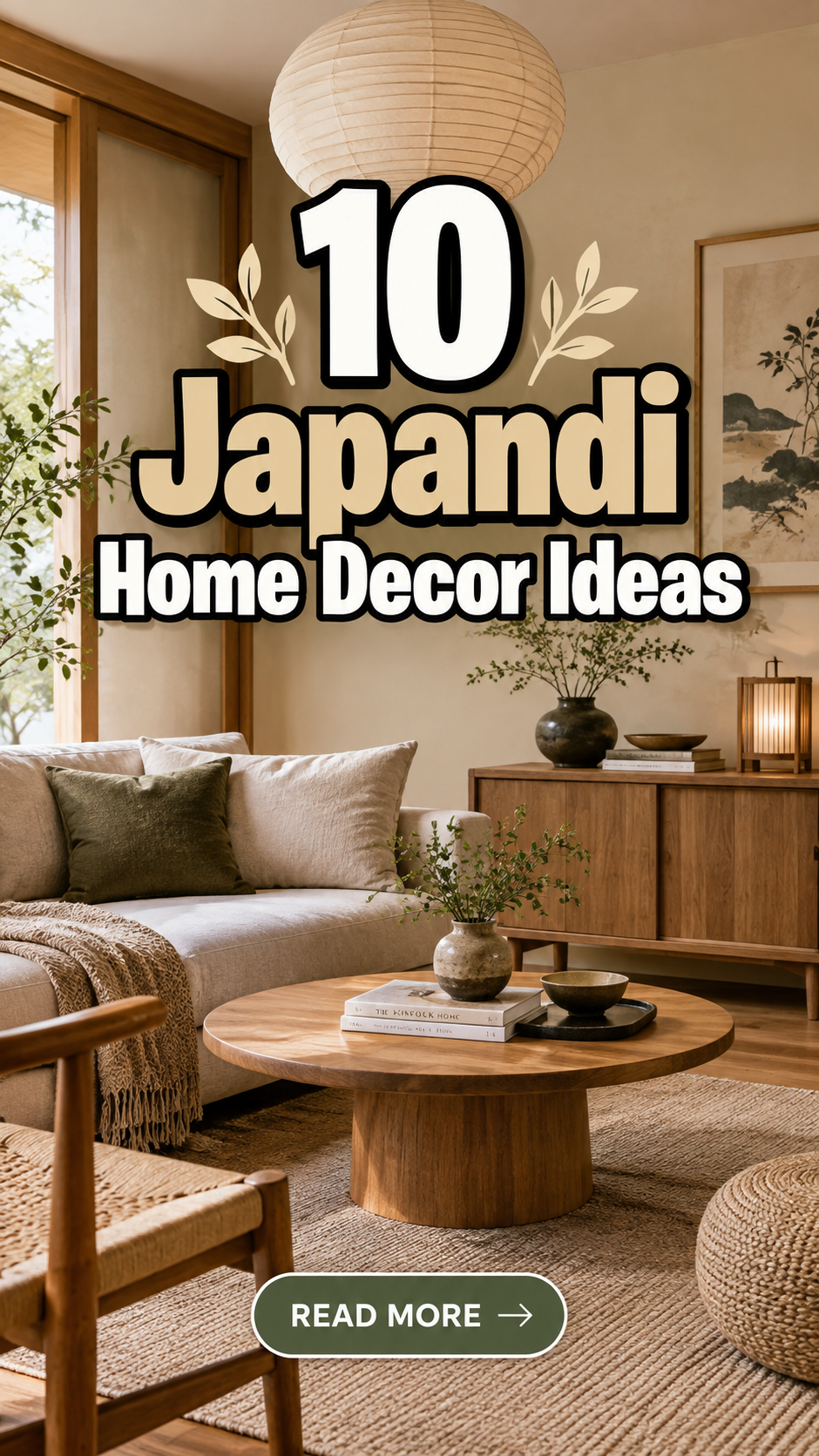
Japandi home decor combines the simplicity of Japanese interiors with the warmth and functionality of Scandinavian design. The result is a calm, uncluttered, and comfortable home that focuses on natural materials, neutral colors, clean lines, and thoughtful details.
The beauty of Japandi home decor ideas is that they do not require a completely minimalist home. You can create the look by simplifying your furniture, adding natural textures, choosing warm neutral colors, and bringing more greenery into your space.
Whether you are decorating a living room, bedroom, entryway, or small apartment, these 10 Japandi decor ideas can help you create a peaceful and timeless interior.
1. Choose a Warm Neutral Color Palette
Color is one of the most important elements of Japandi style. Instead of bright colors, focus on warm and calming shades such as cream, beige, taupe, warm white, soft gray, muted brown, and earthy green.
Use lighter shades on walls and larger furniture, then introduce deeper tones through wood, textiles, ceramics, and accessories.
A warm neutral palette creates a peaceful foundation without making the room feel cold.
2. Add Natural Wood Furniture
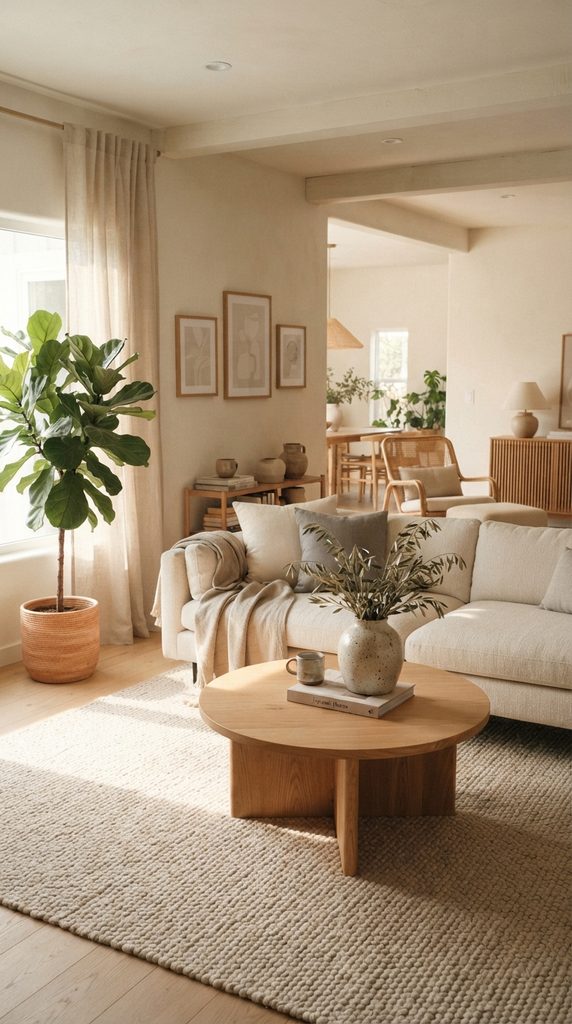
Natural wood is essential to the warm character of Japandi interiors. Choose furniture with simple shapes and visible wood grain.
A wooden coffee table, dining table, bench, bed frame, or shelving unit can become a beautiful focal point.
Light and medium wood tones work especially well with cream walls and soft neutral textiles.
3. Keep Furniture Simple and Functional
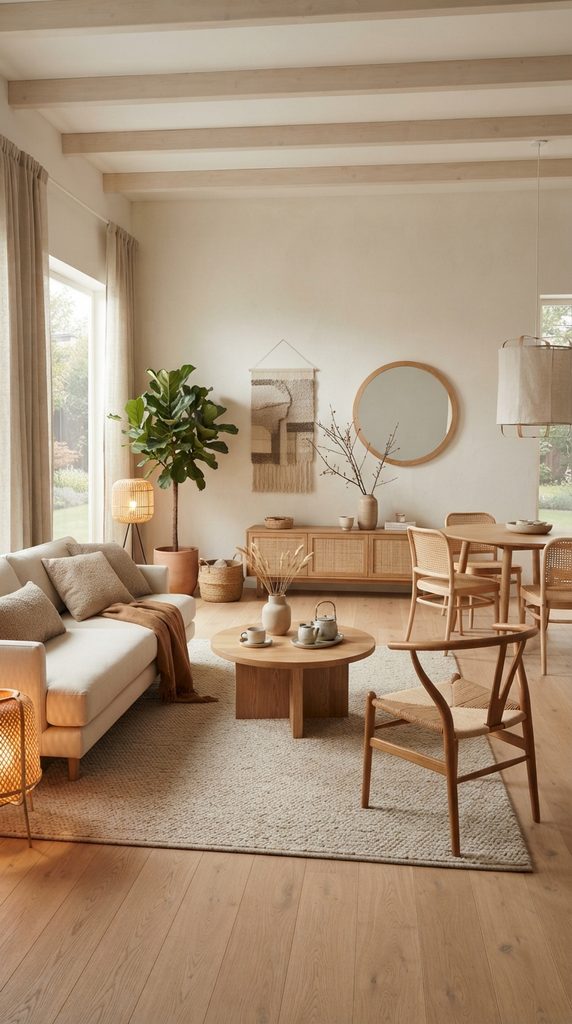
Japandi design focuses on pieces that are both beautiful and useful. Avoid filling the room with unnecessary furniture.
Choose a comfortable sofa, practical coffee table, simple storage, and a few carefully selected accessories.
Clean lines and uncluttered surfaces help the room feel spacious and peaceful.
4. Layer Natural Textures
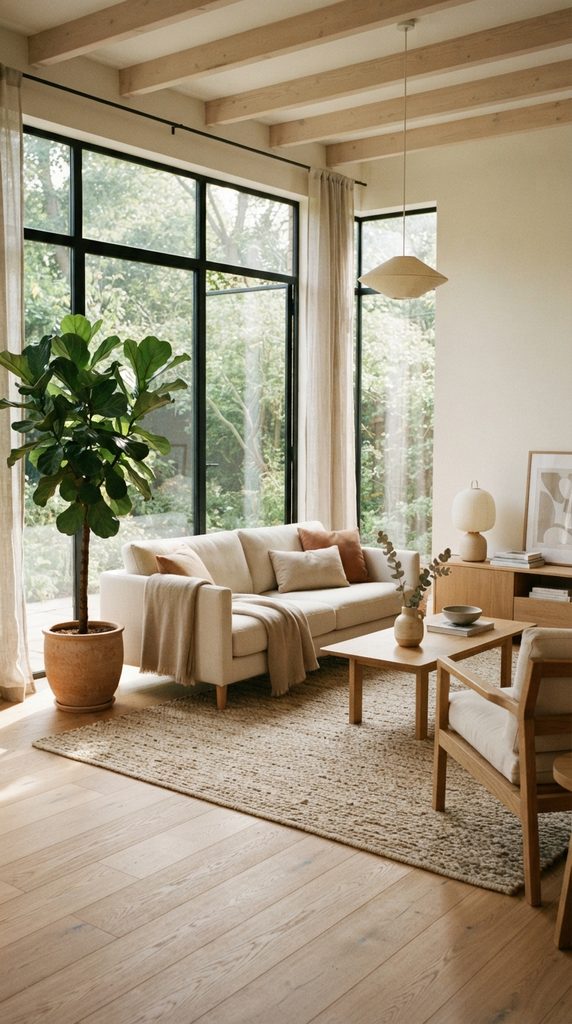
A neutral room becomes more interesting when different textures are introduced.
Combine linen, cotton, wool, jute, rattan, bamboo, wood, ceramic, and stone.
For example, pair a linen sofa with a woven rug, wooden table, ceramic vase, and soft cotton cushions.
The subtle contrast creates warmth without relying on bold colors.
5. Bring in Minimal Greenery
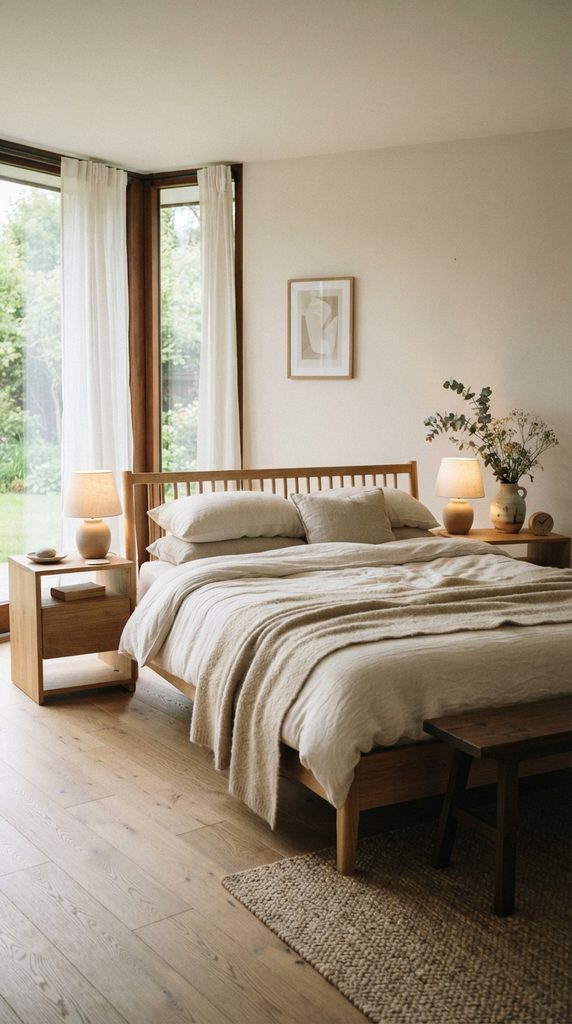
Plants can add life to a Japandi interior while maintaining its connection to nature.
Choose simple plants with elegant shapes rather than filling every surface with greenery.
A tall plant in a ceramic pot can fill an empty corner, while a small branch arrangement can decorate a dining table or shelf.
6. Create a Calm Japandi Bedroom
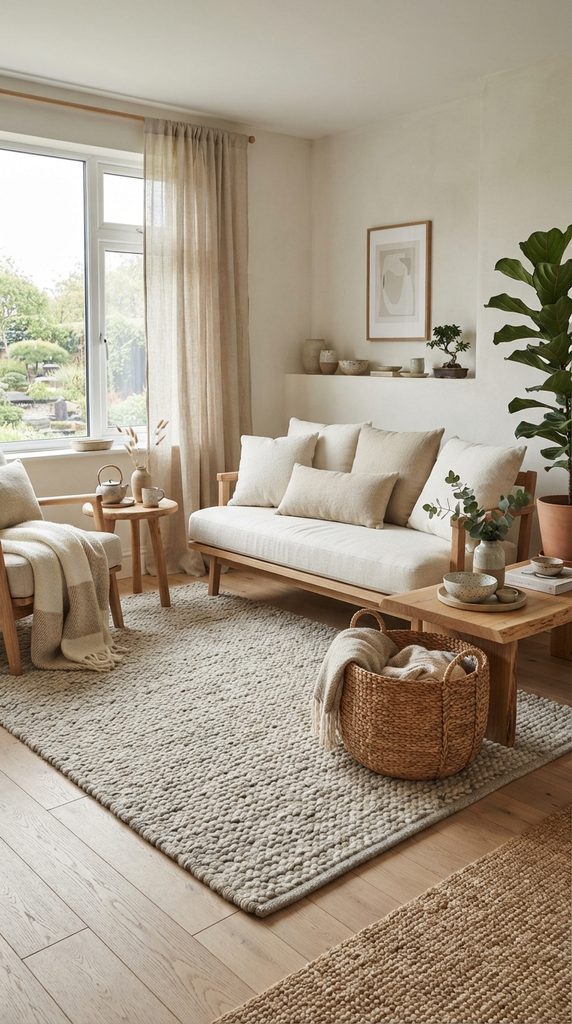
The bedroom is an ideal place to use Japandi principles. Choose simple wooden furniture, neutral bedding, soft lighting, and minimal accessories.
Layer cream, beige, and taupe bedding with a textured throw.
Keep bedside tables relatively uncluttered and use warm lamps to create a relaxing evening atmosphere.
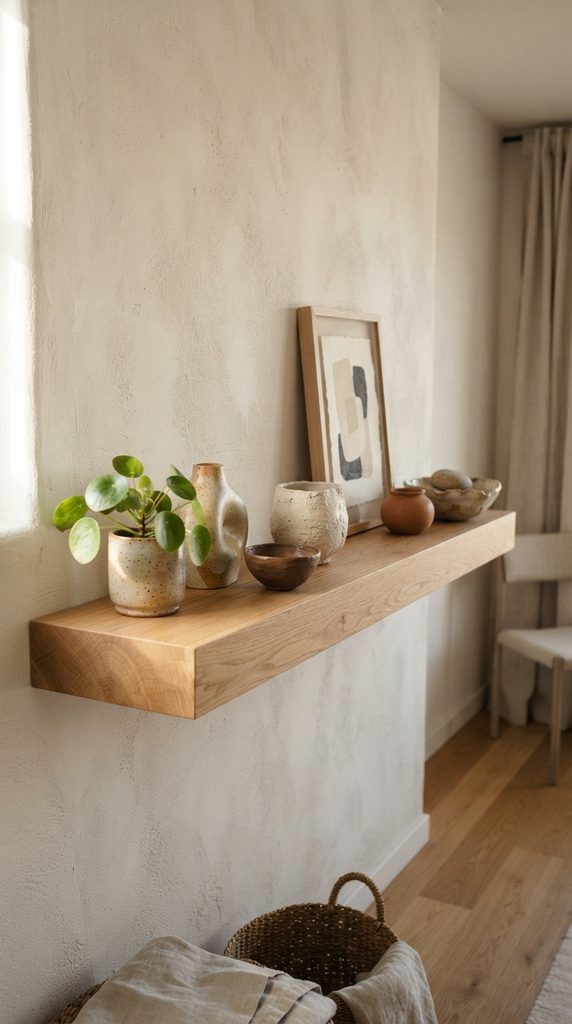
7. Use Handmade Ceramics
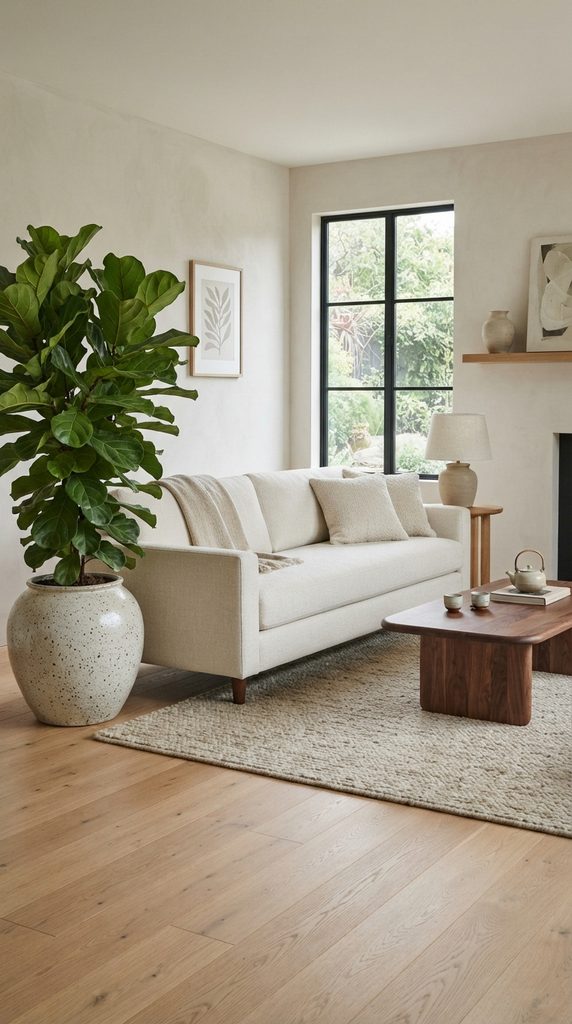
Handcrafted ceramics add subtle personality without disturbing the simplicity of the room.
Choose organic-shaped vases, bowls, mugs, candleholders, and decorative vessels in earthy colors.
Display a few pieces on shelves, tables, or a console. Their handmade imperfections can add warmth to an otherwise clean interior.
8. Add Soft and Warm Lighting
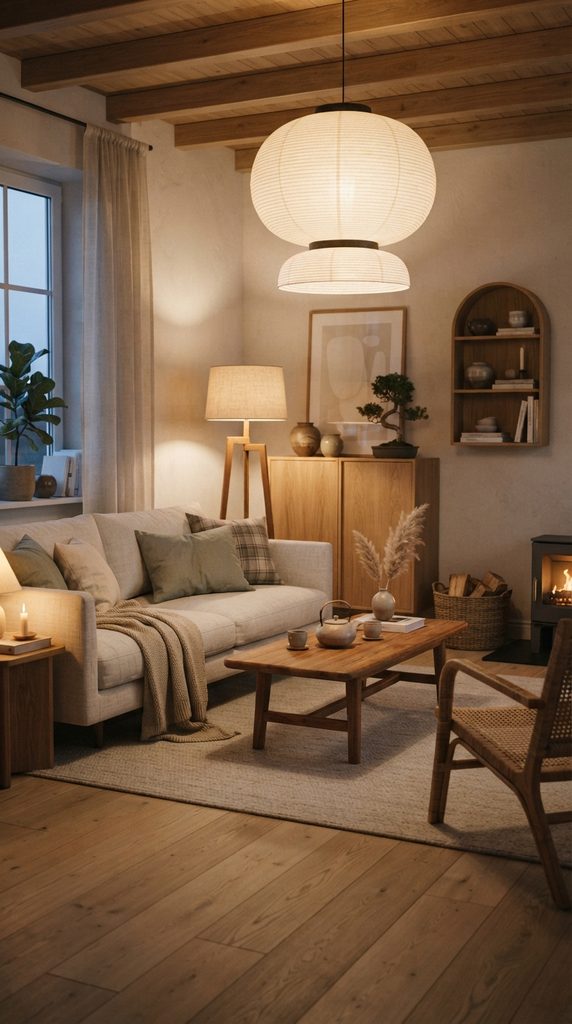
Lighting is essential for creating the calm atmosphere associated with Japandi interiors.
Choose paper-style lamps, simple floor lamps, wooden fixtures, or soft fabric shades.
Use multiple smaller light sources instead of relying entirely on one bright ceiling light.
Warm illumination can make natural wood and neutral textiles feel especially inviting.
9. Embrace Intentional Negative Space
One of the easiest ways to create a Japandi-inspired home is to leave some areas intentionally empty.
Instead of decorating every shelf or tabletop, choose a few objects that you genuinely like.
Negative space allows furniture, artwork, plants, and handmade pieces to become focal points while making the room feel calm and organized.
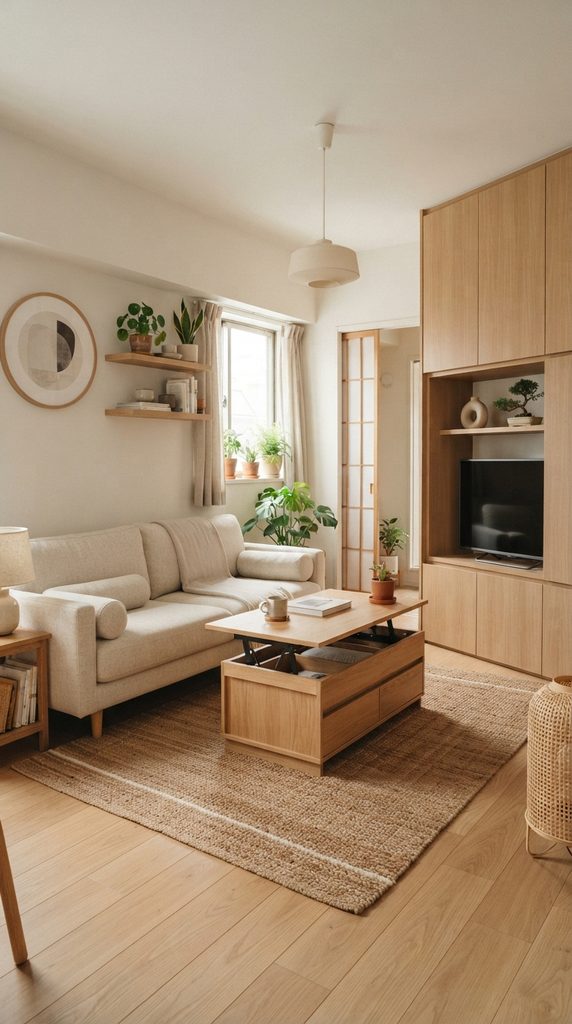
10. Mix Japanese and Scandinavian Details
The most authentic Japandi spaces balance both design influences.
Japanese-inspired elements can include low furniture, organic shapes, simple ceramics, natural materials, and restrained decoration.
Scandinavian influences can appear through cozy textiles, functional furniture, soft lighting, and warm neutral colors.
Combining these details creates an interior that feels minimalist but still comfortable.
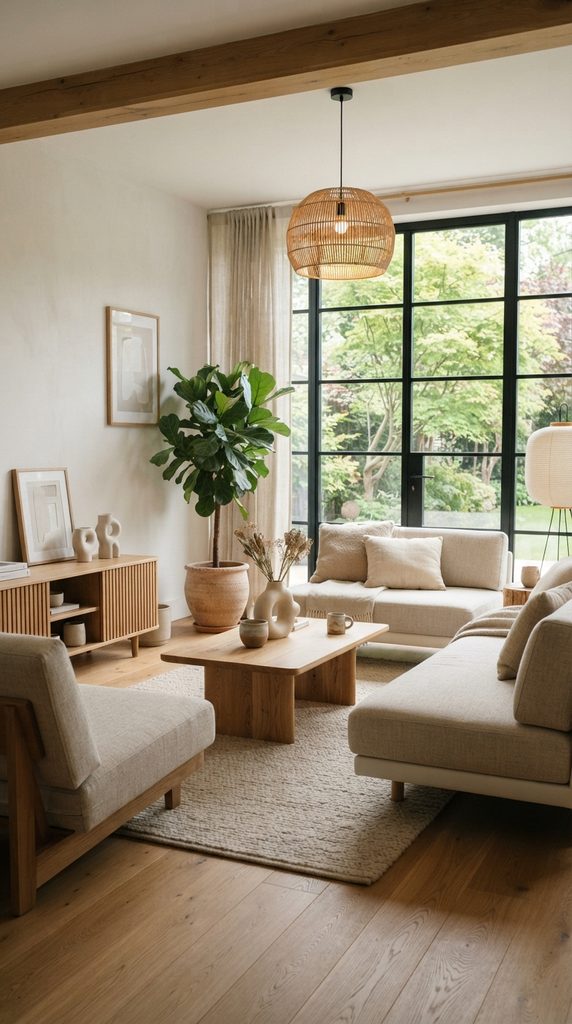
How to Make Japandi Decor Feel Warm
Minimalism can sometimes feel too cold if there are not enough textures. Add warmth through wood, woven rugs, linen curtains, soft cushions, blankets, and handmade ceramics.
Keep the color palette natural and use warm lighting in the evening.
The goal is not to make the room completely empty, but to make every item feel intentional.
Japandi Home Decor Ideas for Small Spaces
Japandi style works particularly well in small homes because it emphasizes functionality and uncluttered spaces.
Choose furniture that serves multiple purposes, such as storage benches, compact wooden tables, or shelving with concealed storage.
Use vertical space carefully and keep floors relatively open to create a greater sense of spaciousness.
Modern Japandi Living Room
For a modern Japandi living room, start with a simple cream sofa and natural wooden coffee table.
Add a textured neutral rug, one large plant, a ceramic vase, soft cushions, and a warm floor lamp.
Keep artwork minimal and choose natural or muted colors.
Budget-Friendly Japandi Decorating
You do not need expensive furniture to create a Japandi atmosphere. Start by decluttering and simplifying what you already own.
Add affordable linen-look textiles, wooden accessories, woven baskets, simple ceramics, and plants.
A secondhand wooden table or chair can also fit beautifully into the style.
Final Thoughts
Japandi home decor creates a peaceful balance between simplicity, functionality, warmth, and natural beauty. It is an excellent choice for anyone who wants a home that feels calm without becoming boring or overly minimalist.
The best Japandi home decor ideas combine warm neutrals, natural wood, soft textures, simple furniture, greenery, handmade ceramics, and thoughtful lighting.
Start with fewer but better-loved pieces, introduce natural materials, and allow plenty of breathing room. The result can be a timeless home that feels both elegant and comfortable.
Leave a Reply