A gallery wall is a beautiful way to personalize your home while turning an empty wall into an eye-catching focal point. Whether you prefer family photographs, artwork, travel memories, or a combination of different pieces, a thoughtfully arranged gallery wall can add character to almost any room.
The best gallery wall ideas don’t require everything to match perfectly. By combining different sizes, frames, colors, and textures while maintaining some visual consistency, you can create a display that feels collected and intentional.
From minimalist layouts to eclectic arrangements, these 10 gallery wall ideas can inspire you to create a stylish wall display that suits your home and personality.
1. Create a Classic Grid Gallery Wall
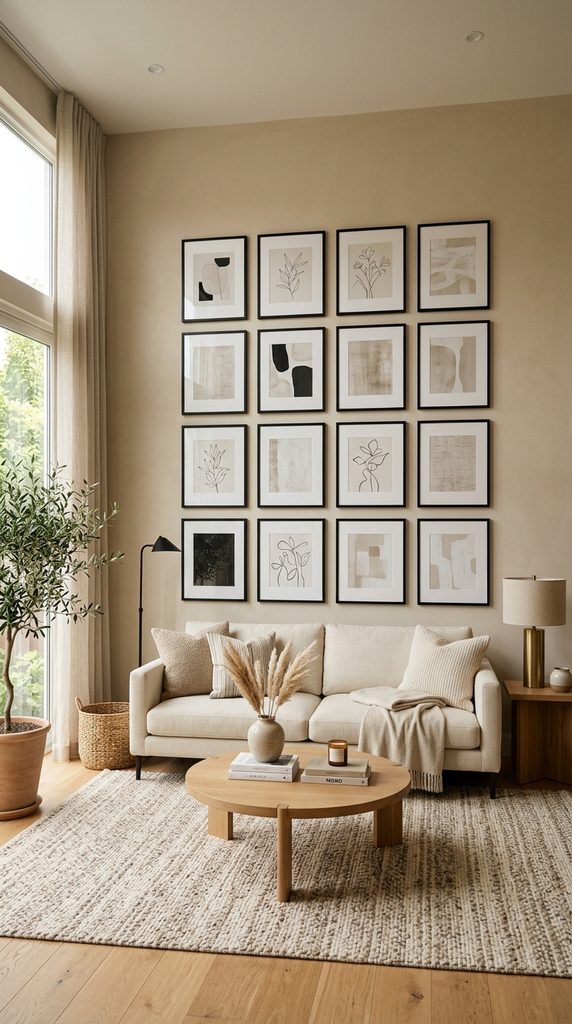
A grid layout is ideal if you love clean lines and an organized appearance. Arrange artwork or photographs in evenly spaced rows and columns using frames of the same size.
Black, white, natural wood, or metallic frames can all work well depending on your interior style.
A grid gallery wall looks especially attractive above a sofa, dining table, console, or bed. Choose artwork with a consistent color palette to make the arrangement feel cohesive.
Styling tip: Measure the wall and mark your frame positions before hanging anything to keep the spacing even.
2. Mix Family Photos and Artwork
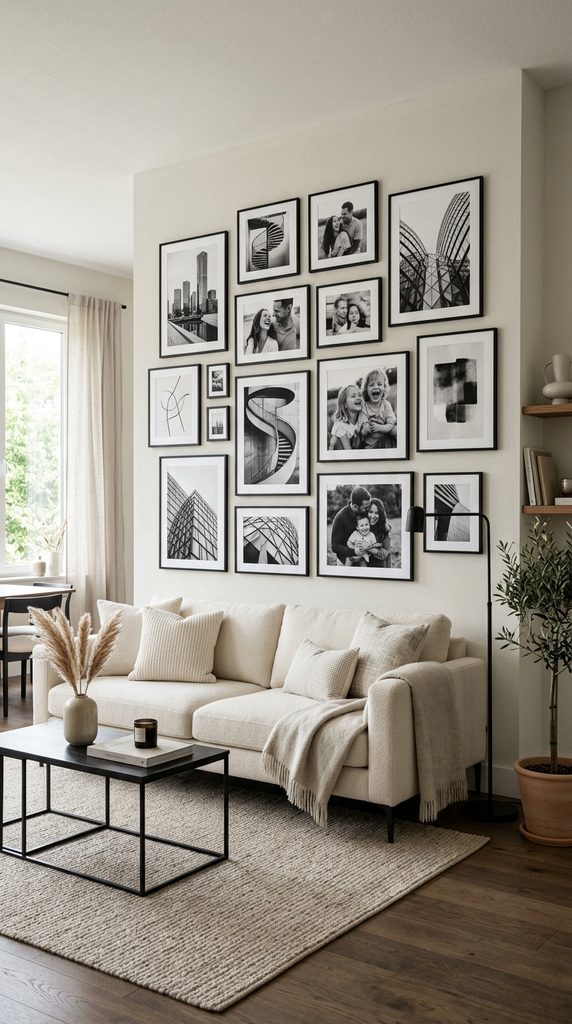
Give your gallery wall a personal touch by combining family photographs with artwork. Black-and-white photographs can be paired with abstract prints, line drawings, botanical illustrations, or typography.
To prevent the display from looking random, repeat one or two elements throughout the arrangement. For example, use similar frame colors or keep the artwork within a neutral palette.
This approach works beautifully in hallways, living rooms, stairways, and bedrooms.

3. Try a Minimalist Gallery Wall
A minimalist gallery wall uses fewer pieces and plenty of surrounding space. Choose three to five artworks with simple designs and arrange them in a balanced composition.
Neutral abstract artwork, line drawings, monochromatic photography, and simple botanical prints work particularly well.
Use matching frames for a polished appearance or choose frames with subtle variations for a softer, more relaxed look.
The result is a gallery wall that adds visual interest without overwhelming the room.

4. Use a Black-and-White Gallery Wall
A black-and-white gallery wall creates a timeless and sophisticated appearance. You can use family photographs, architectural photography, abstract artwork, or simple illustrations.
The limited color palette allows you to mix different frame sizes and layouts while maintaining visual unity.
Black frames against a white or light neutral wall create strong contrast, while natural wood frames can soften the overall look.
This idea is particularly effective in modern, minimalist, and contemporary interiors.
5. Create an Eclectic Gallery Wall
If you love a more collected and artistic look, embrace an eclectic gallery wall. Combine different frame styles, artwork sizes, photographs, mirrors, illustrations, and decorative objects.
The trick is to create some connection between the pieces. You might repeat a particular color, material, or theme throughout the arrangement.
Don’t worry about making every gap perfectly equal. A slightly relaxed arrangement can give the display a charming, collected-over-time appearance.

6. Add a Gallery Wall Above the Sofa
The wall above the sofa is one of the most popular locations for a gallery wall. It can turn an otherwise empty area into the main focal point of your living room.
Choose a layout that is proportional to the sofa. A gallery wall that is too small can look disconnected, while one that is too large may overwhelm the seating area.
You can use a symmetrical grid, an organic arrangement, or one large central piece surrounded by smaller artwork.
Keep the bottom of the gallery arrangement visually connected to the sofa rather than leaving an excessively large gap.

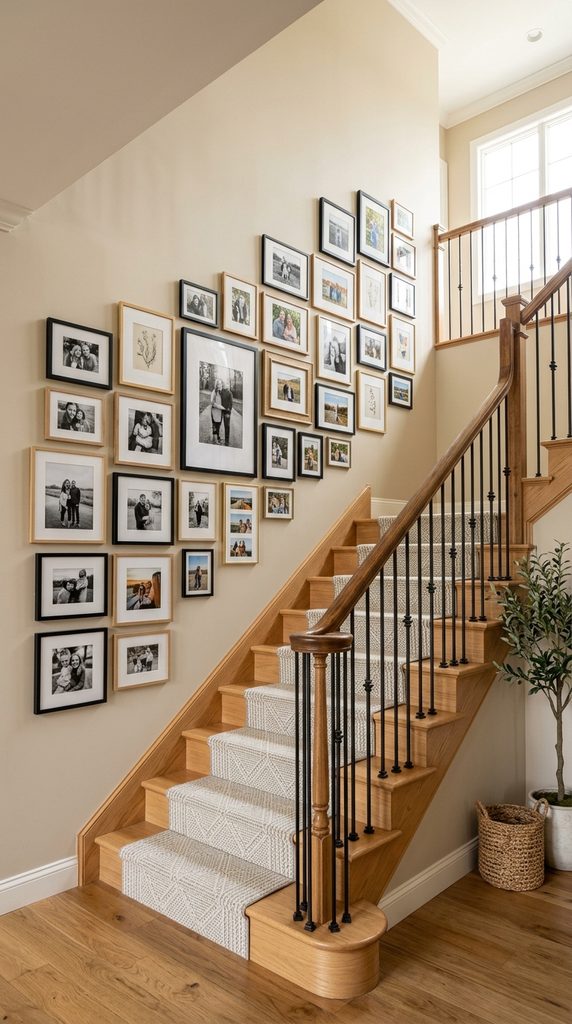
7. Create a Stairway Gallery Wall
A staircase provides a natural opportunity for a gallery wall because the arrangement can follow the angle of the stairs.
Use a combination of family photos, artwork, and meaningful prints to make the stairway feel more personal.
Before hanging the frames, lay them out on the floor or create paper templates on the wall. This makes it easier to visualize the arrangement and maintain a comfortable flow along the staircase.
A stairway gallery wall can turn an overlooked transition area into one of the most memorable parts of your home.
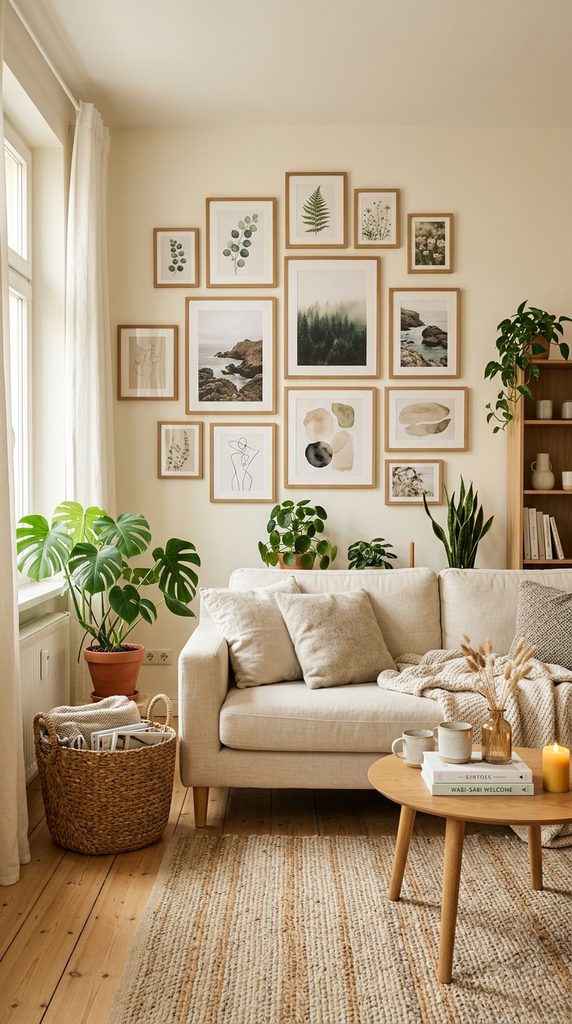
8. Use Natural Wood Frames
Natural wood frames can add warmth and texture to a gallery wall. They work particularly well with neutral, Scandinavian, farmhouse, rustic, and organic modern interiors.
Combine light oak frames with botanical prints, neutral artwork, family photos, or nature photography.
For additional texture, you can include a small woven wall piece or handmade object among the framed artwork.
Keep the surrounding decor relatively simple so the natural materials remain the focus.
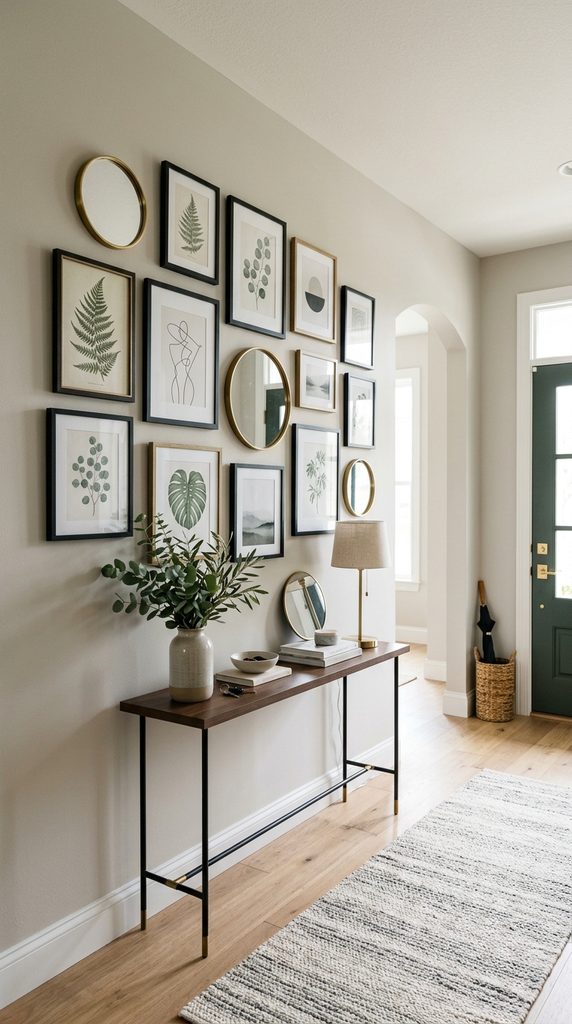
9. Design a Gallery Wall with Mirrors
Gallery walls don’t have to consist entirely of artwork. Adding mirrors can create a more dimensional and interesting display.
Combine small round mirrors with framed artwork, photographs, or decorative wall pieces. Different shapes can create an attractive contrast while helping reflect light around the room.
For a cohesive appearance, repeat similar frame finishes or stick to a limited color palette.
This idea works especially well in entryways, dining areas, bedrooms, and narrow hallways.
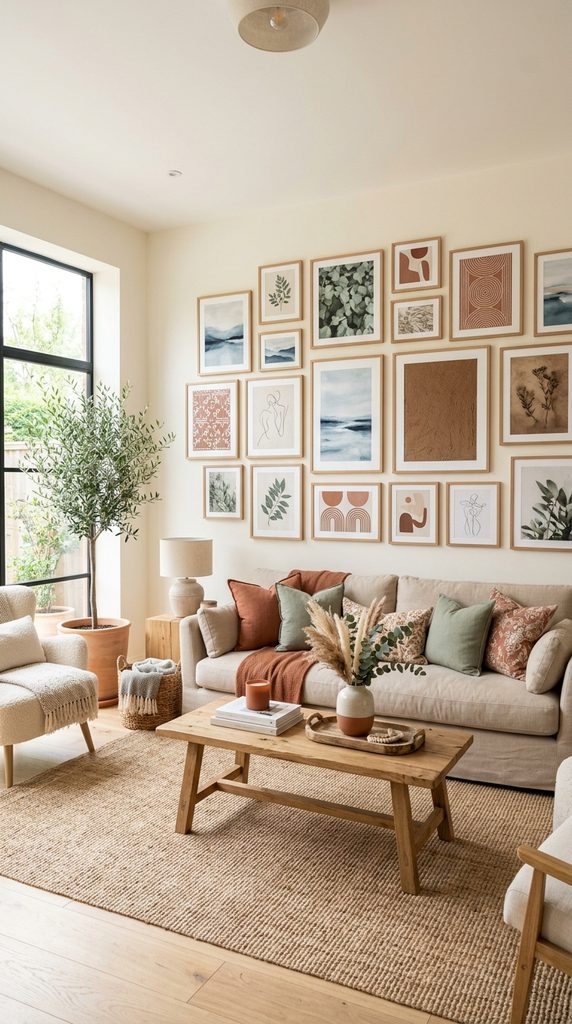
10. Create a Colorful Gallery Wall
A colorful gallery wall can bring energy and personality into a neutral room. Choose artwork with colors that complement the existing furniture and accessories.
You can create a coordinated palette using shades such as blue and green, terracotta and beige, or pink and warm brown.
If the artwork is colorful, consider using simple frames so the display doesn’t become visually overwhelming.
A colorful gallery wall can work as a statement feature in a living room, bedroom, office, or creative space.
How to Plan a Gallery Wall
Before hanging your artwork, consider the size of the wall and the furniture underneath it. The gallery arrangement should feel connected to the room rather than floating independently.
Start by choosing your main pieces. Then add smaller artwork around them until you achieve a balanced composition.
One easy method is to arrange everything on the floor first. Take a photo of the layout so you can refer to it while hanging the pieces.
You can also use paper templates cut to the size of each frame and attach them temporarily to the wall. This allows you to experiment without creating unnecessary holes.
How to Make a Gallery Wall Look Cohesive
The artwork doesn’t have to be identical to look coordinated. Choose one or two repeating elements to connect the pieces.
These elements might include:
- Matching frame colors
- A consistent color palette
- Similar artwork themes
- Repeated materials
- Consistent spacing
- Similar visual styles
For example, an eclectic gallery wall can contain different artwork styles while using mostly black frames. Alternatively, you can mix frame colors while keeping all the artwork within a neutral palette.
Final Thoughts
A gallery wall is one of the easiest ways to make your home feel more personal and visually interesting. Whether you prefer a clean grid, minimalist arrangement, black-and-white display, eclectic collection, colorful artwork, or family photo wall, there are countless ways to create a design that suits your style.
The most successful gallery walls balance variety with consistency. Mix different sizes and subjects, but connect them through color, framing, spacing, or theme.
Most importantly, choose pieces that mean something to you. Your gallery wall should tell a story and make your home feel more like your own.
Leave a Reply