Creating a beautiful outdoor garden around your house can make your property feel more welcoming, peaceful, and connected to nature. Whether you have a spacious backyard, a small front yard, a narrow side garden, or a compact patio, thoughtful landscaping can transform an ordinary outdoor area into a comfortable extension of your home.
The best house garden ideas outdoors balance greenery, functionality, and personal style. You do not need an enormous budget or a professional landscape designer to create an attractive garden. Simple additions such as flowering plants, pathways, seating areas, raised beds, and outdoor lighting can make a noticeable difference.
Here are ten inspiring outdoor garden ideas to help you create a stylish and inviting space around your home.
1. Create a Welcoming Front Garden
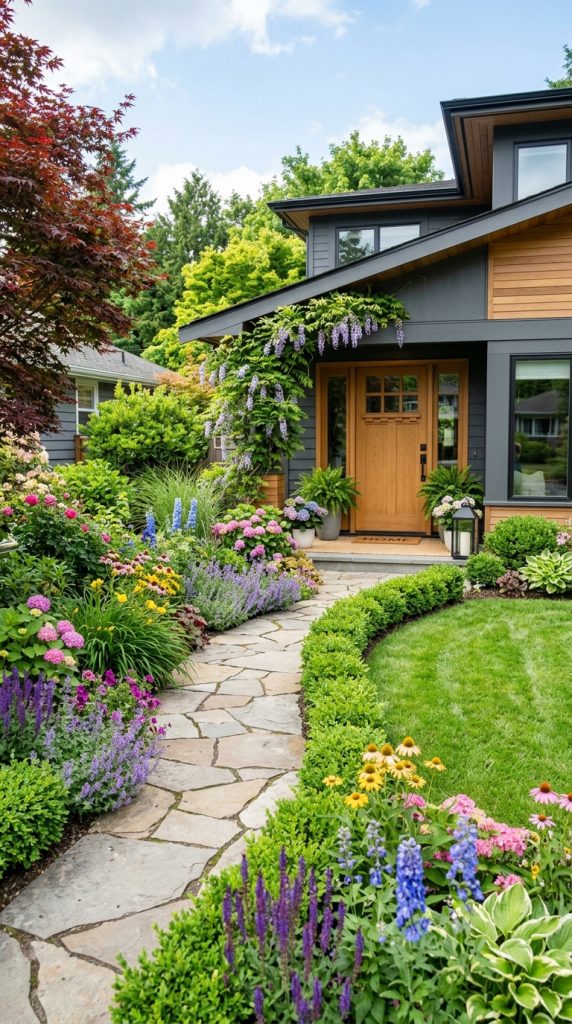
Your front garden is one of the first things people notice when they approach your home. A combination of colorful flowers, evergreen shrubs, decorative grasses, and a neat pathway can create an inviting entrance.
Use plants of different heights to add depth. Place taller shrubs near walls or boundaries and shorter flowers closer to the walkway. Adding a few decorative pots near the front door can provide an extra layer of charm.
Choose plants that suit your local climate and the amount of sunlight your front yard receives. A well-planned front garden can improve curb appeal without requiring excessive maintenance.
2. Design a Cozy Backyard Seating Area
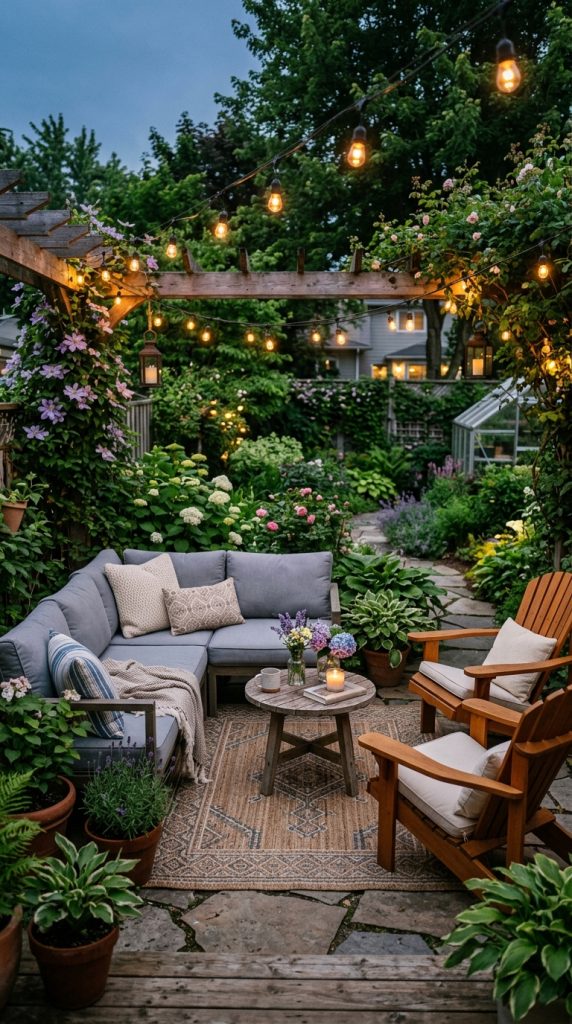
Turn part of your backyard into a relaxing outdoor living space. A small seating arrangement with comfortable chairs, a bench, or a compact outdoor sofa can create the perfect place for morning coffee or evening conversations.
Surround the seating area with greenery, potted plants, or flowering borders. A small outdoor rug and a few cushions can make the space feel more comfortable.
For evening use, add warm outdoor lighting around the seating area. The result can feel like a natural extension of your indoor living room.
3. Add a Garden Pathway
A garden pathway can make an outdoor space feel more organized while guiding visitors through the landscape. You can create a path using stepping stones, gravel, bricks, natural stone, or concrete pavers.
For a natural appearance, allow low-growing plants or ground cover to grow between some of the stones. Curved pathways can create a relaxed garden atmosphere, while straight paths often suit modern landscaping.
Line the pathway with flowers, small shrubs, or solar lights to make it more attractive and functional.
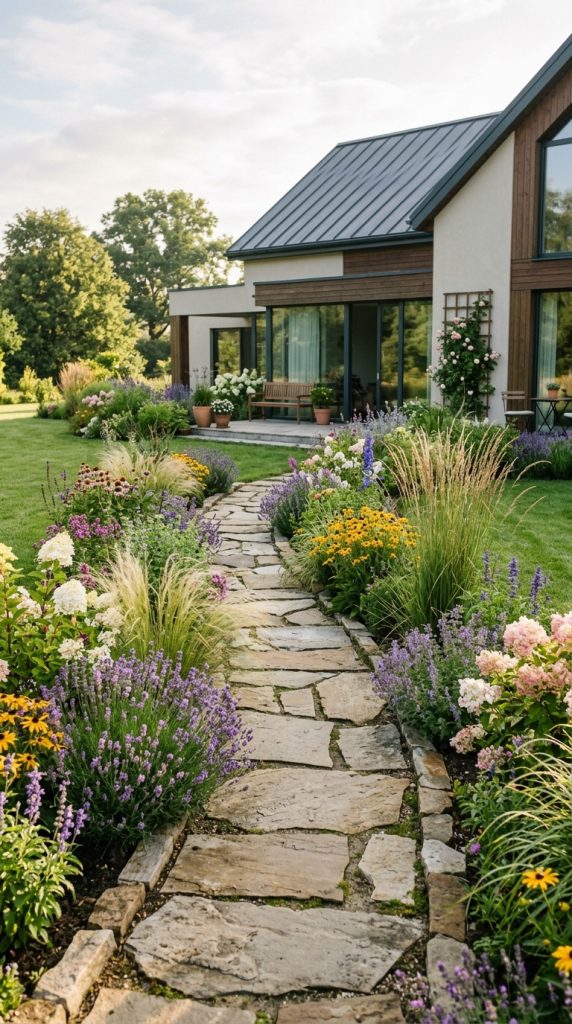
4. Build a Raised Flower Bed
Raised garden beds are an excellent way to introduce structure and color into your outdoor space. They can be constructed from timber, stone, bricks, or other durable materials.
Fill the beds with a combination of flowering plants, herbs, ornamental grasses, or seasonal greenery. Varying plant heights can create a layered appearance.
Raised beds are particularly useful when you want to separate planting areas from lawns, pathways, or patios. They can also make gardening more comfortable because the plants are easier to reach.
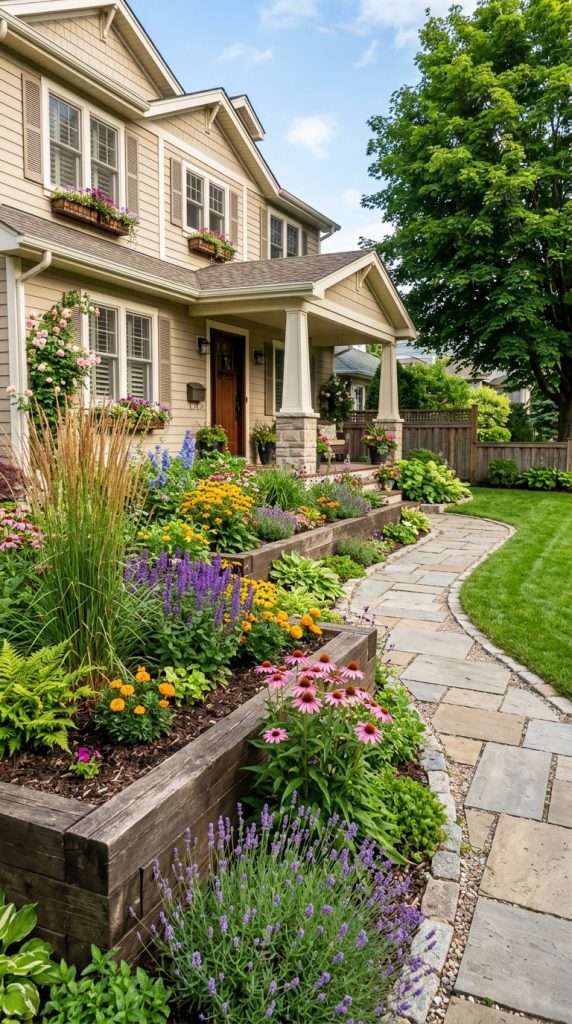
5. Create a Small Vegetable Garden
A house garden does not have to be purely decorative. Add a small vegetable or herb garden where you can grow useful plants such as tomatoes, peppers, lettuce, mint, basil, or other suitable varieties.
If you have limited space, use raised beds, containers, or vertical planters. Place the garden somewhere that receives appropriate sunlight.
A small edible garden can make your outdoor space more productive while adding natural greenery. Clearly labeling plants can also give the area a charming, organized appearance.
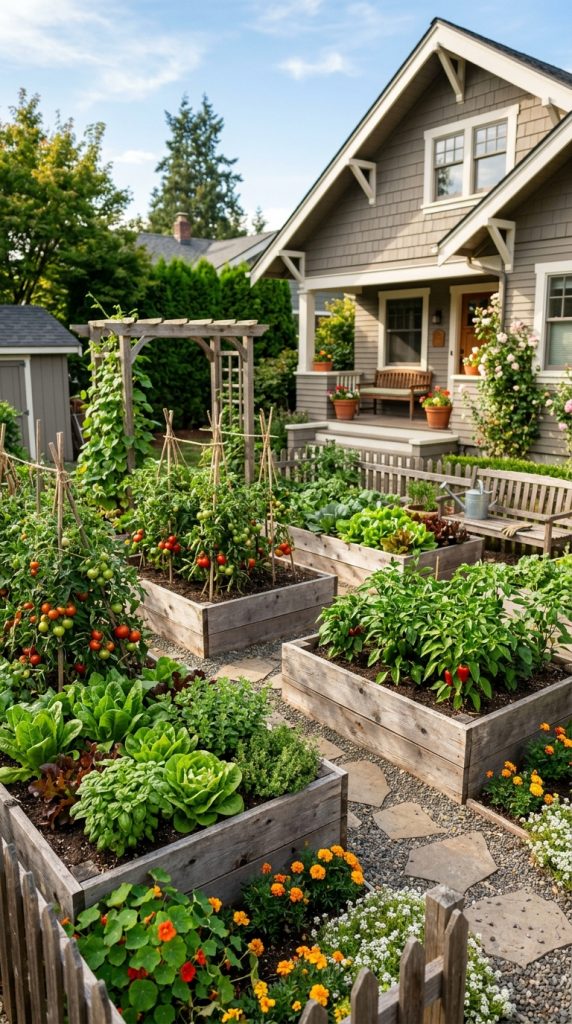
6. Add a Pergola With Climbing Plants
A pergola can provide structure and shade while creating an attractive focal point in a backyard. Add climbing plants or vines to soften the structure and make it feel integrated with the garden.
Place comfortable seating underneath for a relaxing retreat. Depending on your climate, choose climbing plants that are appropriate for the available sunlight and support structure.
String lights can be added for evening ambiance, creating a cozy outdoor setting for entertaining.
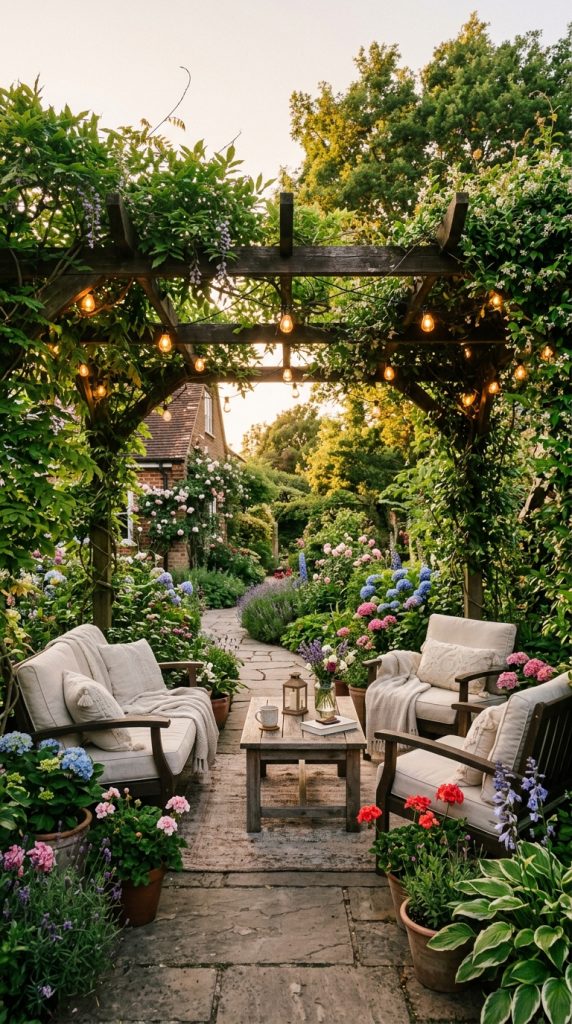
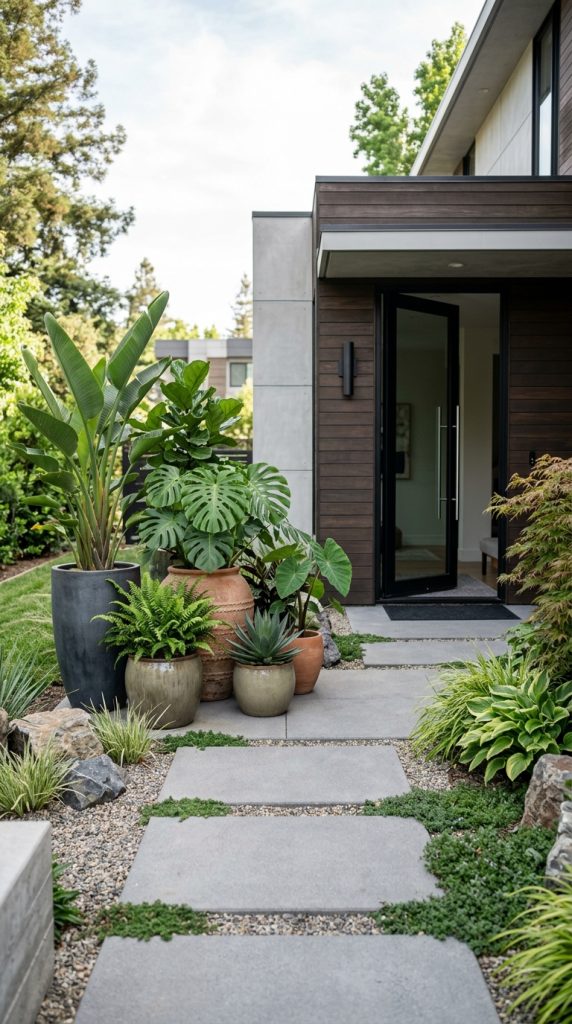
7. Use Large Decorative Planters
Large planters are an easy solution when you want greenery without creating permanent planting beds. Place them beside the entrance, along a patio, around a seating area, or near garden steps.
Choose planters in materials such as terracotta, concrete, ceramic, or weather-resistant composite. Grouping planters in different sizes can create more visual interest.
For a sophisticated appearance, repeat the same planter style while using different plant varieties. This creates consistency without making the garden look repetitive.
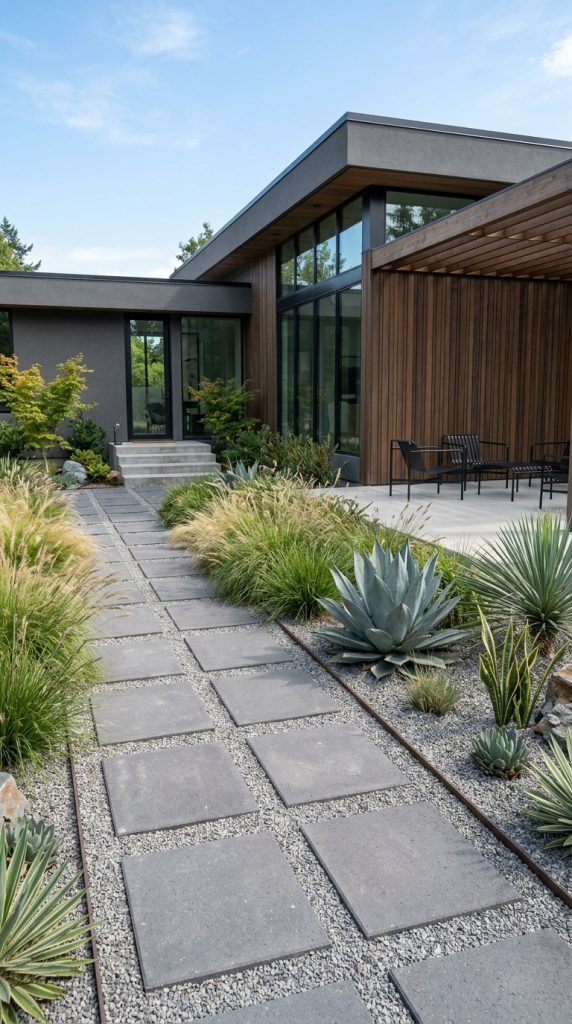
8. Design a Modern Minimalist Garden
If you prefer a clean and contemporary aesthetic, try a minimalist garden design. Focus on simple shapes, limited plant varieties, natural stone, gravel, and open space.
Use sculptural plants, ornamental grasses, or neatly trimmed shrubs to create structure. Neutral materials such as gray stone, wood, and concrete work well in modern outdoor spaces.
Avoid filling every area with plants. Negative space is an important part of minimalist landscaping and can make a small garden feel larger.
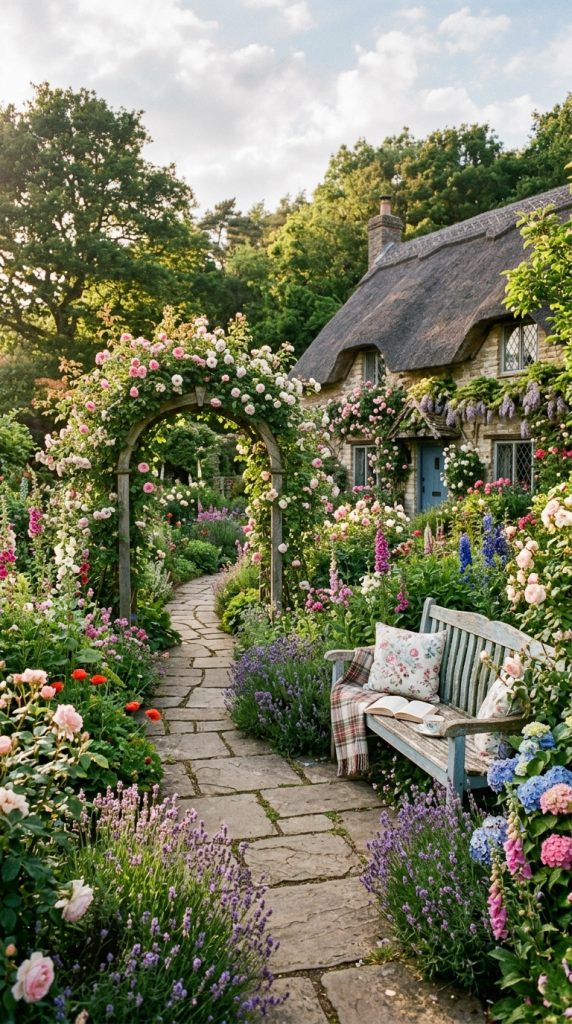
9. Create a Cottage-Style Flower Garden
For a romantic and colorful outdoor space, consider a cottage garden filled with flowers and informal planting. Combine different colors, heights, and textures to create a relaxed appearance.
Flowering plants can be arranged around pathways, fences, windows, and seating areas. A mixture of annuals, perennials, herbs, and greenery can create a natural layered effect.
A simple wooden bench, vintage-style planter, or small garden arch can enhance the cottage-inspired atmosphere without making it feel overly designed.
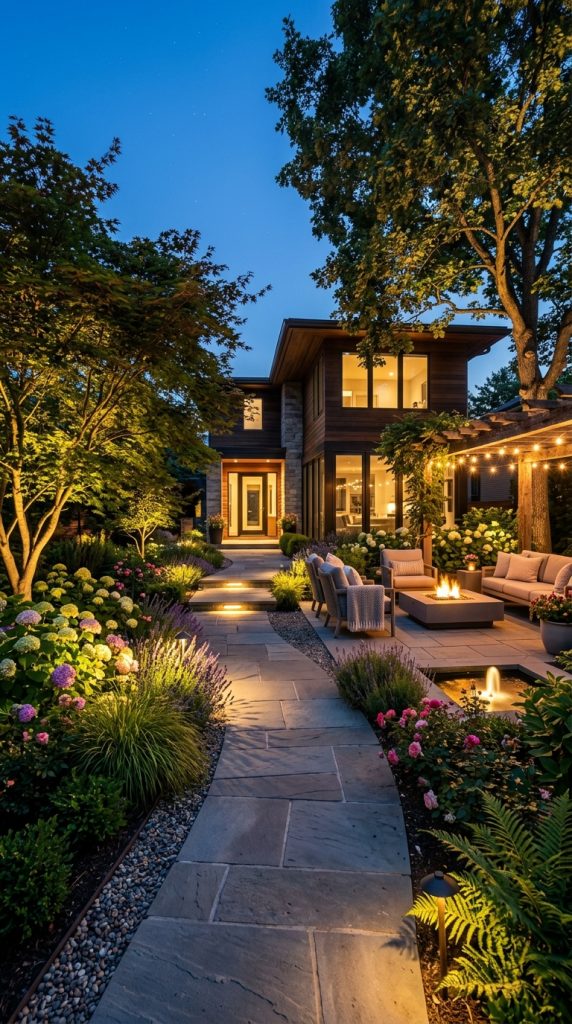
10. Add Outdoor Garden Lighting
Good lighting can completely change the appearance of a garden after sunset. Use pathway lights to highlight walkways, uplights to emphasize trees or architectural features, and subtle lighting around seating areas.
Solar lights are a convenient option for many garden locations, while other outdoor-rated lighting systems can provide more controlled illumination.
Avoid making every corner equally bright. A combination of light and shadow often creates a more relaxing and visually interesting outdoor environment.
How to Plan Your Outdoor House Garden
Before buying plants and decorations, think about how you want to use the space. Consider whether you need an area for entertaining, gardening, children, pets, relaxation, or simply improving curb appeal.
Pay attention to sunlight, drainage, soil conditions, and the amount of maintenance you can realistically manage. Select plants suited to your climate rather than choosing them only because they look attractive in photographs.
It is also helpful to repeat certain materials or colors throughout the garden. For example, matching pathway stones with planter colors can create a cohesive appearance.
Final Thoughts
These house garden ideas outdoors show that a beautiful garden can be created in many different ways. From a simple front-yard flower border to a cozy backyard seating area, the right design can make your outdoor space more functional and enjoyable.
Start with one area rather than trying to transform the entire property at once. Add greenery, pathways, seating, planters, and lighting gradually until your garden feels balanced and personal. With thoughtful planning, even a modest outdoor space can become a relaxing and attractive part of your home.
Leave a Reply