

Your living room is one of the most important spaces in your home. It is where you relax, welcome guests, spend time with family, and often express your personal decorating style. The right living room home decor ideas can make the space feel more comfortable, stylish, and functional without requiring a complete renovation.
From cozy textures and natural materials to modern lighting and thoughtful accessories, small changes can have a noticeable impact. Whether you prefer a minimalist, modern, farmhouse, boho, or warm neutral aesthetic, these 10 living room decor ideas can help you create a space that feels inviting and beautifully put together.
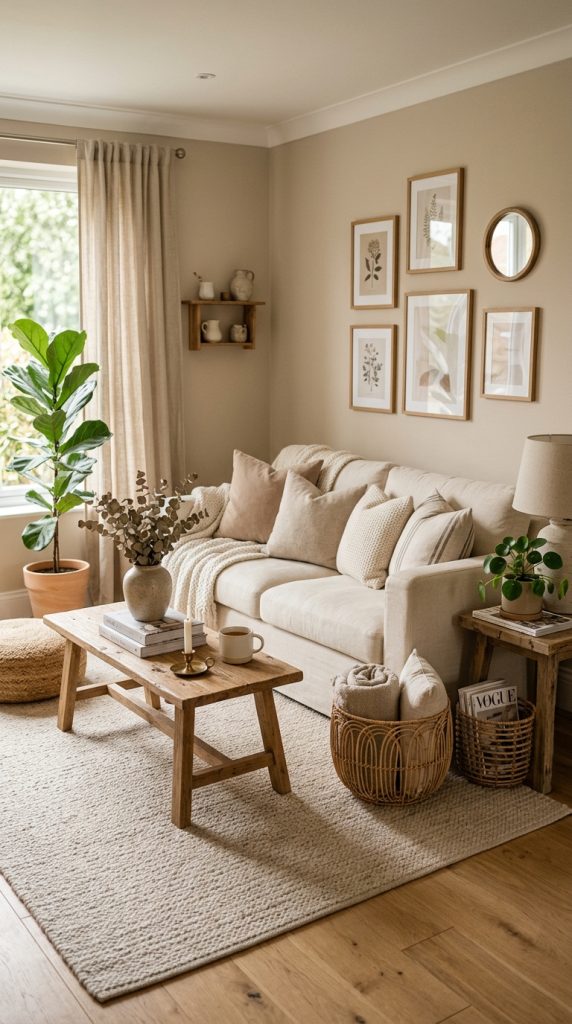
1. Create a Warm Neutral Living Room
Neutral colors are a timeless choice for living room decor. Shades such as warm white, beige, cream, taupe, and soft brown can create a calm and sophisticated atmosphere.
Start with a neutral sofa and layer the room with textured cushions, a soft area rug, linen curtains, and natural wood furniture. To prevent the space from looking flat, mix different textures rather than relying on many colors.
A few green plants or subtle black accents can add contrast while maintaining the peaceful neutral palette.
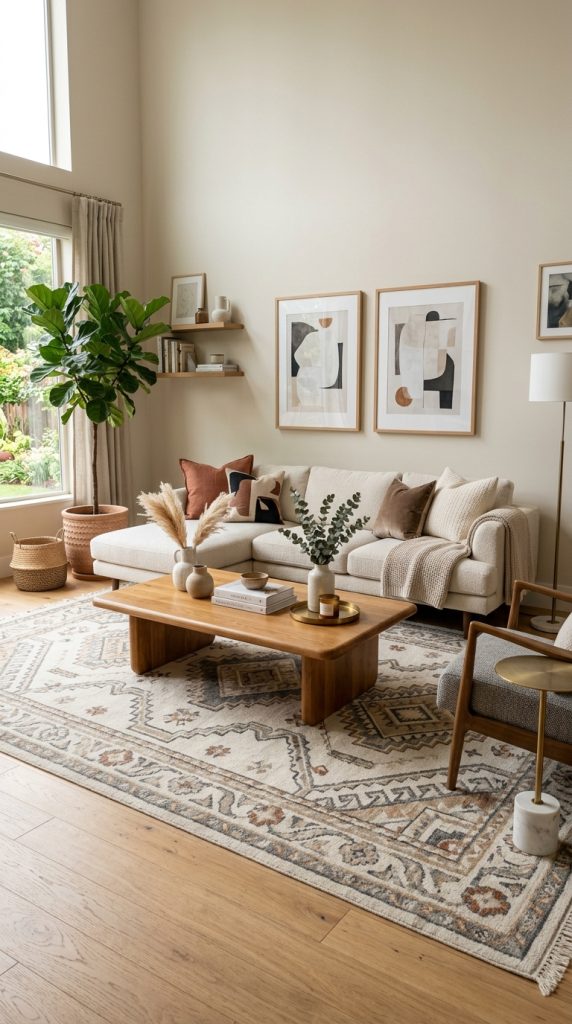
2. Add a Statement Area Rug
An area rug can instantly define the seating area and make a living room feel more finished. Choose a rug that is large enough to visually connect the sofa, chairs, and coffee table.
For a modern room, consider a subtle geometric or abstract design. A vintage-inspired rug can add character to a traditional space, while a natural jute rug works beautifully with organic and farmhouse decor.
When selecting a rug, consider both the color and texture so it complements your existing furniture.
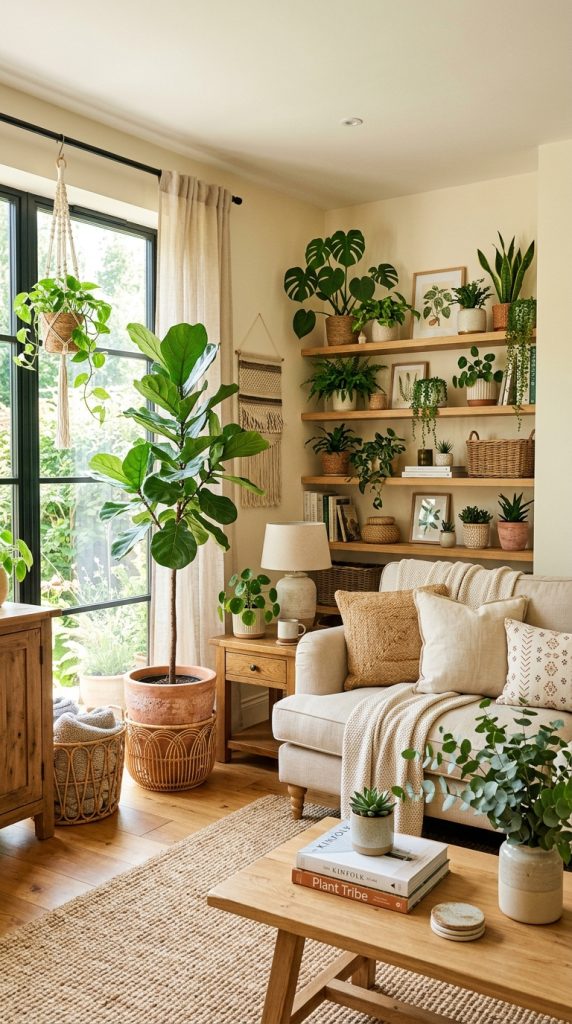
3. Decorate With Indoor Plants
Indoor plants are an easy way to bring freshness and natural color into your living room. A large plant beside the sofa or near a window can fill an empty corner, while smaller plants can decorate shelves, side tables, or a console.
Choose plants according to the amount of natural light available in your room. Attractive planters can also become part of the decor.
Greenery works especially well with neutral walls, wooden furniture, and woven textures.
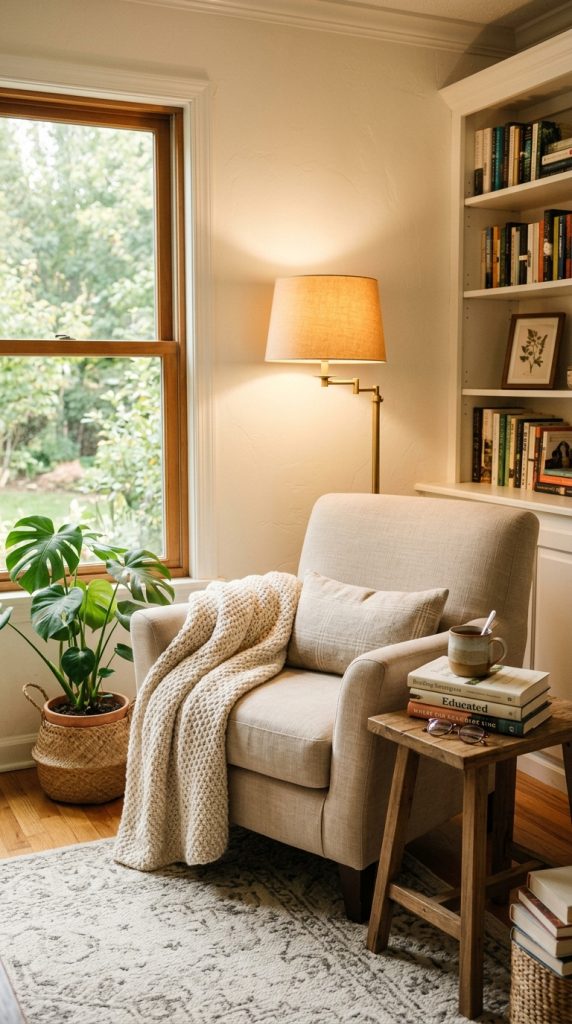
4. Create a Cozy Reading Corner
Turn an unused corner into a comfortable reading nook with a stylish armchair, floor lamp, and small side table. Add a soft throw and cushion to make the chair feel more inviting.
A nearby bookshelf or floating shelves can provide storage for books and decorative objects.
This idea is perfect for living rooms where you want to create a quiet space without adding too much furniture.
5. Use a Gallery Wall
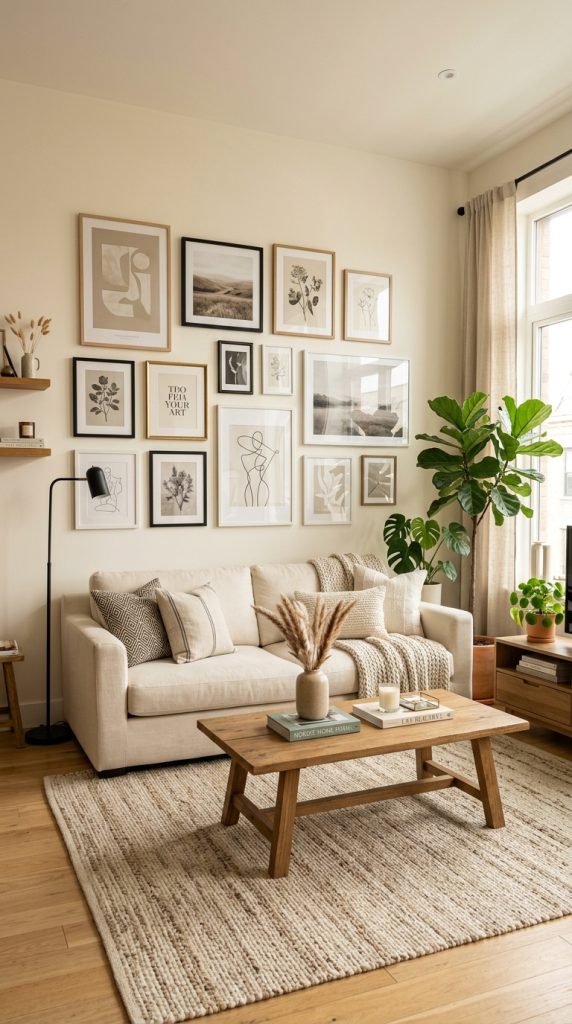
A gallery wall can personalize your living room and turn a plain wall into a focal point. Combine framed artwork, photography, simple prints, and decorative pieces that share a similar color palette.
For a clean appearance, use frames in the same color. If you prefer an eclectic style, mix different frame finishes while keeping the artwork visually connected.
Before hanging everything, arrange the frames on the floor to experiment with spacing and composition.
6. Add Layered Lighting
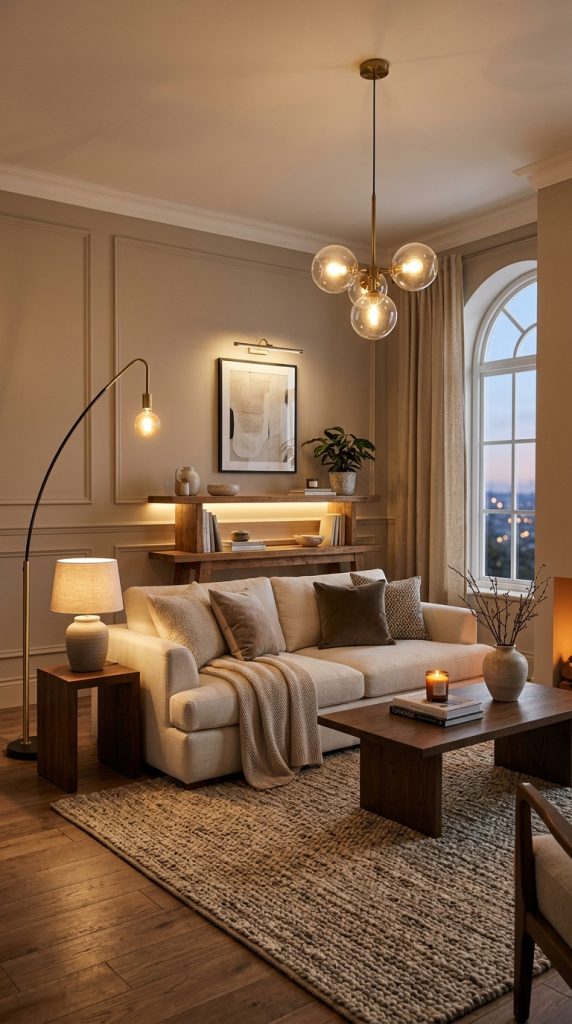
Good lighting can completely change the mood of a living room. Instead of relying on one ceiling light, combine several sources such as floor lamps, table lamps, wall lights, and accent lighting.
A floor lamp beside the sofa can provide practical reading light, while a table lamp can create a softer evening glow.
Warm-toned lighting is especially effective for creating a cozy atmosphere. Decorative lighting can also serve as an important design feature.
7. Mix Wood and Soft Textures
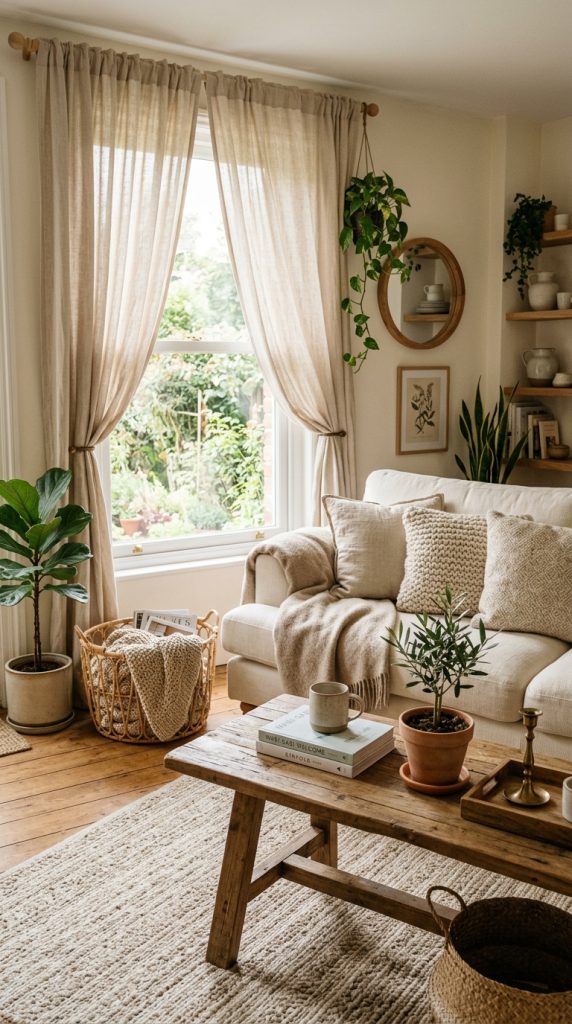
Combining natural wood with soft fabrics can make a living room feel warm and balanced. Use wooden coffee tables, shelves, side tables, or cabinets alongside upholstered furniture, linen curtains, woven baskets, and textured cushions.
Light wood creates a bright Scandinavian-inspired look, while walnut or darker wood can give the room a richer appearance.
This combination works across many decorating styles because it adds warmth without relying on bold colors.
8. Style the Coffee Table
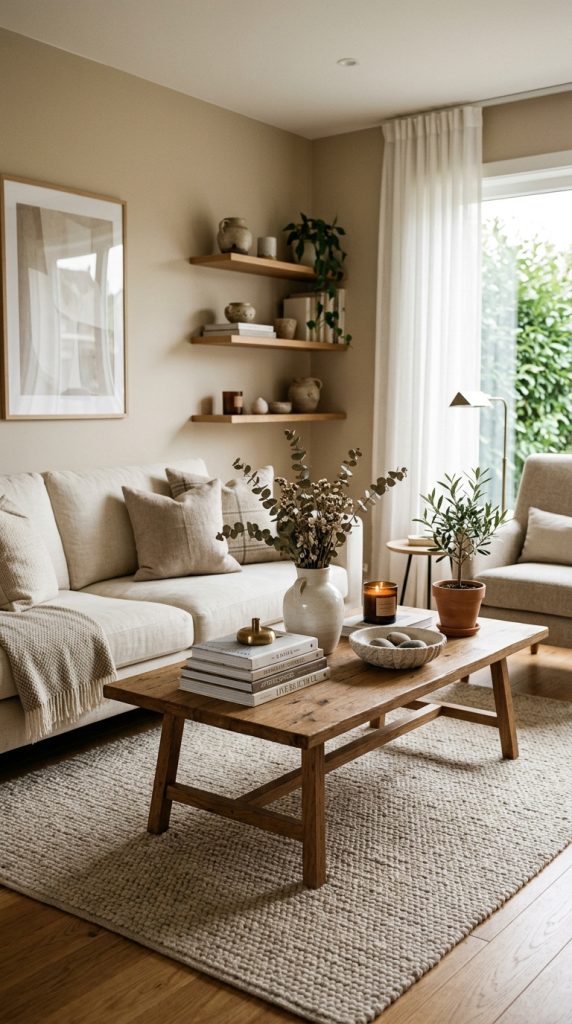
A coffee table can become an attractive focal point when decorated thoughtfully. Start with a tray to organize smaller accessories, then add a stack of books, a small vase, candle, decorative bowl, or plant.
Avoid covering the entire surface. Leaving some empty space keeps the arrangement practical and prevents visual clutter.
Choose accessories that repeat colors or materials already found elsewhere in the room for a cohesive look.
9. Add a Large Mirror
A large mirror can make a living room feel brighter and more spacious by reflecting natural and artificial light. Place it opposite or near a window when possible to maximize the effect.
Round mirrors can soften rooms with lots of straight lines, while large rectangular mirrors can create a more structured appearance.
Choose a frame that complements your furniture. Wood works well for warm interiors, while black or metallic frames can suit modern spaces.
10. Create a Cozy Layered Sofa
Your sofa is often the main visual anchor of the living room, so styling it can make a major difference. Add cushions in different sizes and textures while keeping the colors coordinated.
A soft throw draped over one side of the sofa can add warmth and casual character. Try combining linen, cotton, boucle, velvet, or knitted textures depending on the overall style.
Instead of matching every cushion exactly, use complementary colors and patterns to create a relaxed layered appearance.
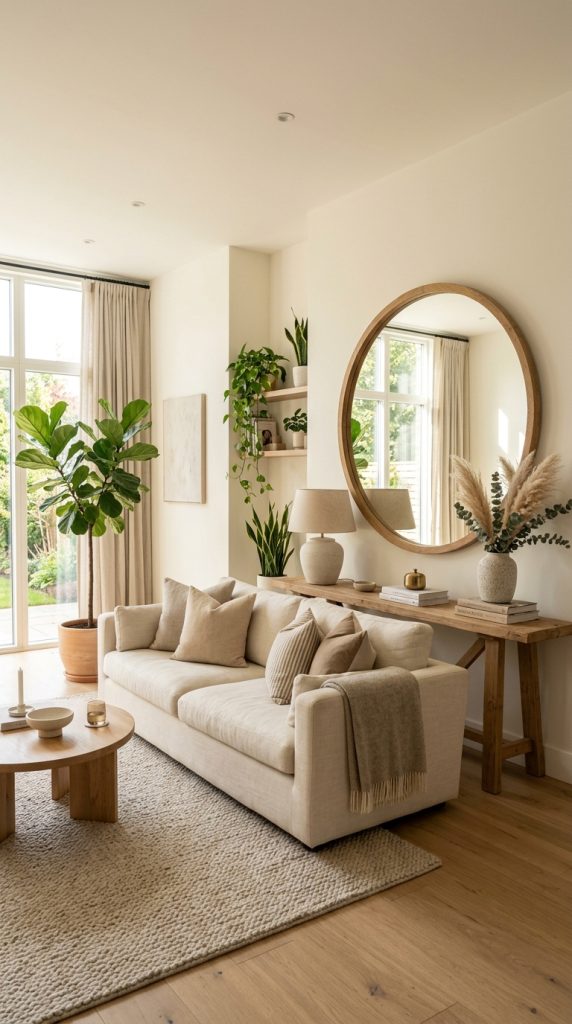
How to Make Living Room Decor Feel Cohesive
A beautiful living room does not need to contain lots of accessories. The most successful spaces usually have a consistent color palette, repeated materials, and a balance between decorated and open areas.
Choose two or three main colors and repeat them throughout the room. For example, a palette of cream, beige, and natural wood can create a warm neutral atmosphere. Adding small black accents can provide contrast without overpowering the design.
Scale is also important. Large furniture should be balanced with appropriately sized rugs, artwork, lighting, and accessories. Avoid placing tiny artwork above a large sofa or using a very small rug that does not connect the seating area.
Most importantly, choose pieces that suit how you actually use the room. A living room should look beautiful but remain comfortable and functional for everyday life.
Final Thoughts
Refreshing your living room does not always require expensive furniture or major renovations. Simple changes such as adding an area rug, styling the coffee table, introducing plants, improving lighting, or creating a cozy reading corner can transform the overall atmosphere.
The best living room home decor ideas combine personal style with practical comfort. Whether your taste is modern, neutral, rustic, boho, or minimalist, start with a clear color palette and build the room with layers of texture, lighting, greenery, and meaningful accessories.
Leave a Reply